Search This Blog

Showing posts with label Koehler-J.P.. Show all posts

Thursday, March 6, 2025

JPK5: Koehler–dangerous path; Stöckhardt–”old paths”

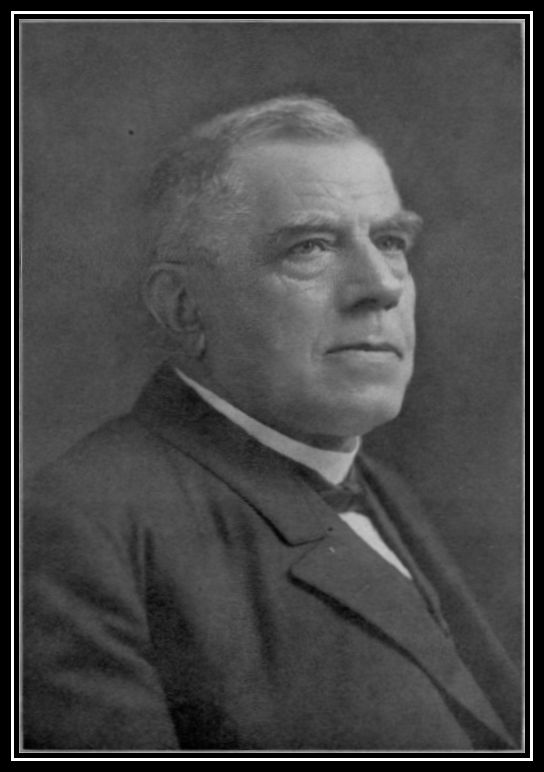
deposed Prof. John Philipp Koehler      This concludes my protest from Part JPK1 (Table of Contents in Part JPK1) against today's "Wisconsin Synod" and its Pastor Peter M. Prange's blindness in following (the deposed) John Philipp Koehler. 

Wisconsin Synod!  You are on a "dangerous path
in following John Philipp Koehler! ==>>

To: Pastor Peter M. Prange:
      You, like J. P. Koehler, call for a "reinvigorated" science of exegesis.  Yet Prof. Armin Schuetze did not hide the following report concerning the 1905 meetings with the Ohio Synod on the Predestinarian Controversy (The Synodical Conference: Ecumenical Endeavorp. 186-187, emphasis mine):
“Toward the end of the discussions, Dr. Hoenecke commented, 'Also by means of exegesis we will not arrive at agreement because our opponents from the very start differ with us in the analogy of faith'.”
Pastor Prange, your call for a "reinvigorated" exegesis is a direct contradiction of not only Franz Pieper and George Stoeckhardt, but also Dr. Adolf Hoenecke.  Hoenecke denied the path for Koehler's new approach against the "rusty thinking" of the Synodical Conference teachers. The men of the Old Synodical Conference clearly delineated the plain meaning of the Scripture passages on the Doctrine of Election of Grace.  Instead, you have clearly identified a distinct change in today's "Wisconsin Synod" from the old Wisconsin Synod, the Wisconsin Synod from above. You may call yourself "Wisconsin Synod", but you are not. This is analogous to today's LC-MS which likes to identify itself as the "Missouri Synod", but it is not.

Will the real Stoeckhardt please stand up?
      Those who would still follow Koehler's "exegetical clarifications" and yet claim Stoeckhardt for their causes, to them I apply a modified phrase of Franz Delitzch:
“You flatter yourselves that Stoeckhardt is your patron.”
It was Stoeckhardt who filed a formal protest against J. P. Koehler's misuse of "exegesis".

Stoeckhardt, in exegesis, second to...? 

The fact that Stoeckhardt's works are so obscure in today's LC-MS (CPH here, CTS-FW here) is only a sign of how far it has changed from the Old (German) Missouri Synod, not because Stoeckhardt is outdated.  And I would even question Prof. Joel L. Pless, after his glowing remarks on Stoeckhardt's exegesis (see Part JPK1), why does he not include any of Stoeckhardt's books in his "very short list", why has he not spearheaded an effort for NPH to publish and sell the languishing works of Stoeckhardt?……… (See the recently republished Stoeckhardt book Grace Upon Grace by Steadfast Press.)


…while NPH sells the book A Commentary on Galatians and Ephesians by J.P. Koehler, "one of the premier theologians" of the WELS?  Prof. Pless, it appears your praise of Stoeckhardt's exegesis… has fallen on deaf ears. (I had to laugh to learn that NPH still sells a Stoeckhardt book… but only in Spanish!)
Antidote to J. P. Koehler

<< One Benefit of John Philipp Koehler?
      I now wonder that Franz Pieper came to decide to write a "Dogmatics" series of books in part because of J. P. Koehler's agitation in the Synodical Conference against “dogmatism”.  I believe Pieper felt compelled by the great need, not only in his Missouri Synod but also in the Synodical Conference, to produce a clear work of Dogmatics to counter the confusion instigated by Koehler.  The result? ... his Christian Dogmatics!

Romans 12:6 – Objective Faith!
      Pieper refutes Koehler's misuse of the word "faith" (πίστις) as subjective faith in his poster verse, Romans 12:6 (Vol. 2, page 451CDk 2, 540-541, footnote 1260):
Rom. 12:6
"Faith" is objective
“Luther takes πίστις (faith) in Rom. 12:6 in the objective sense: “Prophecy” must agree with the doctrine of faith. He translates: ‘Hat jemand Weissagung, so sei sie dem Glauben aehnlich’ and says in his Church Postil (St. L. XII:334; [Lenker v. 8, pg 27-28, #17-18]) that to agree with the faith means to agree with “the doctrine of Scripture,” and again (in his last sermon preached at Wittenberg, Jan. 17, 1546, St. L. XII:1169 ff., (p. 1175, #15AE 51, p. 378) that it means to refrain from all human speculation, which [without God's Word] produces its own thoughts about God and matters divine.”
And of course, the 1932 Brief Statement clearly expresses this teaching in paragraph #2. Any Lutherans of today who subscribe to the Brief Statement and yet hold to the peculiar doctrines of J. P. Koehler are not being entirely honest with themselves. —  I am aware that George Stoeckhardt, in his exegesis of Rom. 12:6 (German p. 568, English translation p. 426:), considered that it was "very questionable whether πίστιν (faith) is used in the N.T. in this objective sense".  I consider this a weakness of Stoeckhardt but find that his firmness in the other areas of Objective or General Justification and Verbal Inspiration (as Dr. Pieper pointed out) overcame this weakness.  And Stoeckhardt never attempted to pit Exegetical Theology over Dogmatics for he too wrote many dogmatic articles and essays.  He wrote most beautifully about the doctrines of General Justification and even Walther's doctrine of Church and Ministry. Stoeckhardt's 1894 Central District essay outlined the doctrines as his "Missouri Synod" taught.  Stoeckhardt was a "Missourian". Koehler attempts to claim Stoeckhardt for his causes, but the fact remains, as Koehler reported (History, p. 212), that Stoeckhardt "filed a formal protest… in several letters" against Koehler's misuse of exegesis.  Unfortunately, but to a lesser degree than by the LC-MS, the Wisconsin Synod morphed into the new "Wisconsin Synod".  Perhaps the best indication of this change is proclaimed in the following statement in Wauwatosa Theology, vol. 1, p. 93 concerning (emphasis mine):
“Other changes were made gradually, no doubt to reflect the viewpoint that exegesis, not dogmatics, was to be the most important discipline. Today I would venture the guess that all members of our faculty and student body and all our synod pastors would agree that exegesis should be most important among the theological disciplines. Pray God that it will always stay that way.” — Martin O. Westerhaus, 1988
This change that placed "exegesis" over dogmatics was the intent of John Philipp Koehler – it was definitely not the intent of their supposed founder George Stoeckhardt! (1894 Central District) This change was clearly not the intent of Adolf Hoenecke when he disallowed exegesis over dogmatics as a means of resolving the dispute with American Lutherans who opposed the Synodical Conference. (Schuetze, p. 186-187)  

Franz Pieper — in the bull's eye for Wisconsin Synod
      Indeed, Leigh Jordahl, editor of the History, spoke for the new "Wisconsin Synod" (History, p. xvi, n. 37):
Franz Pieper (1852-1931) became Walther’s successor as the theologian of the Missouri Synod. The best introduction to his work is through his Christliche Dogmatik, translated and published under the title Christian Dogmatics (St. Louis, Concordia, 1950-1953). This is also the most thorough articulation of the theology of Lutheran orthodoxy produced in America. It [Pieper's theology] personifies the methodology which Koehler and the Wauwatosa theology attempted to transcend and transform.
My prayer to God for today's Wisconsin Synod is that it returns the field of dogmatics to its rightful place, that this field of theology not be ignored to the extent that it is placed under exegetical theology.  A good beginning would be to re-establish the field of Dogmatics, both Hoenecke's and Franz Pieper's to their rightful prominence for "Lutheran orthodoxy", i.e. the "old paths", to that of the old, true Synodical Conference.  
Dr. Robert Preus said it well in his essay "How is the Lutheran Church to Interpret and Use the Old and New Testaments?" for the 1973 Reformation Lectures at Bethany Lutheran College (p. 8): 
"This position, that exegesis yields and must yield doctrine… is most important for us to be aware of today, if we are to understand how we as Lutherans ought to interpret and apply the Scriptures. …certain exegetes of the past depreciated dogmatics because they have separated doctrine from exegesis [e.g. J. P. Koehler], but proponents of the historical critical method of exegesis today have virtually outlawed the very concept of dogma in the sense of pure doctrine. Thus exegesis is given a purely historical function and purpose."
While Preus was defending against the "Historical Critical Method", yet the shoe fits also for Prof. J. P. Koehler. And here would be a good starting point in the study of the Lutheran Book of Concord:
But since in this controversy the chief topic of Christian doctrine is treated, which, understood aright, illumines and amplifies the honor of Christ [which is of especial service for the clear, correct understanding of the entire Holy Scriptures, and alone shows the way to the unspeakable treasure and right knowledge of Christ, and alone opens the door to the entire Bible], and brings necessary and most abundant consolation to devout consciences…
      No oneno oneno one proclaimed the pure Gospel in the Twentieth Century more purely and forcefully than... Franz Pieper.  It will be Franz Pieper who will be the judge of who is the greatest exegete of modern times.  That man is... George Stoeckhardt!... who protested against the misuse of "exegesis" by John Philipp Koehler (History, p. 212), who deferred away from an exegetical discussion to a discussion of the Lutheran Confessions in the 1906 Intersynodical Ft. Wayne meeting (History, p. 247).
John Tietjen — Richard Koenig
John Tietjen      —       Richard Koenig 
    If any of the supporters of J. P. Koehler would now say that I have been too harsh with him, that he taught Verbal Inspiration, Justification, Conversion and Election of Grace. I will not deny that I found some evidence for all of these. But in practically all cases, what he gives with one hand he takes away with the other, he leaves some doubt, especially with his ubiquitous charges of "intellectualism", "legalism", "dogmatism", "polemicism", "mechanical method", repetition, "parroting", "materialism", "formalism", "fossilized", "sectarianism", etc. As confirmation of this, Concordia Seminary President John Tietjen, in his Fact Finding or Fault Finding? pamphlet p. 10,  relied on Koehler for his faculty's aberrations on Scripture interpretation. And the editor of the liberal Lutheran Forum, Richard Koenig, in the November 1972 issue (p. 20), quoted Koehler's harsh remarks against the Missouri Synod and Pieper's scriptural theology. Koenig was a vocal sympathizer of the "Walkout". Does the Wisconsin Synod of today really want to follow the errors of also Tietjen and Koenig?

I had to endure much to read from Koehler, and especially from his followers, much talk about the "Life" part of their "Faith-Life" slogan, about the so-called "living faith".  They left the objective Faith… behind.  They left my faith… gasping for a breath of fresh air!  — But even if this were discovered, I would turn this around and declare that Koehler received this from those who went before him, essentially from the legacy of those he came to fight against – the Fathers and True Teachers of the Old Synodical Conference!
George
Stoeckhardt
Stoeckhardt-Lebensbild (O. Willkomm) pics w border2.jpg
Greatest Exegete
of
Modern Times

Jeremiah 6:16 – Thus saith the LORD, Stand ye in the ways, and see, and ask for the old paths, where is the good way, and walk therein, and ye shall find rest for your souls.

Thursday, February 20, 2025

JPK1: Koehler not true exegete, not a Stoeckhardt; protest to WELS; Pless counters Prange

Prof. John Philipp Koehler (Wisconsin Synod until deposed 1929)
Prof. J. P. Koehler
Better than Stoeckhardt?
Why deposed?
 
Past. Peter M. Prange:
Pastor Peter Prange
Out with Old Syn. Conf.
In with New "Exegesis"
    This blog post was provoked during my research of George Stoeckhardt and his Exegetical Theology. It is a protest to today's Wisconsin Synod (WELS).  I am lodging a protest against your Pastor Peter M. Prange who is a member of the WELS Commission on Inter-Church Relations (CICR) and was also a member of the committee that produced the Christian Worship: Supplement  (according to current info here.) 
      What is my protest?  It is the same as the formal protest reportedly issued by the St. Louis faculty and submitted by Prof. George Stoeckhardt against the new theology promoted by your Prof. John Philipp Koehler
The History of the Wisconsin Synod, by J. P. Koehler
This formal St. Louis protest was reported by Koehler himself in his History of the Wisconsin Synod (HWS; WHIInternet Archive 2024p. 212. I have blogged about Koehler in 2017, and this post expands on that by bringing it into today's Wisconsin Synod.
      Most WELS church historians, and many outside the WELS today, make extensive use of Koehler's HWS book. (It should be noted that there is an extensive "Introduction" by Koehler follower Prof. Leigh Jordahl of Gettysburg Lutheran Theological Seminary).  It has been called "the standard reference for the early history of the Wisconsin Synod" by the WELS Historical Institute.  It should be mentioned that it was not made available from WELS publisher NPH, but only through those who followed Koehler and separated from the WELS, the "Protes'tant Conference", which may no longer have congregations. Its periodical "Faith-Life" appears be be discontinued.  While the historical works of WELS Profs. Mark BraunArmin Schuetze and E. C. Friedrich make substantial use of HWS, they offer practically no correction to Koehler's weaknesses and errors (he was deposed from his professorship in 1929).  This leads their readers to sympathize with Koehler, and wonder: "Why was Koehler deposed from his post as professor?"
      Again, Koehler was the leader of this "new exegesis" movement. What he came to promote was actually an attack on much of what the Missouri Synod and the Synodical Conference stood for, an objective faith.  The field of "Exegesis", according to Koehler, was supposed to breathe a new vigor into the life of a supposed "spiritless" orthodoxy, a "dead formalism" as one follower called it.  The notion was raised that the process of "exegesis" was sorely lacking, that new efforts were needed to understand the Bible, as if the Church was adrift in uncertainty.  Much has been written about Koehler and why he was deposed as professor by the Wisconsin Synod – search "Koehler" at essays.wls.edu:8080/ (Edward Fredrich's essay is perhaps the best.).  But the notion of the primacy of "exegesis" still lives on among many Lutherans.  Although Koehler claimed some support from George Stoeckhardt (HWSp. 212), yet he admits that it was Stoeckhardt who wrote the letters of formal protest (p. 212) against his "exegetical clarification", against his misuse of the term "analogy of faith".  Dear God!  as I read the works of the later Koehler and the followers of his weaknesses and errors, I needed an antidote and I found it in Franz Pieper's Christian Dogmatics books.  The Christian religion is not about always questioning what we believe (faith) but about being absolutely certain of it, about sustaining and defending it.  And especially those who followed after Koehler, the so-called Protes'tant Conference, show how dangerous a little leaven can leaventh the whole lump. (Gal. 5:9) It is a shame the that Wisconsin Synod's history and its so-called "Wauwatosa Theology" is so tied up with the book written by deposed Prof. J. Ph. Koehler!

A Tale of Two Synods, and A Fiction
http://www.kenoshanews.com/faith/ministry-is-in-his-dna/article_94bf1750-0eec-5a80-8e87-f70d9ed83c9f.html
Past. Peter M. Prange:
Stöckhardt speaks
“at the mind”,
not the heart?
      In case anyone doubts that some (most WELS theologians and teachers?) hold that J.P. Koehler taught a superior exegetical theology than Stoeckhardt, Pastor Peter M. Prange (now of Kenosha Lutheran Academy-Kenosha) said the following in his essay J.P. Koehler, The Exegetical Task at the 2006 Bethany Reformation Lectures (BLTS/LSQ 47-1, p. 45):
“The reader will instantly notice a marked difference [between Koehler and Stoeckhardt]. Stöckhardt has copious quotations from other exegetes; Koehler has practically none. Stöckhardt spends much more time on the fine points of grammar and syntax; Koehler deals much more with the interrelatedness of Paul’s thought and the application of its saving truths to our lives as Christians. Stöckhardt reads as if he’s delivering a lecture aimed principally at the mind; Koehler sounds like he’s delivering a sermon aimed principally at the heart.”
So, according to Pastor Prange, to get at the meaning of the Holy Spirit by His words, by "merely setting forth what is expressed in Scripture", is not aimed at man's heart? This assertion that Stoeckhardt's writing is directed "principally at the mind" and not at the heart is fiction. Stoeckhardt lets the Holy Spirit, through His words, "aim at the heart". But I will grant to Pastor Prange that Koehler "deals much more with … the application of its saving truths to our lives as Christians".  The actual case is that Koehler does not lay the foundation for the assurance, the absolute certainty of salvation for the Christian, as does… George Stoeckhardt. Prange (in his 2006 essay) and Koehler promote "A Call to Reinvigorate the Science of Biblical Hermeneutics", a new "exegesis". I am unable to distinguish their distinctively new "exegesis", from eisegesis ("interpreting text in such a way as to introduce one's own presuppositions, agendas or biases"), or from the apostasy of Germany's renowned theologians.  It was exactly against this false notion of Prange and Koehler that I had to fight for my soul's salvation against Larry Darby and his attack on UOJ. — (Note: The Steadfast Press book Grace upon Grace of Stoeckhardt sermons recently published is at an unbelievably low price of $12.50 –paperback.)
 
Prof. Joel L. Pless:
“Stöckhardt was
confessional,
orthodox,
thoroughly Lutheran”

A Stark Contrast...
      To counter Prange's attack on Stoeckhardt, in the same 2006 lectures, WELS Prof. Joel L. Pless said of Stoeckhardt's exegesis:
  • p. 13: Stoeckhardt’s view and understanding of the Holy Scriptures can be readily understood to be orthodox Lutheran ... Stoeckhardt’s view of Scripture is readily recognizable as confessional and orthodox Lutheran.
  • p. 15: Stoeckhardt was truly a master exegete of both Testaments. ... his hermeneutical principles can be legitimately described as thoroughly Lutheran.
  • p. 20: The main focus of his exegetical method is commenting on the doctrinal content of the verses, with often brief references to what other commentators have remarked on the meaning of the verse being studied, followed by Stoeckhardt’s often polemical rejoinders. Stoeckhardt then often supplied a brief application of the verse at hand.
  • p. 22: Stoeckhardt’s method was continually guided by a burning desire to make the text of Scripture plain.
Prof. Pless wonderfully counters Prange.  These statements by Prof. Pless on Stoeckhardt's exegesis is in stark contrast to that of Pastor Prange.  The contrast is no small matter.  If Pless is correct that Stoeckhardt's exegesis was "thoroughly", "confessional and orthodox" Lutheran, then Stoeckhardt taught the absolute certainty of salvation, no doubts whatsoever.  But if Koehler's exegesis truly shows "a marked difference", then just what did Koehler teach? (Hint: "the application to our lives as Christians, i.e. "Faith-Life")  —
      And What Would Luther Say? about the emphasis on the application of the Bible to "our lives as Christians" à la Koehler, Prange, "Protes'tant Conference", etc.?  Martin Luther said:
“Doctrine is heaven, life is earth”
            Objective        <—>     Subjective
             Stoeckhardt      <—>     J. P. Koehler
So much for the fiction of Koehler's "exegesis" over Stoeckhardt!   Nonsense!  I reject all the teachings of this "new exegesis" for it would mix its aberrations with the truth, thereby confusing the truth!  But, Dear God!, "Doctrine is Heaven, Life is Earth".  I am absolutely certain of my salvation, in part because Luther, Walther, Pieper, and Stoeckhardt and others in the Old Synodical Conference (including the Wisconsin Synod!) held my nose to the very words of Holy Scripture (objective!) and said: Believe this!  My life is nothing apart from believing 2 Cor. 5:19 — or the Lutheran Doctrine of Justification! – I will take from the Old Synodical Conference what Koehler claims for it: the "dogmatism", "rusty thinking", "closed minds to new insights", "no understanding of exegesis", no "clear conception of how to handle language"! (HWS pp. 212-213).
      Others are being brought to testify against Pastor Peter M. Prange and his dream of Koehler's exegetical supremacy. The first will be Martin Luther, to refute an exegesis of John Philipp Koehler on Koehler's primary Bible verse, Romans 12:6, regarding the "Analogy of Faith". That will come in the next Part JPK2
- - - - - - - - - - - -  Table of Contents  - - - - - - - - - - - - 
Koehler 1: Doctrine & Life — Faith & Life (Luther); “coma” of Missourians (2017)
Part JPK1: Koehler not true exegete, not a Stoeckhardt; protest to WELS; 
Part JPK2: Luther vs. J. P. Koehler on Rom. 12:6, "analogy of faith"
Part JPK3: Pieper's "Use and Abuse of Analogy of Faith" (LuW essay, p. 321)
Part JPK4: John Gerhard On Interpreting (GDrv) §§ 75-78 , § 62, p. 76-77, 30. (Note: § 78 is directly against Prof. Joel Biermann. This series will be followed by one on a lecture by Prof. Biermann starting with JB01.)
Part JPK5: Koehler–dangerous path; Stöckhardt–”old paths”

Saturday, April 27, 2024

RH13: Appendix: exegesis, Revelation, confessionalism

      This continues from Part 12 (Table of Contents in Part 1) in a series presenting Pastor's Hochstetter's critique of an 1881 German pamphlet on the Old Missouri Synod. — This segment does not contain Hochstetter's critique because he did not cover these points. That could be because he spent so much space on the doctrine of the Church and Church Government.  Or it could be because he was not given enough space to fully address all the points made by Hoffmann. Whatever the reason, the following criticisms were leveled against the Missourians, and therefore call for a response. One will find these covered in Hoffmann pp. 27-29. What follows are quotes from Pastor Hoffmann, then my critique.

Exegesis and Holy Scripture:
Hoffmann: “Missourian theology is merely backward theology and as such is already insufficient; but there are many other things. The Missourians did almost nothing in the way of independent biblical research; it is extremely rare to find an exegetical work. … For the rest, the Missourians regard Holy Scripture only as a collection of dicta probantia [proof texts] for dogmatics; it is clear that the divine word is not given its due.”
The first charge, the lack of exegesis, is false for the Old Missouri Synod had an exegete of the first order in Prof. George Stoeckhardt. Also see below of Pastor Röbbelen on the Book of Revelation.
Prof. J. P. Koehler
Prof. J. P. Koehler
This kind of charge had also come from one much closer to home, most notably from Prof. J. P. Koehler of the Wisconsin Synod. See his History of the Wisconsin Synod, p. 236 where he uses "exegesis" to attempt to show that "a synod is 'church'" in the same sense as the local congregation, which is mirrored exactly by the explicit teaching of Pres. Matthew Harrison of the LC-MS (see Part 8). — The second charge of "the divine word is not given its due" comes from an opponent of Verbal Inspiration, as practically all teachers of the German United Church were opponents. Many others have made these same charges against Walther and Pieper. The charge claims to be as a champion of Holy Scripture when it intends to strip it of its dogmatic nature. It originates from an aversion to dogmatics. 

Book of Revelation:
Hoffmann: “It sounds more than naive when a Pastor Röbbelen, who published an interpretation of the Apocalypse [Revelation] in Der Lutheraner, declared that he could not consider this book canonical because Luther did not consider it canonical either, and the enlightened man understood more about it than he [Luther] did. (Köstering p. 180 ff. [CHI/CPH 2022 p. 144])”
One may read the background of this from Missouri Synod Pastor Röbbelen himself in Der Lutheraner, volume 12 (April 22, 1856), p. 139 f.. While Hoffmann complimented Röbbelen, he wants to promote doctrinal freedom, particularly away from Martin Luther, with this comment. It represents a cavalier attitude towards the Reformer of the Church. (More will be forthcoming on this matter, watch for it soon.) — Hochstetter addresses the Book of Revelation in his History (search "Revelation" there).

quatenus Subscription and Confessionalism:
Hoffmann: “But what is taken away from it [Scripture] is given too much to the symbolic books, and thus what should at first be a testimony of doctrine becomes an essential source of doctrine. Here lies, however much their willing submission is to be acknowledged, the fundamental error of the Missourians. The <page 28> symbolic books in honor — would to God they were better known and more diligently studied among us — they are also a norm for us, and in accepting them we need not hide behind the reserve: quatenus verbo dei consentiunt, [in so far as they agree with the Word of God] but since they are also the work of men, we must also distinguish between the essential and the non-essential in them and must not forget that they can be norm and foundation, but not already the goal and end of theological knowledgeMissouri, however, turns the confessions, whose literal, unreserved acceptance she demandsinto a code of law, into a paper pope, and so, against her will, her exaggerated Lutheranism turns into Romanism, whose bitterest opponents they otherwise are.”
Pastor Hoffmann admits that his Church, the Union Church, does not subscribe fully to the Lutheran Confessions — he holds to a "quia" "quatenus" subscription, a conditional one. That is the same as admitting that one is not actually Lutheran. Then he confirms this, saying that the "too much" that is given to the symbols was taken away from Scripture. Then he attempts to whitewash all of this by saying that the Confessions "are also a norm for us". All of this exposes just how un-Lutheran he is as he then calls the Confessions a "code of laws", "a paper pope". How much more un-Lutheran can one be? All of this was going on well before the devasting World Wars of the next century.
- - - - - - - - - - - - -  Conclusion in Part 14  - - - - - - - - - - - - - - 
      Hoffmann was not the only German churchman to use Pastor Röbbelen's exposition of Revelation and its canonicity against the Old Missouri Synod. More will be said in a later blog series by C. F. W. Walther (GB4). — In the next Part 14, we conclude this series with Hoffmann's errors on the Antichrist and other doctrines.

Thursday, July 18, 2019

Memories 12: Congregations, congregational schools; C.C. Schmidt, model preacher

      This continues from Part 11 (Table of Contents in Part 1), a series by Prof. Ludwig Fürbringer of his personal memories of the departed Franz Pieper in the 1931 Der Lutheraner magazine. — We learn more of Pieper the pastor in this segment. But the high point in this narrative is how Pieper promoted the "glory of the Christian congregation"... and followed Walther perfectly in doing so.
- - - - - - - - - - - - - - - - - - - - - - - - 
(page 313, col. 2)
Memories of Dr. Franz Pieper.
by Ludwig Fürbringer – [5.] (Part 12 of 16)

When I go back to the past in these memories of Dr. Pieper, so his congregational membership also comes to my mind. He had in his many working years in St Louis connection with particularly two congregations:
●  Holy Cross congregation, at first Dr. Stöckhardt and then Pastor C. C. Schmidt and his assistant preacher and successor, Pastor P. König, and
●  Immanuel congregation, whose pastor for many years was Pastor G. Wangerin, followed by Pastor H. H. Hohenstein and Pastor J. Oppliger twelve years ago.
Dr. Pieper was for a long time even vacancy preacher of the congregation of the blessed pastor J. F. Bünger after his death in 1882 [Find-A-Grave]. He then remained their auxiliary preacher and assisted their pastors until recently, especially in the distribution of the Holy Supper. He also remained a communicant member of this congregation and saw their pastors for the care of his soul. Our Seminary was in the parish of the Holy Cross congregation for so many years until moving to our new location. Dr. Pieper, who lived just a few steps away from the Holy Cross church, was with their older pastors Stöckhardt and Schmidt through years of friendship, proximity and (col. 1, page 314) official relations closely connected and, therefore, when not traveling or otherwise used, visited the services there. And every member of the church knew what a diligent worshiper he was. He had his particular place where he could be seen almost by the whole congregation and where he was always such an attentive listener to the sermon. And the scholarly, thorough theologian did not miss the catechism examinations as long as they still existed in the church. In the experienced Dr. Schmidt he had a model preacher and had pronounced this more than once. But if he also heard a less praiseworthy sermon at conferences, synods, or other occasions, I know from more than one case that he also praised such sermons and built on them if only the Gospel was rightly expressed in them. But, of course, he could not suffer
● the mixture of Law and Gospel,
● superficial talking without proper preparation,
●moralizing according to the manner and ways of the sects,
●mere so-called "commonplaces" (commonplaces and platitudes).
As a result of his many years of association with these congregations and his entire public activity, it was quite natural that he also entered into a closer personal relationship with older members of both of these and other congregations. Most of them have preceded him in death:
● Louis Lange sen., the well-known actual founder and editor of the Abendschule,
● Konrad Kellermann, the old hearty “Synodical Builder”,
● E. Junghans, the theologically interested one, (he said to me once on a street corner that in order to get rid of his business worries he read Luther's tremendous interpretation of the book of Genesis and was thoroughly enraptured by it),
● E. F. W. Meier, the well-deserving, longtime synodical treasurer and
● J. F.  Schuricht, his too early deceased, noble-minded successor,
● A. L. Rohlfing, the synodical deputy known in wider circles and others.

And I remember very well how he appreciated their and so many other congregational members’ services in congregation and church, as well as the faithful service of the oldest member of our ministry, extending over thirty-eight years, known to us as A. G. Brauer, as well as the truly great diversity of services offered by our current synodical treasurer E. Seuel, who has also been the prudent leader of our Concordia Publishing House for nearly twenty-five years.
In general, it was part of his theology that he advanced the glory of the Christian congregation into the foreground and loved all of their works, especially compared with the modern associations, and the tendency to allow societies for what is the congregation's role and what should be developed by them.
He was a very special friend of the Christian congregational school. He pronounced this so often in Der Lutheraner and in Lehre und Wehre. But I also remember once as we both were going through our seminary with guests and were asked to explain by these guests, who were from other synods, how it was that our synod could always put so many preachers in the field. Then he went to the open window near the stairs in the old seminary, pointed to the stately school of the Holy Cross congregation, and said briefly, “There lies the explanation”; he wanted to say that it is above all our congregational schools which gave us our preachers and teachers and equipped them for their later profession even in their youth. That's why he once said in a presidential report to the Delegates Synod:
“In more than one account that came to me, it said, ‘In us, the nature of the church is like a garden of God.’ This is especially true of our congregational school system. It is (page 314, col. 2) declining in some places, in other places it increases and is in a flourishing state. Especially in the West and also in some places in the East, the demand for congregational schools has been strong. So, on the one hand, we have a high cause to humble ourselves deeply, on the other, we must praise God's great grace, which still works its wonders on us.
“I can not refrain from acknowledging and praising the fact that no less than 1,082 of our pastors have in addition to the ministry, provided also the education office. What mental and physical effort and self-denial that implies, all who were in the same situation know from experience. ‘This schooling,’ as the blessed Dr. Walther used to say, ‘has no great appearance in the eyes of men, but it particularly reveals the faithful pastor, who does not allow himself to be grieved in accepting the teaching of the youth himself if the congregations are not yet able or willing to call church teachers.’ Especially our younger pastors are generally willing and diligent to keep school. God will reward their diligence and their faithfulness for all eternity. At the same time, the dear congregations are cordially asked that their pastors no longer have to administer the office of the school, as necessarily indispensable as it is. The holding of school in addition to serving the preaching ministry has wiped out some young strength ahead of its time, and the school itself is better looked after by a school teacher who uses his undivided strength for the school.” (Report of the 11th Delegates Synod, 1905, pages 22-23).
- - - - - - - - - - - -  continued in Part 13  - - - - - - - - - - - - -

      Old Missouri's high regard for the congregation is so foreign to today's external churches.  And the emphasis on congregational schools has been covered in previous blog posts here, and here.

      Pastor C. C. Schmidt is mentioned in the above narrative twice.  He was a prominent preacher in the Old Missouri Synod, serving in various offices.  He also defended the Christian doctrine of Predestination (Gnadenwahl, Election of Grace) during the critical Pastoral Conference in 1881 – see 2018 CPH book Predestination, p. 171, 176. English speaking Lutherans may read from the few English language articles in Theological Monthly here. Of course German speaking people can search "C. Schmidt" in the Der Lutheraner Table of Contents PDF. Someday I may translate his sermon here. Although he is characterized as a "model preacher" above, church historian J.P. Koehler (History of the Wisconsin Synod, p. 252) characterized him as "out of touch with actual life".  Such were the caustic comments from Koehler on a true Missourian model preacher. Fortunately Koehler's "history" was not held by all in the Wisconsin Synod. —  In the next Part 13...