Search This Blog

Showing posts with label Martyrs. Show all posts

Thursday, March 23, 2023

Corvinus, Lutheran martyr; differing histories (Part 1 of ?)

Antonius Corvinus (www.portraitindex.de)
      This coming Sunday will be the 5th Sunday in Lent, also known as Judica.  As I was researching published books by Old Missouri, I ran into a reprint of sermonettes by Antonius Corvinus which contained one for this Sunday.  The 1899 reprint was edited by the excellent Prof. A. L. Gräbner who gave the proper history of this defender of Reformation doctrine. This book had been highly approved of by Martin Luther in his Preface to it. — But before we present this sermonette, what follows is a survey of the contrasting histories of Corvinus that show, once again, how so-called "objective" histories of modern theologians miss the mark.
      What do current histories say about Corvinus?  The LCMS Christian Cyclopedia says:
(Rabe; 1501–53). B. Warburg; d. Hanover. Expelled from cloister because of his Lutheranism 1523; preacher in Goslar 1528, Witzenhausen 1529; advanced Reformation in Northeim, Hildesheim, and Calenberg-Göttingen; opposed Augsburg Interim; imprisoned 1549–52; works include sermons on the Gospels and Epistles.
The 1927 Concordia Cyclopedia gives a bit more information on him, letting us know that he was more than just "imprisoned":
Corvinus (Rabe) Antonius, b. 1501; chased out of his cloister for his Lutheranism in 1522; preacher in Hessen in 1538; reformed in Goettingen, Nordheim, Hildesheim, Calenberg; opposed the Interim; imprisoned in damp cell 1549 — 52; d. April 5, 1553, a true and faithful Lutheran Christian. His sermons on the Gospels and Epistles became popular.
Hmmm, it seems the LCMS, the New Missouri Synod, stripped the history of the conditions of Corvinus's imprisonment. The German Wikipedia article on him (there is no English one) goes further by adding that (translated):
The prisoners were well fed, could receive and answer mail, and talk to their visitors through an open window
Imprisoned by a Catholic ruler, but "well fed", etc. Was it actually an easy imprisonment? Hmmm, sounds like Catholic or "objective" historians inserted these comments into this Wikipedia article to try to soften the story of the imprisonment of Corvinus. But the old German history source Allgemeine Deutsche Biographie or ADB states the following excerpt (translated):
However, when Duke Erich II reverted to the Catholic Church and demanded the acceptance of the [Augsburg] Interim from the Protestant clergy of his country, Corvinus drew up a protest against this imposition signed by the entire Evangelical clergy. He atoned for this step with three years of hard imprisonment at Calenberge (1549-53). Most of his library was scattered and burned by the Spanish and Brabant soldiers who accompanied the young duke; his prison was "such a nasty tower that his clothes rotted off his body." Only at the intercession of Duke Albrecht of Prussia was Corvinus released. But he died very soon from the consequences of his imprisonment in Hanover.
Oh well, it seems the new German (Catholic?) historians want the world to forget the real suffering of Corvinus. — But even more than the old German history, Prof. Friedrich Bente, in his Historical Introductions to the Symbolical Books, finally put the proper label on Corvinus's imprisonment, p. 101:
…Antonius Corvinus, Superintendent at Kalenberg-Goettingen, the Lutheran martyr, who, because of his opposition to the Interim, was incarcerated for three years, in consequence of which he died, 1553.
Bente is not exaggerating, as he only uses what was known to old German history — Corvinus's death was a consequence of his imprisonment. He was imprisoned as a Lutheran by a Roman Catholic. Corvinus was a Lutheran martyrNow we finally get the real history of Corvinus. Unfortunately, Prof. Bente's history is now ignored (by Dr. Robert Kolb), or attacked (by Dr. Lowell Green † 2014) by LCMS historians.  But the LCMS cannot bury Bente's quote of Corvinus's precious testimony about Philip Melanchthon's weakness which gives credence to his, and C. F. W. Walther's, history of Melanchthon. — In the next Part 2, we publish a precious sermonette by Corvinus, a sermon that could hardly have been preached by a more qualified theologian, other than Martin Luther, for Corvinus was… a Lutheran martyr.
- - - - - - - - -  Table of Contents  - - - - - - - - - - 
Part 1: Introduction to Anton Corvinus, Lutheran martyr; differing histories
Part 2: Sermonette for Judica, Sunday before Palm Sunday
Part 3: Palm Sunday: Exhortation to love, humility, and service
Part 4: Easter: Disciples think it a fairy tale
Part 4B: Easter II: Women sent as first preachers… but afterwards?
Part 5: 

Saturday, November 28, 2020

Baltic Christian Martyrs of Communism: Bente 1921 book review; Part 1 of 6

      I have presented a blog series before, from Pastor C. J. Hermann Fick's books, about the Lutheran martyrs during Reformation times and benefited greatly.  That series is one of my more popular blog series.  I recently ran across a book review in the 1921 Lehre und Wehre theological periodical that speaks of martyrs of more modern times, albeit about 100 years ago.  These were associated with the Communist / Bolshevik Revolution in Russia starting in 1917.  This is an example of what C.F.W. Walther taught about Communism in his 1878 lectures.
Pastor Oskar Schabert (1866-1936) (image from Stephan Bitter essay)
Pastor Oskar Schabert
     Friedrich Bente, the book reviews editor, devoted space to a book by a certain Pastor Oskar Schabert (1866-1936) (Image here).  There have been a number of books written by Schabert on this subject when one searches WorldCat today, but this book review will suffice to get the general idea of those who suffered during this time. (NB: WorldCat listings sometimes show his name as "Otto".)  Behind the face of the man picture at right, with the stern looking image, is a Christian man who withstood all the Communists persecutions and was spared by the Lord, when others were not, so that he could testify to what actually happened in and outside of the Communist prison.  When I look at that stern face, I now see one who would fight unto death for the Lord, and against the Communists.
      What I learned from this book review opened up a flood of information surrounding these unsettled times of about 100 years ago.  My parents housed a Latvian family in our upstairs farm house when I was quite young. They then moved to Michigan, and so I don't remember very much about them, other than that there was a time in their people's history of some kind of persecution.  This book and Bente's book review fill in the details for Americans who are far removed from the events described therein. Or… are we not so far removed in this watershed year of 2020?
      Much of this book review quotes either the publisher or Schabert, so I have indented these quotes so that the reader can pick out Bente's own comments by the un-indented portions.  I was most interested in an old Missouri Synod theologian's comments about these martyrs, and Bente does not disappoint.  He gives the best brief sketch of the background  of Lutheranism in the Baltics, from the time of the Reformation leading up to more modern times. — All Christians will be interested in these accounts of Bente and Schabert.  The story of the martyrs brings out the greatest anger in the enemies of Christianity.
      I am splitting this book review into 2 parts because of its length.  I am appending two more parts, Parts 3 and 4, to offer even more narrative translations of other works by Pastor Schabert who is the greatest chronicler of that region of the world for those times of great persecution at the hands of the Communists/Bolsheviks.
- - - - - - - - - - - - - - - - - - - - - - - - - 
Excerpt from Lehre und Wehre vol. 67 (July 1921)  p. 209-211; translation by BackToLuther, highlighting, hyperlinks, and red text in square brackets [ ] are mine, German original text file here.


Literature.

Martyrs. The Suffering of the Baltic Christians. By Pastor O. Schabert, St. Gertrude's Church, Riga. Agency of the Rauhen Haus, Hamburg 26. 77 pages. M.4.

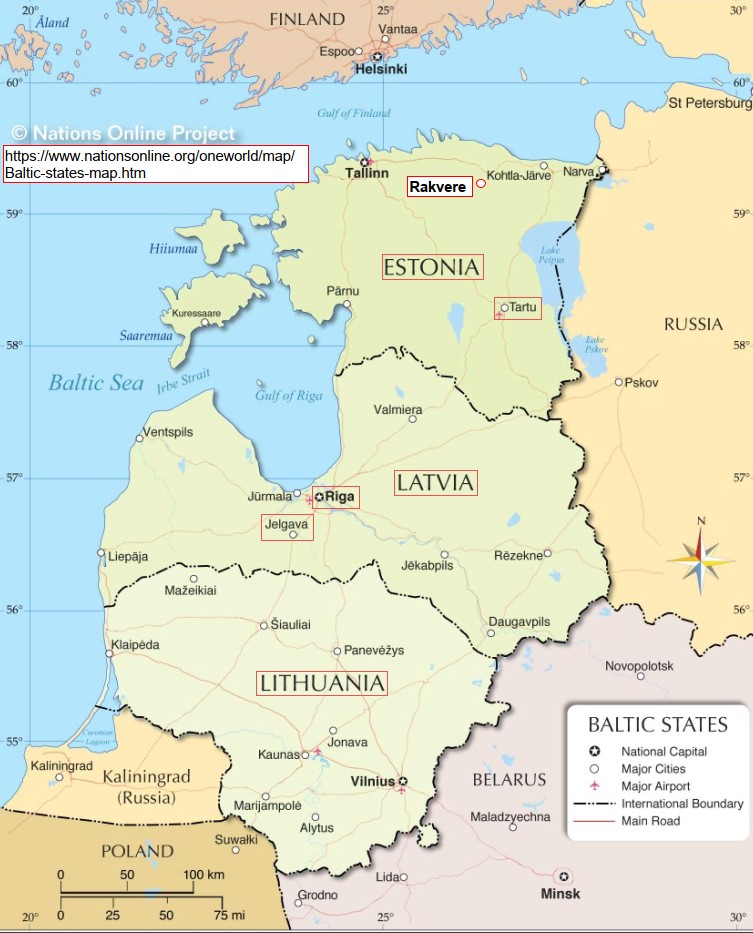
Baltic Countries: Estonia, Latvia, Lithuania (image: nationsonline.org)

“The martyrdom of the Baltic Christians is portrayed in a deeply moving manner by an eyewitness who himself was tried and tested in martyrdom. A warning sign for us Germans! [And us Americans!] A gem of rare value in form and content”, 

is how the publisher characterizes this booklet. In a review we read: 

“We have martyrs again in the midst of the old ‘Christianity’, Evangelical-Lutheran martyrs, in the 20th century. This realization awakens Psalms of praise in our hearts when we read Shabert's writing, in the midst of the shivering over the nameless sufferings that have befallen our brothers and sisters on the Baltic Sea shore. Despite the great apostasy of Western Christianity, there is still a Christianity that stands not in words but in power, and our beloved Lutheran Church has been honored to reveal such power.” 

In short, powerful lines the author describes how Lutheranism gained a firm foothold in the Baltic countries a few years after the posting of the theses [Luther’s 95 Theses], first among the Germans, but then also among the Latvians and Estonians. In one generation the arch-Catholic country had become Evangelical. But when it became a robbery by the Poles, the first persecution by the Jesuits began, who sought to eradicate, by root and branch, the “cursed Lutheran heresy” from the old “Land of Mary”. A few congregations fell away, but most of them declared with H. Samson: “We want to stay with the pure word of God as long as there is still a breath in us.”  

Gustavus Adolphus

Gustavus Adolphus [of Sweden] brought freedom to the Baltics in 1620, but in 1721 they came under the forced rule of the Russians. Apostasy from the Russian state church and the admission of apostates to the Lutheran Church were punished as criminal offenses, while “orthodox” propaganda among the Lutherans was zealously pursued and promoted by the state. But woe to the Lutheran pastors who welcomed back repentant apostate Lutherans! Schabert writes: 

Whether absolutist tsarism, whether constitutional monarchy, whether democratic-socialist republic, whether Bolshevism reigns, however different they find, they find one thing in the pursuit of the Gospel.” [now American democracy? 

Konstantin Pobedonostsev, advisor to 3 Russian tsars

Under [Konstantin] Pobedonostsev the persecution of tsarism reached its peak. England also had its hand in this. Schabert remarks: 

“It is now clear from the records that the leading [Russian] newspaper Novoye Vremya worked with English money, envying everything German and Evangelical. The slanders had their effect. This was clearly shown at the outbreak of the world war.” 

But the persecutions under the tsars had not harmed the Lutheran Church. Before the war, Livonia had 144, Courland 103 [western Latvia], Estonia 56 parishes with about 300 pastors and 2,000,000 Evangelicals. The most serious suffering was caused by the revolution in 1917, when the rabble reigned instead of the tsar. Of the 18 pastors sent to Siberia, none was allowed to return to their congregations. The Bolsheviks deported 400 Germans, Latvians (page 210) and Estonians to Siberia as hostages

= = = = = = = = = = = =  Continued in Part 2  = = = = = = = = = = 

      This booklet was reprinted numerous times and, commenting on the 1930 reprint, the journal Archiv für Religionspsychologie / Archive for the Psychology of Religion, Vol. 5 (1930), p. 363, said (translated)
"The booklet describes a memorable period of Baltic church history (1919), based on the strong religious life of the persecution period. It has long since found its way to the people."
Even scholars from this journal of the "psychology of religion" had to admit that Schabert's writings were "memorable" and aided a "strong religious life of the persecution period".  They even had to admit that "the people" had procured such a book, even if their review was only a few short lines.  Surely "the people" did not procure such a book on a recommendation by these scholars.  Fortunately Friedrich Bente provided a much richer book review and quoted Schabert at length.
= = = = =  Table of Contents  = = = = =
Part 1 – This blog post: Introduction, Bente's book review
Part 2 – “Red flag—bloody rule”; Greatest WW I Heroes (conclusion to Bente's review)
Part 3 – Martyrdom of the Baltic Church— "He preached until the bullet closed his mouth"
Part 4 – Schabert's 1930 book of 51 Martyrs’ Portraits: “Take aim, the angels are waiting for me”
Part 5 – Too terrible to think about? Schabert's 1930 Baltic Martyrs' Book
Part 6 – Orthodox or "Orthodox"? Pieper on Schabert misstatement; Lutheran Church not a "denomination"

Wednesday, August 14, 2019

Missourian! #2: Lutheran Martyrs; deny Luther?; ceased to be dirty word? or not?

      This continues from Part 1 (Table of Contents here), a series presenting Walther's Foreword to the 1872 Der Lutheraner on the term “Missourian”. — This portion begins with those who died as Lutherans, also in America, but ends with how the label of "Lutheran" lost its dirty word connotation.
= = = = = = = = = = = = = = = = = = = = = = = = =
Taken from Der Lutherner v. 29 (1872), p. 1-29-10. Translation by BackToLuther using DeepL, Google Translate, Microsoft, Yandex. Underlining follows Walther’s emphasis. All hyperlinkshighlighting, red text, text in square brackets [ ] are mine.

Foreword (“Vorwort”)
Twenty-ninth year of Der Lutheraner.
[by C.F.W. Walther, part 2 of 5]

As often as the Papists had murdered a witness of the truth in and after Luther's time, in Germany, France, England, Spain, etc., they always thought they had justified themselves sufficiently and could boast of their bloody deed if they could only say [page 2, col. 1] that the one executed was a Lutheran. Even the Calvinists were often persecuted as “Lutherans” at that time. This has even happened in America. In the time of the persecution of the Calvinists in France in the second half of the 16th century many French Calvinists emigrated to America and founded a settlement among other things on the coast north of Florida. This aroused the jealousy of the King of Spain, the fanatical papist Philip II. The same sent therefore (in the year 1565) a squadron of 11 ships, manned with 2600 soldiers, to the North American coast with the order to destroy the newly developed settlement. This order was executed on time. Whoever fell into the hands of the papist Spaniards had to suffer the criminal's death. Many were tied to the trees of the nearby forest and the headline was attached:These were not hanged as French, but as Lutherans”. By this they thought that they had sufficiently justified their murder, for a Lutheran and a man worthy of the most martyr's death were regarded by the Papists as synonymous.*) [ref. blog posts here and here]
—————————
*) Two years later, however, the French invaded the forts erected by the murderous Spaniards in the area of the destroyed French settlement in order to avenge that infamous act, and now also attached a headline to these Spaniards, but with the following: “These were not hanged as Spaniards and Catholics, but as traitors, thieves and murderers.”
—————————
But since the enemies have stubbornly persisted in calling all those who profess with Luther the old Christian apostolic faith Lutherans, so finally all confessors of this faith have had to put up with this name. Yes, in the end it has come so far that the one who did not want to admit to being a Lutheran, although he carried the ancient Christian apostolic faith in his heart, by his denial of being a Lutheran, would have denied the true faith. Luther therefore wrote already in 1522: 

“Finally, I see that I must add a good word of admonition to those whom Satan has now begun to persecute. For there are some among them who think that when they are attacked they can escape the danger by saying: I do not hold with Luther or with anyone else, but only with the holy gospel and the holy church, or with the Roman church. For saying so they think they will be left in peace. Yet in their hearts they regard my teaching as the teaching of the gospel and stand by it. In reality this kind of statement does not help them, and it is in effect a denial of Christ. Therefore, I beg such people to be very careful.
True, by any consideration of body or soul you should never say: I am Lutheran, or Papist. For neither of them died for you, or is your master. Christ alone died for you, he alone is your master, and you should confess yourself a Christian. But if you are convinced that Luther’s teaching is in accord with the gospel and that the pope’s is not, then you should not discard Luther so completely, lest with him you discard also his teaching, which you nevertheless recognize as Christ’s teaching. You should rather say: Whether Luther is a rascal or a saint I do not care; his teaching is not his, but Christ’s.
For you will observe that the tyrants are not out merely to destroy Luther, but to wipe out the teaching. It is on account of the teaching that they attack you and ask you whether you are Lutheran. Here you must be sure not to speak with slippery or evasive words but frankly to confess Christ, no matter who did the preaching—Luther, or Tom, Dick, or Harry. The person you can forget; but the [page 2, col. 2] teaching you must confess. Paul also writes thus to Timothy in 2 Tim. 1:8: ‘Do not be ashamed then of testifying to our Lord, nor of me, a prisoner for his sake.’ If it had been enough here for Timothy to confess the gospel, Paul would not have commanded him not to be ashamed also of Paul—not of Paul as a person but of Paul as a prisoner for the sake of the gospel. Now if Timothy had said, I do not hold with Paul or with Peter, but with Christ, when he knew that Peter and Paul were teaching Christ, then he would actually thereby have denied Christ himself. For Christ says in Matt. 10 [Matt. 10:40] concerning those who preach him: ‘He who receives you receives me, and he who rejects you rejects me.’ Why this? Because holding thus with his messengers, those who bring his word, is the same as holding with Christ himself and with his word..” (see Luther's writing: “Receiving Both Kinds in the Sacrament”. XX, 136. f.) [St. L XX, p 90-92, § 76-78; Am. Ed. 36, p 265-266] 
Hence Margrave Georg of Brandenburg, the well-known intrepid confessor of the truth, answered at the Diet of Augsburg when the name Lutheran was used to insult him, thus: “I am not baptized in Dr. Luther; he is not my God and Saviour; I do not believe in him and do not become saved by him; and therefore in such a sense I am not Lutheran. But when I am asked whether I confess with my heart and mouth the teaching that God has given me again through his healing instrument, Dr. Luther, I have no hesitation or shyness in calling myself Lutheran; and in this sense I am and remain a Lutheran for the rest of my life.

But what happened? In the course of time, the name “Lutheran” has finally almost completely ceased to be a dirty word; on the contrary, it has often become an honorary name; as Luther had already predicted. He wrote in the already mentioned letter of consolation to the Miltenbergers: “Although I dislike very much that doctrine and people have to suffer to be called Lutheran and thus see God’s word profaned with my name, still they will have to let Luther, as well as Lutheran doctrine and people, alone and [let them] be held in esteem. On the other hand, they and their doctrine will perish and come to shame, even to the dismay of all the world and the vexation of all devils.…  We know whose word it is that we are preaching. They will not deprive us all of it. That is my prophecy, which will not fail [to come true]. May God have pity on them.” (V, 1858. f.) [St. L. 1283, § 15; Am. Ed. 43, p. 112]  But what will be the consequence of the fact that the name Lutheran has changed from an insulting name into an honorary name? This: that the enemies of the Lutheran doctrine alone want to be the proper Lutherans, but that those who really are, now by new party names, e.g., Old Lutherans, Missourians, and the like, suspect and seek to brand as a newly emerged sects.
Be it then granted to us in the next issue to pronounce on the new name “Missouri, Missourian Doctrine” which has been pinned on us and our doctrine by the enemies.
(to be continued.)
= = = = = = = = = = = = continued in Part 3 = = = = = = = = = = = = =

      As I read Walther's statement that “the name ‘Lutheran’… ceased to be a dirty word”, I was reminded of how the great spokesman for "Science" in the 19th and 20th centuries, Andrew Dickson White of Cornell University, called Lutheranism
“…that branch of Protestantism which claims special enlightenment”.
White, in a perverse way, grants the Lutheran Church a sort of respectability.  But in the 20th century, in an "Evangelical" America, Franz Pieper, in an essay in Lehre und Wehre in 1925, said:

According to [William] Shedd there are only “two great systems of theology which divide evangelical Christendom, Calvinism and Arminianism”. The Lutheran Church, which in its confession rejects both Calvinism and Arminianism, is denied the right to exist. …Princetonian Charles Hodge, joins Shedd in his judgment. Hodge declares the doctrinal position of the Lutheran Church “illogical” and untenable.
If today one announces to another of the American Reformed persuasion, whether that person is Presbyterian or Baptist or Pentecostal or "community" or whatever, that you are a Lutheran, you will typically get a response similar to those of Shedd and Hodge.  — Today, the pope "stoops" so low to appear to be in agreement with "Lutheranism"… or is it the other way around? And, of course, Arthur Carl Piepkorn said that "Lutheranism" held only a third rank in today's religious scene.  But it is all a sham.  Of course the Pope knows, as well as the rest of the world, that modern so-called "Lutheranism" has long ago left the true Lutheran faith.  But I digress.  — In the next Part 3

Monday, May 6, 2019

Florida martyrs: Piepkorn's ironic 1940 tribute… to Lutherans? "Religious liberty"? (Part 1 of 2)

      While reviewing old issues of Theo. Graebner's The Lutheran Witness magazine, I stumbled onto a striking story that he published from a pastor who would later become one of the chief spokesmen for the "majority faculty" of Concordia Seminary – Arthur Carl Piepkorn.  The striking part for me was the comparison between the subject of this "Memorial" for the American "Lutheran Martyrs" and Piepkorn's later statements as professor extraordinaire of Concordia: "Lutheran only third" and "annual ambivalence" toward Reformation Day, etc. Piepkorn did not speak this way in his 1940 article.  Was Piepkorn harboring even at this early date a theology in his professional career that would explode into his essay "What Does Inerrancy Mean?".  We shall consider this later. —  But why were these Frenchmen put to death?  Who killed them?
      Before we get to the definitive answers to these questions, let us hear Piepkorn's introductory remarks. The following reproduces the original article. All highlighting, boldinghyperlinks, images and notes in [ ] square brackets were added by BackToLuther:
= = = = = = = = =  Part 1 of 2  = = = = = = = = =

274 Vol. LIX, No. 16 (August 6, 1940) THE LUTHERAN WITNESS
A Memorial to the First American Martyrs
By A. C. PIEPKORN, Cleveland, O.
The 375th anniversary of the massacre of America’s first victims of religious intolerance, the Lutheran [1] martyrs of Florida, was observed in Faith Church, Cleveland, O. [2], on the Sixth Sunday after Trinity, June 30, with the unveiling of a stone from the site of their martyrdom which had been let into the south wall of the Church. An inscription over the stone reads:
“For the perpetual remembrance of the Lutheran Martyrs of Florida, Blessed Jean Ribault and his Companions, slain for their Faith in the Year of Our Lord 1565, two hundred of them on Michaelmas and another seventy-five a fortnight later on October 12, this stone from the site of their Martyrdom near St. Augustine has been dedicated to the Glory of God and the Ideal of Religious Liberty.”


The stone is a gift to the parish from Dr. Carl Johannes Sodergren of Minneapolis [3]. The date of the unveiling was fixed for June 30 because of its proximity both to the 410th anniversary of the presentation of the Augsburg Confession on June 25, 1530, and to Independence Day.
A message from the French Embassy in Washington conveyed the greetings of the French ambassador, the Count de Saint-Quentin, [4] to the congregation. It read in part:
“In these troubled times, when the traditional values of our Western Christian civilization are universally threatened, it is wise that such ceremonies should be held to remind us that all liberties were won and preserved at the cost of great sacrifices.
“I am therefore happy to send to you and to all the members of your congregation my heartfelt appreciation for the spirit which prompted your splendid initiative. May America of today and tomorrow remember ‘Blessed Jean Ribault and his Companions’ as the symbol of religious liberty in this country!”
The unveiling was followed by the regular celebration of Holy Communion. For the introit that [was] appointed by the Common Service for Martyrs’ Days was used, “I know whom I have believed.” The following special collect was employed:
“O God, by whose grace ‘Blessed Jean Ribault and his Companions’ were enabled to glorify Thee by their Martyrdom, grant that we who rejoice in their triumph may likewise be confirmed in the constancy of our confession; through Jesus Christ, Thy Son, our Lord, who liveth and reigneth with Thee in the unity of the Holy Ghost, ever, one God, world without end. R. Amen.
Rev. 6:9-11 was read as the proper Epistle and Luke 12:1-8 as the holy Gospel. A stanza specially written for the occasion was intercalated before the closing stanza of Bishop Reginald Heber’s hymn “The Son of God Goes Forth to War” (tune: All Saints) [5]:
A loyal troop, whose name we share,
Whose blood baptized the sand,
The first the martyr’s guerdon fair
To win in this new land.
Betrayed, defenseless, marked for death,
They faced it with disdain
And praised God with their final breath.
Who follows in their train?
= = = = = = = = = = continued in Part 2 = = = = = = = = = =  
Notes:
  1. Piepkorn calls the martyrs "Lutherans" but this label was not strictly true as will be shown in the next Part 2.
  2. Piepkorn's congregation "Faith Church, Cleveland, Ohio" was not discoverable in my web searching.  Perhaps this Cleveland congregation is now defunct? If so, what happened to the memorial stone that was "let into the south wall of the Church"?
  3. Dr. Södergren, the donor of the memorial stone, was not a member of Piepkorn's congregation.  He was Piepkorn's father-in-law (per The Church: Selected Writings of Arthur Carl Piepkorn, p. 300) and was a minister in the Augustana Synod, an opposing Synod to the old Missouri Synod and the Synodical Confernce in 1872. Södergren's synod was a vehement opponent of the faithful Norwegian Lutherans who adhered to Walther's teaching of the pure Lutheran Doctrine of Justification.  Walther stood behind those Norwegians and against the erring Swedish Augustana Synod Lutherans.  Was Piepkorn not aware of Dr. Södergren's error on Justification when he married into a family of the Augustana Synod? Was he even exhibiting his (and editor Th. Graebner's) unionism even in this ceremony?
  4. There is some irony in having the French ambassador give the greeting for “religious liberty” to American Lutherans since his country's history of Roman Catholic antagonism toward "Protestantism" was well attested in its own history, in the French Wars of Religion.  One wonders if it was Södergren or Piepkorn who sought the French ambassador's greeting for this ceremony.
  5. The hymn Piepkorn chose was not one included in the hymnal current in 1940 in the Missouri Synod, the Evangelical Lutheran Hymn-Book (see here).  But it was included in the later 1941 The Lutheran Hymnal, or TLH #452 text, music.  Was Piepkorn perhaps instrumental in getting this hymn included in the 1941 TLH?
There is more to this article by Piepkorn, and much more to comment on, in the next Part 2