Search This Blog

Showing posts with label Synodical Conference. Show all posts

Thursday, February 20, 2025

JPK1: Koehler not true exegete, not a Stoeckhardt; protest to WELS; Pless counters Prange

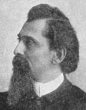
Prof. John Philipp Koehler (Wisconsin Synod until deposed 1929)
Prof. J. P. Koehler
Better than Stoeckhardt?
Why deposed?
 
Past. Peter M. Prange:
Pastor Peter Prange
Out with Old Syn. Conf.
In with New "Exegesis"
    This blog post was provoked during my research of George Stoeckhardt and his Exegetical Theology. It is a protest to today's Wisconsin Synod (WELS).  I am lodging a protest against your Pastor Peter M. Prange who is a member of the WELS Commission on Inter-Church Relations (CICR) and was also a member of the committee that produced the Christian Worship: Supplement  (according to current info here.) 
      What is my protest?  It is the same as the formal protest reportedly issued by the St. Louis faculty and submitted by Prof. George Stoeckhardt against the new theology promoted by your Prof. John Philipp Koehler
The History of the Wisconsin Synod, by J. P. Koehler
This formal St. Louis protest was reported by Koehler himself in his History of the Wisconsin Synod (HWS; WHIInternet Archive 2024p. 212. I have blogged about Koehler in 2017, and this post expands on that by bringing it into today's Wisconsin Synod.
      Most WELS church historians, and many outside the WELS today, make extensive use of Koehler's HWS book. (It should be noted that there is an extensive "Introduction" by Koehler follower Prof. Leigh Jordahl of Gettysburg Lutheran Theological Seminary).  It has been called "the standard reference for the early history of the Wisconsin Synod" by the WELS Historical Institute.  It should be mentioned that it was not made available from WELS publisher NPH, but only through those who followed Koehler and separated from the WELS, the "Protes'tant Conference", which may no longer have congregations. Its periodical "Faith-Life" appears be be discontinued.  While the historical works of WELS Profs. Mark BraunArmin Schuetze and E. C. Friedrich make substantial use of HWS, they offer practically no correction to Koehler's weaknesses and errors (he was deposed from his professorship in 1929).  This leads their readers to sympathize with Koehler, and wonder: "Why was Koehler deposed from his post as professor?"
      Again, Koehler was the leader of this "new exegesis" movement. What he came to promote was actually an attack on much of what the Missouri Synod and the Synodical Conference stood for, an objective faith.  The field of "Exegesis", according to Koehler, was supposed to breathe a new vigor into the life of a supposed "spiritless" orthodoxy, a "dead formalism" as one follower called it.  The notion was raised that the process of "exegesis" was sorely lacking, that new efforts were needed to understand the Bible, as if the Church was adrift in uncertainty.  Much has been written about Koehler and why he was deposed as professor by the Wisconsin Synod – search "Koehler" at essays.wls.edu:8080/ (Edward Fredrich's essay is perhaps the best.).  But the notion of the primacy of "exegesis" still lives on among many Lutherans.  Although Koehler claimed some support from George Stoeckhardt (HWSp. 212), yet he admits that it was Stoeckhardt who wrote the letters of formal protest (p. 212) against his "exegetical clarification", against his misuse of the term "analogy of faith".  Dear God!  as I read the works of the later Koehler and the followers of his weaknesses and errors, I needed an antidote and I found it in Franz Pieper's Christian Dogmatics books.  The Christian religion is not about always questioning what we believe (faith) but about being absolutely certain of it, about sustaining and defending it.  And especially those who followed after Koehler, the so-called Protes'tant Conference, show how dangerous a little leaven can leaventh the whole lump. (Gal. 5:9) It is a shame the that Wisconsin Synod's history and its so-called "Wauwatosa Theology" is so tied up with the book written by deposed Prof. J. Ph. Koehler!

A Tale of Two Synods, and A Fiction
http://www.kenoshanews.com/faith/ministry-is-in-his-dna/article_94bf1750-0eec-5a80-8e87-f70d9ed83c9f.html
Past. Peter M. Prange:
Stöckhardt speaks
“at the mind”,
not the heart?
      In case anyone doubts that some (most WELS theologians and teachers?) hold that J.P. Koehler taught a superior exegetical theology than Stoeckhardt, Pastor Peter M. Prange (now of Kenosha Lutheran Academy-Kenosha) said the following in his essay J.P. Koehler, The Exegetical Task at the 2006 Bethany Reformation Lectures (BLTS/LSQ 47-1, p. 45):
“The reader will instantly notice a marked difference [between Koehler and Stoeckhardt]. Stöckhardt has copious quotations from other exegetes; Koehler has practically none. Stöckhardt spends much more time on the fine points of grammar and syntax; Koehler deals much more with the interrelatedness of Paul’s thought and the application of its saving truths to our lives as Christians. Stöckhardt reads as if he’s delivering a lecture aimed principally at the mind; Koehler sounds like he’s delivering a sermon aimed principally at the heart.”
So, according to Pastor Prange, to get at the meaning of the Holy Spirit by His words, by "merely setting forth what is expressed in Scripture", is not aimed at man's heart? This assertion that Stoeckhardt's writing is directed "principally at the mind" and not at the heart is fiction. Stoeckhardt lets the Holy Spirit, through His words, "aim at the heart". But I will grant to Pastor Prange that Koehler "deals much more with … the application of its saving truths to our lives as Christians".  The actual case is that Koehler does not lay the foundation for the assurance, the absolute certainty of salvation for the Christian, as does… George Stoeckhardt. Prange (in his 2006 essay) and Koehler promote "A Call to Reinvigorate the Science of Biblical Hermeneutics", a new "exegesis". I am unable to distinguish their distinctively new "exegesis", from eisegesis ("interpreting text in such a way as to introduce one's own presuppositions, agendas or biases"), or from the apostasy of Germany's renowned theologians.  It was exactly against this false notion of Prange and Koehler that I had to fight for my soul's salvation against Larry Darby and his attack on UOJ. — (Note: The Steadfast Press book Grace upon Grace of Stoeckhardt sermons recently published is at an unbelievably low price of $12.50 –paperback.)
 
Prof. Joel L. Pless:
“Stöckhardt was
confessional,
orthodox,
thoroughly Lutheran”

A Stark Contrast...
      To counter Prange's attack on Stoeckhardt, in the same 2006 lectures, WELS Prof. Joel L. Pless said of Stoeckhardt's exegesis:
  • p. 13: Stoeckhardt’s view and understanding of the Holy Scriptures can be readily understood to be orthodox Lutheran ... Stoeckhardt’s view of Scripture is readily recognizable as confessional and orthodox Lutheran.
  • p. 15: Stoeckhardt was truly a master exegete of both Testaments. ... his hermeneutical principles can be legitimately described as thoroughly Lutheran.
  • p. 20: The main focus of his exegetical method is commenting on the doctrinal content of the verses, with often brief references to what other commentators have remarked on the meaning of the verse being studied, followed by Stoeckhardt’s often polemical rejoinders. Stoeckhardt then often supplied a brief application of the verse at hand.
  • p. 22: Stoeckhardt’s method was continually guided by a burning desire to make the text of Scripture plain.
Prof. Pless wonderfully counters Prange.  These statements by Prof. Pless on Stoeckhardt's exegesis is in stark contrast to that of Pastor Prange.  The contrast is no small matter.  If Pless is correct that Stoeckhardt's exegesis was "thoroughly", "confessional and orthodox" Lutheran, then Stoeckhardt taught the absolute certainty of salvation, no doubts whatsoever.  But if Koehler's exegesis truly shows "a marked difference", then just what did Koehler teach? (Hint: "the application to our lives as Christians, i.e. "Faith-Life")  —
      And What Would Luther Say? about the emphasis on the application of the Bible to "our lives as Christians" à la Koehler, Prange, "Protes'tant Conference", etc.?  Martin Luther said:
“Doctrine is heaven, life is earth”
            Objective        <—>     Subjective
             Stoeckhardt      <—>     J. P. Koehler
So much for the fiction of Koehler's "exegesis" over Stoeckhardt!   Nonsense!  I reject all the teachings of this "new exegesis" for it would mix its aberrations with the truth, thereby confusing the truth!  But, Dear God!, "Doctrine is Heaven, Life is Earth".  I am absolutely certain of my salvation, in part because Luther, Walther, Pieper, and Stoeckhardt and others in the Old Synodical Conference (including the Wisconsin Synod!) held my nose to the very words of Holy Scripture (objective!) and said: Believe this!  My life is nothing apart from believing 2 Cor. 5:19 — or the Lutheran Doctrine of Justification! – I will take from the Old Synodical Conference what Koehler claims for it: the "dogmatism", "rusty thinking", "closed minds to new insights", "no understanding of exegesis", no "clear conception of how to handle language"! (HWS pp. 212-213).
      Others are being brought to testify against Pastor Peter M. Prange and his dream of Koehler's exegetical supremacy. The first will be Martin Luther, to refute an exegesis of John Philipp Koehler on Koehler's primary Bible verse, Romans 12:6, regarding the "Analogy of Faith". That will come in the next Part JPK2
- - - - - - - - - - - -  Table of Contents  - - - - - - - - - - - - 
Koehler 1: Doctrine & Life — Faith & Life (Luther); “coma” of Missourians (2017)
Part JPK1: Koehler not true exegete, not a Stoeckhardt; protest to WELS; 
Part JPK2: Luther vs. J. P. Koehler on Rom. 12:6, "analogy of faith"
Part JPK3: Pieper's "Use and Abuse of Analogy of Faith" (LuW essay, p. 321)
Part JPK4: John Gerhard On Interpreting (GDrv) §§ 75-78 , § 62, p. 76-77, 30. (Note: § 78 is directly against Prof. Joel Biermann. This series will be followed by one on a lecture by Prof. Biermann starting with JB01.)
Part JPK5: Koehler–dangerous path; Stöckhardt–”old paths”

Wednesday, November 27, 2019

UOJ, Ohio's great error &… The Lutheran Witness? Part 1 of 2

The Lutheran Witness, March 21, 1890      Universal, Objective Justification (UOJ) continues to be ignored or misunderstood in today's Lutheranism.  But it was the core teaching of not only Walther, but also the Synodical Conference from its beginning.  One of my more popular blogs presented Pieper's sharp warning in June 1889 against the Ohio Synod and their fall on this foundational Christian doctrine of Justification.  But less than a year later, in March 1890, another sharp warning appeared against the changing Ohio Synod and its Lutheran Standard magazine, this time in the English language The Lutheran Witness. The following is the summary section (Google Books, p. 155-156) of one of the finest essays that The Lutheran Witness magazine has ever produced, apart from translations of Walther's German language writings: 
- - - - - - - -  (Summary by author "G. A. M.")  - - - - - - - - - 

Such is the article, a truly wonderful document, in our opinion on the relation of faith towards universal justification. This article voiced the sentiments of the whole Synodical Conference in 1872. In this article our readers are informed: “The sectarians do not simply regard faith as a hand, but as a condition which man must fulfill before he can go to heaven; whereas faith is nothing but an empty hand which God must fill. If we had nothing else but faith, and not Christ (which of course is impossible), we would be damned with all our faith; for not the act of faith, but Christ whom we thereby embrace, makes us pleasing to God. And this is what all fanatics <page 156> overlook. They wish to secure some place for the activity of man, and therefore they now lodge it in man’s faith, now in his penitence, again in his conversion, and yet again in his sanctification,” etc.
But in 1890 the Standard also writes: “Faith is a necessary condition of man’s justification.” In 1872 the Standard in agreement with Synodical Conference stated: “The sectarians regard faith as a condition which man must fulfill before he can go to heaven;” in 1890 the same Standard writes: “Faith is a necessary condition of man’s justification.” In 1872 faith was only an empty hand and no condition; in 1890 faith has become a necessary condition and is no longer an empty hand only. The Standard of 1890 has killed the Standard of 1872. According to its own verdict Ohio has taken its place among sectarians in wishing and working “to secure some place for the activity of man” in conversion, justification and election. Yet, in consummate hypocrisy, the renegades at Columbus charge Missouri with having falsified even the doctrine of justification. The sad truth is, Ohio has changed both its doctrine and morals. G. A. M.
- - - - - - - - - - - - - - - - - - - 

Along with the clarion call against the Ohio Synod that this summary displayed, it was also a surprise for me to see it published in English, for it seemed that it was largely the German speaking Missouri theologians who were strong on the Doctrine of Justification.  Unfortunately today's LC-MS theologians, who want to label Old Missouri as "LC-MS", do not teach like the Old (German) Missouri Synod. So why do they promote themselves as Old Missouri?…  Good question.
      Now I will reproduce the full 2-part essay (March 7, March 21) for the full background and narrative, even though it is freely available in Google Books.  In the next Part 2, I present my conclusion on this pivotal doctrine.
= = = = = = = = = = = = = = =
Polemical.
Ohio in 1872 and in 1890 on Faith and Conversion.
1. ON FAITH.
“Meeting of the Synodical Conference (1872).”
Christ is the lamb of God who taketh away the sins of the world.” He was the representative of the human race in bearing all men's iniquities, suffering and dying for our sins. When he arose again from the dead, He was pronounced acquitted. This acquittal was again in our stead. In Him all men are absolved. “He was delivered for our offenses and was raised again for our justification.” He died and rose again not only for an elect few, but for all men, and the benefits of the redemption are secured to all. “As by the offense of one judgment came upon all men to condemnation, even so by the righteousness of one the free gift came upon all men unto justification of life.” There is a general justification of the race in Christ as the substitute for all men. The benefits thus secured are brought to men through the means of grace. These are not efficient causes of the blessings bestowed, but channels through which they are conveyed. They bring the gift which is already purchased and secured. Faith is not a condition of the existence of forgiveness for men. It is the means of its appropriation. When absolution is pronounced, it is valid whether men believe it or not. Faith does not make God’s declaration true that our sins are forgiven us. It is made because it is true and faith is to receive it because it is true. Were it not true, unbelief could not be the great sin it is. It is absurd to say that we might believe a thing to be true in order that it may become true and give us comfort. Our comfort might rest upon the truth in itself, which does not become truth by our faith and does not become untruth by our faithlessness. When the truth that our sins are forgiven us in Christ is received we are personally justified by faith and have peace with God through our Lord Jesus Christ. He that believeth not shall be damned, because he rejects the free pardon brought to him through the means of grace. His sin is not that he failed to fulfill conditions under which he might have received forgiveness of sin, but that he has not appropriated the forgiveness offered without money and price.” (L. Standard, Vol. XXX, No. 15, whole No. 820. Aug. 1, 1872, page 116.)
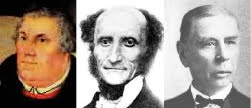
Prof. Matthias Loy, Ohio Synod
Prof. Matthias Loy
Ohio Synod
"Prof. Toy"


This summary of the discussions of this subject was written by the Editor, “Rev. M. Loy,” and is introduced in these words: “To this subject” (of justification) “the greater portion of the time set apart for this meeting of Conference was devoted, not because there was any diversity of opinion upon it among the members, but because of its paramount importance and also because some not connected with the Conference had disputed essential features of the doctrine.” Now in 1890 this same Standard and this same “Loy” writes, “Faith is a necessary condition of justification.” In 1872 faith was not a condition of the existence of forgiveness of sins. In 1890 it has become a <column 2> necessary condition of justification. Now they teach the very reverse of what they taught twenty years ago in the very article of justification. Now they find a merit of man in his faith or apprehension, formerly faith was to them the God-given hand only whereby man grasps the pardon announced in the gospel of justification. This shows that the Standard has become a Sand-ard, and Rev. Loy a Prof. Toy.

[Read the balance of this article in the "Read more »" section below; Conclusion in Part 2]

Thursday, August 11, 2016

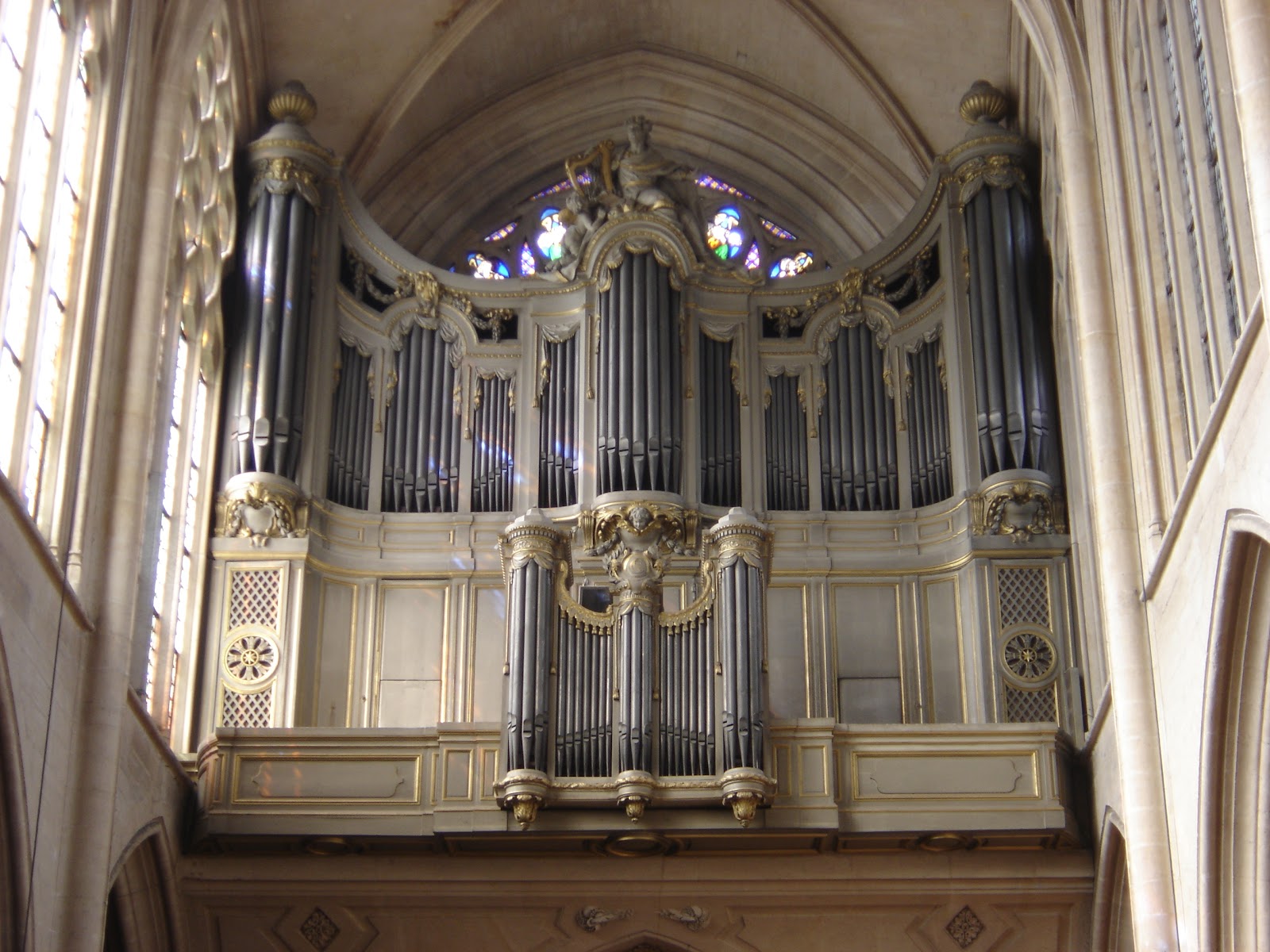
Synodical Conf 1886– Divinity of Scripture: Docetism or Pipe organ?; on Sasse; Copernicanism Part 21

[Last updated: 2024-12-07: updated links to Bad Boll; 2024-11-26: updated link to Kloha book on Sasse, and added link to CPH Accents book; 2024-11-06: updated link to Bodensieck reference; 2024-09-05: organ pipes analogy note added below;2019-12-29: fixed broken links to original SC report; 2019-11-19: added reference to later blog; 2019-08-30 updated info; 2018-04-23 – several added notes at bottom in red.]
      This continues from Part 20, a series on Copernicanism and Geocentricity (see Intro & Contents in Part 1) in response to a letter from a young person ("Josh") who asked if I believed Geocentricity ... and did not ridicule me in his question.
= = = = = = = = = = = = = = = = = = = = =
Dedicated to the honor of the old Synodical Conference.
[2016-09-11 - added note in red at bottom]
      Today, August 11, marks the 130th anniversary of the Synodical Conference meeting in Detroit Michigan, August 11-16, 1886.  A doctrinal report was delivered at that meeting and published in the German language in its Proceedings, pages 5-71 (SCR 1886).  That essay has never been translated into English, as far as I know, and so a reader took up my challenge in an earlier blog post:
“Will some faithful Lutheran translate this full essay today?  It would be a treasure of inestimable value to the Church.” 
The translator who took up this challenge is... Andrew Boomhower.

      Some notes regarding this translation:  (1) the translator used the modern city name of Tartu for the older city name of Dorpat.  Other translations that referred to theologians of this city typically have used the older name of Dorpat;  (2) One of the errors of Germany's theologians relates to what Franz Pieper countered in paragraph 2 of his Brief Statement: "The rule of faith is not the man-made so-called “totality of Scripture” (“Ganzes der Schrift”).";  (3) The translator noted that various passages were more difficult to render than others.  One example of this is:
"Woerterinspiration" ==>> "inspiration of the words"; "Worteinspiration." ==>> "inspiration of the wording"
Elsewhere in the text, when this distinction is not being made, I rendered "Wortinspiration" as "verbal inspiration."
(4) My translation of an excerpt used in an earlier blog post was somewhat incorrect.  It regards a reference to "Luther's school".  I assumed the essay was in some way quoting Luther but it was rather paraphrasing the erring teachers. Although my translation is technically incorrect, yet it did not do violence to the intended meaning.  One should compare the passages:
  • Mine: Thus Christians also make it this way, if they let themselves be led into a false school and not in Luther's school.  He says: That one can not so highly credit the Bible as that it can let the sun go down; it speaks in simplicity, as it has then presented the matter.
  • Boomhower's: This is also what the Christians are doing when they can be led into a false school and not into Luther’s. They [erring teachers] say, “one cannot give the Bible much credit for letting the Sun move: they spoke naively in the way the matter was visualized back then.”
      The quality of Boomhower's translation reflects the translator's knowledge of languages in general and it is fortunate to have this kind of quality instead of mine.  Not many people today are translating works of the old Missouri Synod or the Synodical Conference.  The translator has chosen well, a jewel in the crown of the Lutheran Church of America.  And, indeed, it specifically addresses the "hot topics" of... Copernicanism, astronomy, geology, etc.
      The text is fully hyperlinked -- footnotes and almost all the works of the referenced German theologians.  Most of these outside works are even linked to the original page numbers in Google Books and elsewhere.

      I want to repeat my preface given in the German language document (also here):
Although the speaker is identified as Prof. A.L. Gräbner of the Wisconsin Synod, yet just  the presence of C.F.W. Walther gives this essay a very close tie to Walther.  Some sections give quotes directly from Walther's Baieri Compendium book. No essay was ever delivered in Walther’s presence that contains any doctrinal issue against the Bible or the Lutheran Confessions.  And indeed I believe that a large amount of text of this report was actually delivered by Walther in a “discussion” setting of questions and answers  – i.e. page 37, last paragraph  –  “Auf die Frage… wurde geantwortet:”  – – >>  To the question....  was answered:.
==>>  I attribute this essay largely to Walther’s authority, but it remains official doctrine of the old Synodical Conference.
[2019-11-19: see later blog of the testimony of Ludwig Fuerbringer on Walther's "heavily involved" participation at this convention's essay.]
      Now I present an original translation of the 1886 Synodical Conference Doctrinal Proceedings of 1886 —  by Mr. Andrew Boomhower:
Theses on the Divinity of Holy Scripture
Speaker: Prof. A.L. Gräbner (Wisconsin Synod)
with C.F.W. Walther in attendance (Missouri Synod)

(translated from the original German by Andrew Boomhower)

[NOTE! 2017-10-04: This Google Doc suddenly quit "publishing to the web" for some technical reason contained within the formatting of this particular document.  After some trials, I seem to have gotten it to "publish" again from a different location.]


A downloadable paginated PDF version (54 pages) of this essay is available here:
Synodical Conf 1886- Divinity of Scripture (Boomhower 2016-08-01 final).pdf
(direct access Google Doc >> here <<)
[2020-04-03: document available on Archive.org]


     Franz Pieper referred to this doctrinal essay at least 2 times in his Christian Dogmatics textbooks: Volume 1: page 93, footnote 131; page 272, footnote 84.  On page 271-272, Pieper states:


Of the more widely known theologians in Germany it is only Philippi who in the last years of his life returned to the Scripture doctrine of in­spiration.84
84 … A complete presentation and review of the doctrine of inspiration held by modern theologians is found in the 11th report of the Synodical Conference, 1886.

So the future pastors of the old (German) Missouri Synod being trained in America under Prof. Franz Pieper were directed to this essay to get updated on the history of the doctrine of Inspiration. For the first time this essay is now available in the English language. – Unfortunately modern theologians continue their destructive work today, just as in 1886 and in 1931, Pieper's final year. But today, it seems the struggle for the Divinity of Holy Scripture is within the LCMS itself. No longer can the world look to today's St. Louis (or Fort Wayne) for the "orthodox" teaching on Inspiration. One is better served by the true teachers of the Lutheran Church. And this essay is a watering hole for those feeling parched when attempting to find faithful writings.
      There are many quotes that I could extract from this essay, but I will highlight the following extended one from pages 10-11 concerning modern theologians:
These theologians are like the enthusiasts, who cry, “the Spirit! The Spirit must teach us the truth!” Likewise, the New Theologians cry, “No, Christ is the foundation of the Faith, not Scripture!” However, with that, they completely contradict Eph. 2, [Eph. 2:20] “built upon the foundation of the apostles and prophets,” that is, upon the witness, upon the writings of the Apostles and Prophets. To this, they come right back and say, “he who teaches this misleads the youth; that is a foundation of sand. Oh, the evil Foe is very serious about robbing us of the foundation of our faith.” It really does sound nice when they say, “No! Christ is the foundation of the Christian Faith!” But this is nothing more than a superb illusion. ... 
Illusion indeed! That is "docetism" – a word meaning to seem, or an apparition, or a phantom. This term is normally used by true Christian teaching (i.e. the Nicene Creed) to combat errorists. The false teachers attempted to use this same terminology against orthodox teaching. — Herman Sasse also used this false charge against the true teaching, as Robert Preus pointed out (The Inspiration of Scripture, pg 69: "He finds in the monergism of the dogmaticians a Monophysite-Docetic concept of Scripture which destroyed the human character of the Bible."). President Matthew Harrison even admits (Letters to Lutheran Pastors, Vol. 1. p. lxxxiv) that Sasse was wrong, his attack was "disturbing", and he "never was comfortable with the Missouri Synod's doctrine on this matter nor with the doctrine of the orthodox fathers. In fact, he remained negatively concerned regarding the Missouri Synod on the doctrina de scriptura up to his last days." (Harrison then goes on to say he believes the readers of Sasse's letters are "in for a treat", and wants them all "growing in certainty of the Gospel"... all this while even he found Sasse's attacks "disturbing".) Prof. Jeffrey Kloha quoted (I believe with approval, page 363 here [2024-11-26: updated link to Internet Archive copy]) Sasse's understanding of inerrancy with his words "This inerrancy, however, does not obviously exclude certain human limitations". (Is it any wonder that Sasse espoused Copernicanism in the 1967 CPH book Accents in Luther's Theology: Essays in Commemoration of the 450th Anniversary of the Reformation, page 84 [Internet Archive; 2024-11-26: added link], – just as today's LCMS/CTCR is doing for the 500th Anniversary?) — But the Synodical Conference-1886 responds to this charge: "This warning against Docetism is a warning against a bogey." And I will turn this misuse of terminology around and use it against these errorists, just like the Synodical Conference did -- for it is "a superb illusion" where their "Christ is the foundation"... a Christ without the Scriptures. But how did Christ teach about Himself on the road to Emmaus to the two travelers?
Luke 24:27 – Beginning at Moses and all the prophets, he expounded unto them in all the scriptures the things concerning himself.
There can be NO separation of Christ from the Holy Scriptures for they are Divinely Inspired! John 1:1,14.
= = = = = = = = = = = = = = = =
==>> To "Josh"
Read how the old Synodical Conference put the Sola Scriptura in practice.  Read about the pipe organ analogy (pg 49, search "pipe" and "organ") and the ridiculousness of saying that a tune is inspired but the notes are not.  Even Andrew Boomhower, the translator, was impressed with this wonderful metaphor. (2024-09-05: the pipe organ analogy also spoken of in Walther's 1868 essay to the Western District, p. 22)

     In the next blog post, I am hopeful to return to Pastor Pasche with Part 19b... [Part 22 here]
- - - - - - - - - - - - - - - -

2016-09-11: see also Pieper's article on Walther's teaching of Inspiraition here; also Manteufel's translation of Walther's lectures of 1885-1886 on Inspiration here.

2016-11-6 [updated 2024-11-06]: the false charge of "docetism" was also made in 1957 by J. Bodensieck, Pres. of Wartburg Seminary (#3), see p. 237 of The Struggle for Lutheran Unity...

2018-02-05: In Walther's book The True Visible Church, Theses XIII-XVIII are on the Inspiration of Scripture, pp. 50-114 (see here); Walther's last Lehre und Wehre Foreword in 1886 also was on Scripture, no English translation... yet. 2019-08-30: see English translation here.

2018-04-23: In F.E. Mayer's 1949 book The Story of Bad Boll – Building Theological Bridges, reporting on the meetings between LC-MS and German theologians after WWII, the Germans firmly denied "verbal inspiration", calling it "docetic". The LC-MS theologians tried to placate the Germans by saying (page 26): [2024-12-07: updated links]
“The doctrine of verbal inspiration is not the basis of our systematic theology and is not the major premise of Christian assurance. … The doctrine of the inspiration of Scripture does not stand in the relationship of a priori, but of a posteriori to our theology. It is not the broad basis upon which the pyramid of dogmatics is built up. It is not the regulative dogma in our system
The above statements were made in the interest of "building theological bridges" across the "unbridgeable chasm", but in reality showed the LC-MS descending into the chasm, a descent that continues today. (see this later blog post for more on Bad Boll.)

Sunday, June 19, 2016

Pastor F. E. Pasche: Prof. J. Schaller's testimony; Copernicanism Part 19a

[2019-05-17: see more references to Engelder below; 2017-02-10: See added note at bottom]
      This continues from Part 18g-2 a series on Copernicanism and Geocentricity (see Intro & Contents in Part 1) in response to a letter from a young person ("Josh") who asked if I believed Geocentricity ... and did not ridicule me in his question.
= = = = = = = = = = = = = = = = = = = = =
Pastor F. E. Pasche
(younger years)

      After completing the blog series on Dr. Carl Schöpffer's last great book against Copernicanism, I want to return again to America, to the spiritual heartland, to Missouri.  And this time I want to reveal more of the pastor that has only been briefly covered in several previous blogs – Pastor Frederick Emil Pasche (1872-1954).  Both Robert Schadewald and Dr. Gerardus Bouw give him some coverage as a prominent proponent against Copernicanism.  
      I have used information from Pasche's books in previous blogs:
  1. Walther's sermon which spoke of the Sun's orbit around the Earth
  2. 1886 Synodical Conference essay against Copernicanism
  3. Lehre und Wehre essay by "W.M." in 1898
  4. Der Lutheraner article in 1878 (by Pastor Köstering)
Robert Schadewald reports the following of Pasche:
Perhaps the most prolific LCMS geocentrist was Frederick E. Pasche (1872–1954).  Pastor Pasche wrote two substantial geocentric books in German—Christliche Weltanschauung.  Kosmogonie und Astronomie (Christian Worldview: Cosmogony and Astronomy) in 1904 and Bibel und Astronomie (Bible and Astronomy) in 1906.  In 1915, Pasche published a 49-page pamphlet entitled Fifty Reasons: Copernicus or the Bible
- - - - - - - - - - - - - - - - - - - - - - - - - - - - - - - - - - 
      To begin my sub-series on Pasche, I want to start out backwards by publishing the Foreword to the last of his publications -- Fifty Reasons: Copernicus or the Bible from 1915.  Why?  Because it shows that Pasche was not unknown in the Synodical Conference in the early Twentieth Century.  And this essay applies to all of Pasche's writings against Copernicanism. 
      The Foreword was written by a notable professor of the old Wisconsin Synod (WELS) Prof. John Schaller, of whom we have heard good things earlier.  It appears to me that Schaller may have been the only teacher in the Synodical Conference, besides Franz Pieper, who actually had anything published against Copernicanism in the 20th century. [NOTE: See added note at bottom ***] As that century proceeded, it is notable that there were progressively fewer publications defending against Copernicanism, except of course by Rev. Wallace McLaughlin.  Because of its forthrightness and importance, I am taking the liberty of publishing this Foreword to the world.  Thankfully, it was written in English and so required no translation work on my part (all highlighting is mine):

Prof. John Schaller
Wisconsin Synod
The author of this booklet has risked a tilt with Science. That is a venturesome undertaking in these days of ours where Science reigns supreme, a veritable goddess before whom millions of faithful worshipers bow their heads in childlike trust. Science has become the masterword to conjure with because it claims to have laid down a firm foundation for a Weltanschauung which happily eliminates all those troublous concepts of sin and guilt, of eternity and a responsibility to an almighty God. Whoever dares to touch this beloved and admired idol with an unfriendly hand, with the nefarious purpose of exhibiting its brazen worthlessness, must expect to be caught up in the vortex of a crushing whirlwind of fanatical vituperation. For Science with its highpriests and devotees is intolerant to the last degree.
But let it be remembered that our author is at odds only with Science; he has no quarrel with science which is content with a lowercase initial. Just plain science is a valuable aid to man since it diligently assembles knowable facts and marshals them into some logical order for purposes of study and application. Its domain is that of observation, and it rests content with recording what it actually sees and hears. It goes no farther beyond the individual perceptions than to express in general, abstract terms a summary of known facts announcing the so-called “laws” which may be deduced from observed occurrences. Plain science is continuously reaching forward into the region of the unknown, seeking to increase the actual store of human knowledge; but as it never pretends to know what is unknown, so does it never attempt to overstep the boundaries which are set between that which is knowable and that which is naturally unknowable. Briefly, just plain science is real knowledge, not fancy.
But Science, the fetish of the modern world, reincarnation of the ancient idol Philosophy, scorns the boundaries which will forever mark the limit of plain science. From some bare foothold in fact, Science vaults into the saddle of that spirited steed Imagination and sets out to uncover the veiled mysteries of the universe. This adventure would be more promising if the steed were of pure pedigree. But no highpriest of Science could ever command the services of an undefiled imagination; the steed is alway a sideling jade, variously afflicted with pantheism, materialism, evolutionism, atheism, or a combination of these ailments. Thus every foray is doomed to failure at the outset. This fact, though sufficiently vexatious in all conscience, would not necessarily discredit those attempts at reaching the unattainable, if it were generally understood that the fanciful flights of Science were meant for pastime only. But it is an unfortunate habit of Science to proclaim as facts the alleged discoveries made in the trackless realms of fancy. Oh yes, Science will always tell us that this and that is an hypothesis; but Scientists and their unthinking followers, quickly losing sight of the difference between the finest hypothesis and the most insignificant fact, will just as surely insist, after a little while, that what entered the world as a guess becomes a fact by many repetitions. To mention but one instance. The hypothesis of evolutionism, having been adopted by Scientists generally, is not only used as a fact, but insisted upon as such, though to this day no investigator has been able to observe a single case of actual evolution. Hence plain science is compelled to record habitual untruthfulness as one of the deplorable characteristics of Science.
While plain science is not, and never can become, dangerous to a Christian believer, Science has been determinedly at work to overthrow the foundations of faith, and has succeeded in deceiving thousands to their eternal detriment. An accomplishment of which Science is especially proud is the successful destruction of faith in the Scriptures as the real revelation of God. Disguised as astronomy and geology, Science has demonstrated triumphantly that the very first chapters of the Bible contain nothing but myths, which are of no greater historical value than the cosmogony of any pagan people. This was the inevitable result of scientific speculation. No mind imbued with the errors of pantheism, deism, or monism, could by any possibility reconstruct the history of creation along the lines laid down in the record of which God is the author. It matters not that all the real facts of astronomy and geology agree very well with the Mosaic presentation and the point of view prevailing in the whole Bible; since Science has decreed that these facts shall be utilized for deductions based upon other points of view, and has declared its deductions to be facts, thousands of deluded sinners have been led to discard as antiquated the entire revelation of God in the Bible, including the Savior and His salvation.
Thus, since Science (not plain science, mind you!) is at war with the fundamental doctrines of Christian faith, it follows that all true Christians must be at war with Science. They cannot sit complacently by while the vain imaginings of the princes of this world are offered as true answers to the most vital questions with which every human being is concerned. It is in this spirit that our author makes his attack upon Science. Sure of his foothold in the inerrant Word of God, he, in particular, aims to show up the fatal weakness of the vaunted deductions of Astronomy (not astronomy, please!). The reader may not agree with the writer in every argument. He may, for instance, admit the possibility that the statements of Scripture referring to the sun as a moving body, were not meant to say that the sun does really move (though such an admission is much like playing with fire!). But he will surely agree that the writer has successfully arraigned Science for untruthfulness in allowing the impression to prevail that its astronomical hypotheses have attained the dignity of facts, whereas they can never be established as such. If it is too much to hope that this brief treatise will actually bring back some erring hearts to certain faith in the Bible, it will surely be welcomed as a fearless witness of the truth by those who, though certain of their footing in Holy Scripture, are yet conscious of the unholy power of Science to corrupt the heart of a believer.
Wauwatosa, Wis., March 27, 1915.
J. Schaller.
======================
      It was most refreshing for me to again run across this writing from the dear Prof. Schaller.  May God bless it to His glory!
      I will comment more on Pasche's booklet 50 Reasons later.  But first I want to cover his earlier books that were published in the German language... in Part 19b.

[2019-05-17: In 1944, Prof. Th. Engelder clearly defended against Copernicanism in his book Scripture Cannot Be Broken, for example p. 89-91:
"All right, they say, let us remain in the domain of common science, physical science, and the Bible is wrong because science teaches that the earth rotates on its axis, etc., and Josh. 10:13 should have stated: “ And the earth stood still.” — Wrong again! Copernicanism indeed teaches that; but everybody except the sciolists knows that the system of Copernicus is based on a — hypothesis. The argument that Scripture is not inspired because of its alleged conflict with some hypothetical assumption has a most flimsy basis. And there is no reason in the world why we should decree that Joshua employed phenomenal and not scientific language."
He also continued his defense on pp. 142-143, 145, 153, 156-159, 161, 215 (also "Kopernicus")
2017-02-10: I have discovered that in 1913, Prof. Th. Engelder defended against Copernicanism in a serialized essay in Lehre und Wehre.  Search for "Kopernikanismus" in Google Books here – pp. 70 and 220 are indicated]