Search This Blog

Showing posts with label Herman Otten. Show all posts

Wednesday, May 1, 2019

Herman Otten † 4/24/19; with Marquart, Scaer 1957, letter to A.O. Fuerbringer defending Inspiration, Inerrancy

      I was saddened to learn of the recent passing of retired pastor Herman Otten, long time editor of his privately published newspaper Christian News.  Although this blog has taken sharp issue with some of his theology, yet his stand for the Bible was refreshing at times.  It was a stand taken since his earlier student days and was scorned by the theologians of the fast-changing LCMS in the 1950s and 1960s.  He was certainly not the chief or only spokesman for the defense of the Scriptures.  There were greater testimonies before him, from Prof. Theodore Engelder, separated teachers Paul Kretzmann, Wallace McLaughlin and Siegbert Becker, the Synodical Conference brethren, Paul Burgdorf's Confessional Lutheran newspaper, etc.  He became largely the "straw man" for many of the liberalizing parties, inside and outside the LC-MS, who did not want to be seen as opposing C.F.W. Walther, the father of the old (German) Missouri Synod, or Franz Pieper, longest serving president of Concordia Seminary.
      In the past 25 years that I have perused the pages of Otten's paper, I do not recall ever seeing that he re-published a noted letter from his student days at Concordia Seminary.  I came across this striking letter, of exactly 62 years ago today (1957), while reviewing the documents from the State of the Church conference of 1960.  What surprised me was the group of signatures under this letter that was directed to the then president of Concordia Seminary, St. Louis, Dr. A.O. Fuerbringer.  The recognizable names included Otten, David Scaer, and Kurt Marquart. What is striking is that both of Otten's former associates later distanced themselves from him. — I now present the text of this letter as a tribute to Herman Otten, who as a seminary student stood up to the crime, as Pieper called it, of “Lèse-majesté”, a crime against the divine majesty, against the Bible, at Concordia. The following was extracted from the book State of the Church 1961 pp. 79-81:
= = = = = = = = = = = = = = = = = = = = = =
Concordia Seminary
May 1, 1957
Dear Doctor Fuerbringer,
We, the undersigned, respectfully submit to you the following matter:
As you no doubt already know, we have carried on doctrinal discussions with another group of students. These discussions had as their purpose the clarification of the points of doctrine which have caused conflict and division on this campus in the past several years.
Since some of us had conducted unsuccessful dealings of this kind before, we know the general aversion to formal charges. We thought we could avoid such action at this point and secure a clarification of the issues through public discussions in the presence of our advisors and Seminary officials. We had been led to believe that the proper way to raise issues of this kind was through our faculty advisors. We now understand that this is not the case, and that no action can be taken unless specific charges are made.
Being vitally interested in the solution of the problem, we must and shall offer specific charges.
Permit us, however, to preface the same with some “historical introductions":
The present conflict is not now. Some of us have faced it for several years. The main issue is the doctrine of Holy Scripture. In a general way, the discussions through these past years telescoped through four logical-chronological stages:
(1)  Inspiration. We found that it is almost useless to operate with terms like "inspiration" or even "plenary inspiration", since these are sufficiently elastic to permit any interpretation. And "verbal inspiration" too, besides being a formulation which, we are informed, we may not "force" on anyone in our Synod, is, when not safeguarded, subject to semantic evaporation.
(2)  Inerrancy. The issues are apparently met much more effectively and directly in the area of the inerrancy of Scripture. If the inerrancy is affirmed bona fide, verbal inspiration must be presupposed.
(3)  Complete inerrancy. But even the term "innerancy" becomes ambiguous by being tacitly assumed to embrace only certain portions of Scripture. Hence we had to specify that we understand by "innerancy" the doctrine that the Holy Scriptures "contain no errors or contradictions, but that they are in all their parts and words the infallible truth, also in those parts which treat of historical, geographical, and other secular matters." (Brief Statement, 1)[Archive]
(4) "Hermeneutics". We found that even the confession of plenary inerrancy may be subject to ambiguity: It is claimed that even though Scripture may contain errors ("error" being apparently defined in some such sense as "major theological heresy"), portions of the Bible, such as the first few chapters of Genesis, including the account of the creation and fall of our first parents, must or at least may be understood figuratively and not as literal history. This we can in no sense regard as submission to the text of what to us is the Word of God. It rather appears to us that if "inerrancy" does not refer to the plain, literal sense (unless of course, the text, context or another text demand the figurative sense), then "inerrancy" means nothing and may be applied with equal facility and justice to Aesop’s Fables and other forms of literature from which morals may be drawn which are "true" at some level of generalization. Scripture then becomes a "waxen nose." We therefore believe that the literal historicity of the Scriptural account of the creation and fall of Adam and Eve is not an open question or a mere "hermeneutical problem," which has no bearing on the doctrine of the inspiration and authority of Holy Writ, but that this Genesis account is in fact a reliable barometer of the doctrine of Scripture.
For us, then the last three of these four "stages" are already implicit in the first, and each is meaningful only if all of the succeeding ones are also affirmed.
As the discussions have proceeded, through the years, from stage (1) to stages (3) and (4), where the conflict centers at present, it has been our impression that the "other side" (of whom the gentlemen herein named are not the exclusive representatives) has become progressively less crass and more subtle. But the basic positions appear to us to be unchanged. We have witnessed an increase not of conservatism, but of caution and specification.
In fact we can conceive yet of a fifth stage of refinement of the issues, and that not altogether without foundation in actual experience: The positions outlined in stages (1) to (4) could be, at least in part, formally granted, but not as indubitably certain Scriptural truths, but only as pious conclusions, results of empirical investigation, human conviction, etc. To concede validity to such a "confession" would, in our estimation, be tantamount to granting a dispensation, in principle, from the positions so confessed, though for a time this right may not be exercised. In our discussions, we have therefore operated on the basis of the principle that what is not confessed positively as indubitable Scripture-truth is not confessed at all, no matter how strongly it may be emphasized that a definite, dogmatic denial or rejection is avoided.
In the light of the preceding, we herewith regretfully submit the following concerning these seven students, Paul Heyne, Dale Krueger, Ed Lawrence, Duane Mehle, William Olsen, Arthur Simon, Thomas Strieter:
1)  Their theological outlook is seriously tinged with Lundensian and neo-orthodox theology, as evidenced in a typical vagueness, subjectivity, and uncertainty with regard to doctrine in general. They do not regard the Missouri Synod's Brief Statement as in any sense normative or binding for them.
2)  They do not accept the authority of Holy Scripture in the sense in which our church has always understood this, Specifically:
a)  They refuse to affirm as a dogmatic certainty the inerrancy of Scripture in all matters of which it treats, including "historical, geographical, and other secular matters." (Brief Statement, 1) Their reasons are: (1) The original autographs are not available for an empirical determination of their inerrancy, and (2) in view of the many variants it is meaningless to predicate verbal inspiration and complete inerrancy of the present text.
b)  They refuse to confess as a matter of faith the literal historicity of the Genesis account of the creation and fall of Adam and Eve, and would admit the view that Adam and Eve are not to be regarded as historical persons. We are treating this under the doctrine of Scripture and not of Creation, because we regard this view as a subversion of the organic foundation of our faith, the Scripture principle.
3)  They refuse to affirm ("in view of the absense of Scriptural grounds") the doctrine that man has an immortal soul which survives after death. They regard the soul as "not ontological but existential," i.e. as a quality of the body, which perishes together with the body.
These views we understand to be contrary to the Evangelical Lutheran position of our Synod. Hence we cannot with a good conscience sit by idly while men holding such views are graduated into the field to become pastors and even teachers. You will understand, then, that we cannot accept men with such beliefs as future colleages in the ministry, with whom we are to live in brotherly peace and concord. We therefore request that steps be taken to ascertain the correctness of our charges, and if they are sustained, to take the appropriate action.
We should like to say also that under the circumstances we cannot very well consider the case settled and closed by any solution operating with the theory of "talking past one another," “misunderstanding," "using different terms," etc., unless we have been given full opportunity, at a public hearing and in the presence of our faculty advisors, to support our cause and to question the witnesses.
In view of the fact that the academic year is rapidly drawing to a close, and calls are about to be issued, we respectfully request your immediate consideration of this matter.
Respectfully submitted,
Paul Dorn
David Scaer
Robert Stockman
/S/      George Lobien
Robert Cordes
Richard Beits
Kurt Marquart [† 2006]
Herman Otten [† 4/24/2019]
 = = = = = = = = = = = = = = = = = = = = = = = =

      There is much irony in this letter in comparing the early student David Scaer with the later Prof. David Scaer in the matter covered by this letter, but we pass over that now.  Herman Otten's struggles were only beginning on that day in 1957, 62 years ago today.  His later defense of the Bible in the pages of his newspaper was at times weak.  But for the ridicule that he received because of his stand for the Bible, I would count myself as his follower. May Otten's fight for the return to old Missouri's teaching on Inspiration and Inerrancy of Holy Scripture be his lasting legacy.

Monday, February 20, 2017

Pastoral 2017: criticism or honor for Drickamer? #2

      This continues from Part 1 in a series of blog posts related to the new 2017 Concordia Publishing House edition of Walther's Pastoral Theology. See Part 1 for Table of Contents.
- - - - - - - - - - - - - - - - - - - - - 
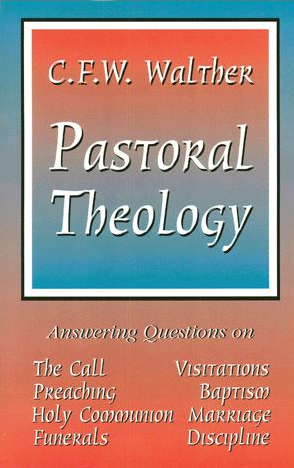
       There is an elitism in the LCMS today associated with the 2017 edition. No one – not Harrison, not editor David Loy, not translator Christian Tiews, not any of the CPH endorsers – no one in the book itself ever directly mentions or praises the prior 1995 abridged translation made by Dr. John M. Drickamer († 1999?).  Translator Tiews condescendingly speaks of it as “highly abridged and only covers one third of Walther’s original book”.  My chart shows that Drickamer’s edition included practically all of the core teachings of Walther.  All of Walther's 50 sections are included, more or less, and in the exact same order that Walther presents them. (Note to President Harrison: I heartily thanked God for the 1995 edition when it came out!... even as I thank Him for this 2017 edition.)  If all these people are so glad for their full translation, then why is there no honor for the one who gave us at least the abridged (not supplemented) version over 20 years ago?  Was it not important to have the essentials that Drickamer brought to the world two decades ago? (It was a life-line for me.) Oh, I too strongly desired that Drickamer had provided the full content of Walther's book, but he did not have the resources of Concordia Publishing House with the help of its editors!  No, he had to find someone else and went to Pastor Herman Otten’s publishing house (Lutheran News / Christian News) which does not have those resources, but at least Otten took this project on. More on this below. —
So I will give the honor to Dr. John Drickamer that should have been given to him in the 2017 edition!  Drickamer was a scholar in the German language – I believe a first rate scholar.  He hosted an online German language lesson series (Drueckhammer's Deutsch Academie) for “those who wished to read the Lutheran Confessions in their original language (clergy and laity)” on the CAT41.org website – now apparently defunct. This website reported that Drickhamer had a “Th.D. in Ecclesiastical History” and was “a past professor of both theology and the German Language”.   I even wonder that he may have been more qualified as a translator than Rev. Christian Tiews.  Shame on Harrison and Pless for not acknowledging this fruitful work of Dr. Drickhamer!  And because of this, I think those truly interested in Walther’s “Pastoral Theology” will still be interested in purchasing Drickamer’s book to compare translations, and still have an abridged version, or for those wanting a quicker read or even a cheaper copy (currently only $9 + shipping).

Comments on Prof. Pless’s Facebook page per CN Feb. 13, 2017 p. 9:
Steven Anderson: “I have the Drickamer/CN edition.  That will have to suffice.”  –
Lincoln Winter: “I know that Drickamer leaves out a lot.  But is the translation significantly inferior to the new one?  Tight budget these days means there needs to be significant weakness to make me buy a second copy of a book I already have.  Anywhere we can see examples of some improvements?  Otherwise, I will have to stick with the ‘Can’t Won’t’ edition.” - Feb. 2 at 7:30 am;
Note to Lincoln Winter: My cross-reference table in Part 1 will help you to compare these editions for yourself.  Drickamer included at least the core information for ALL chapters of Walther’s work, in the order that Walther presented them.  You will see that contrary to the “one third” notion of some, Drickamer’s edition is more than this.  Although I disagree with Matthew Harrison’s “Can’t Won’t” opinion, yet I would say that whenever another sale comes up, you should purchase the full 2017 edition, for this work of Walther is so important, especially if you are considering the office of ministry.  If all you want is the basics of Walther’s teaching, or an “easy read”, then Drickamer’s edition can be used.

Now I present the following reprint of the author’s biography from page 301 of Drickamer/CN 1995 translation of Walther’s Pastoral Theology.  I was glad to see that Pastor Otten did the same thing on his February 13 issue of Christian News, page 8:
————————————
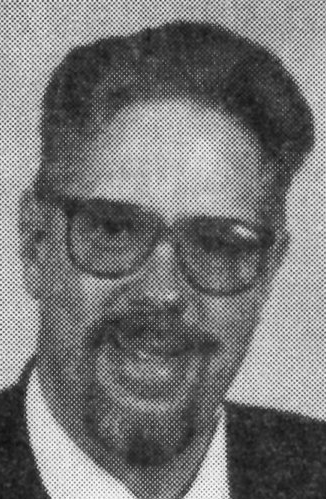
Dr. John M. Drickamer

      John M. Drickamer, a lifelong Lutheran, was raised in the suburbs of Cleveland,Ohio. He was educated at Lutheran parochial schools through the eighth grade. In 1971 he received the B.A. degree from Capital University, with majors in philosophy, history, and ancient languages. His seminary education was at Concordia Theological Seminary, Springfield, Illinois (now located at Fort Wayne, Indiana), from which he received the M. Div. degree in 1975. His vicarage was at Zion Lutheran Church, Chamberlain, South Dakota, in 1973 and 1974.  
      In 1978 Drickamer received the Th.D. degree from Concordia Seminary, St. Louis, majoring in historical theology. From 1977 to 1980 he taught courses in theology and religious history at Concordia College, Ann Arbor, Michigan. From 1980 to 1986 he was pastor of Immanuel Lutheran Church, Georgetown, Ontario, Canada, and also taught theology at Concordia Lutheran Theological Seminary in St. Catharines, Ontario. Since returning to the United States he has served churches in Illinois, Kansas and Oregon.
     Drickamer has published over nine hundred items, including books, poems, hymns, translations, scripts, sermons and short stories.
————————————
$8.99 + shipping

      Herman Otten exposes the duplicity of both Harrison and Pless (and today's LCMS) when he gives the “rest of the story” of the history of Drickamer's edition, CN 2017-02-13 p. 8:
“Drickamer suggested that CN ask the Schwan Foundation for the $10,000 CPH said it would pay Drickamer for his translation.  This foundation, according to Drickamer, had agreed to give CPH $10,000 for his work in producing the translation.  CN would then turn the $10,000 over to Drickamer.  When CN asked the Schwan Foundation for the $10,000 to publish Drickamer's translation of Walther's Pastoral, the foundation declined, claiming there was no real interest in Walther's work.  When CN became involved with the translation, the Schwan Foundation was no longer interested in it.  Years later the Schwan Foundation financed a Russian translation of Drickamer's translation by the Lutheran Heritage Foundation [search Language="Russian", Title="Pastoral Theology"; WorldCat here], since is was much easier to understand and helpful today than a translation of Walther's entire volume with all of its footnotes.  CN granted the Lutheran Heritage Foundation permission to publish Drickamer's translation in Russian without charge.”
According to Otten's report, it appears that Concordia Publishing House backed out of a commitment to pay Dr. John Drickamer $10,000 for his translation.  (Note to Concordia Publishing House: Is this true?) —  Otten then rightfully reprinted the glowing endorsements of Drickamer's edition by CHI director August Suelflow and CTS-FW President Robert Preus. (Aren't Harrison and Pless also condemning Robert Preus and August Suelflow?) —  Pastor Otten should reveal all the details he can gather on Drickamer showing all his publications and scholarly experience.  Otten should research and reveal all the details that he can scrounge up regarding the "unfortunate things" that happened to him as a result of his bold proclamation of the Word of God.
The old CAT41.org website reported the fate of Dr. Drickamer (from Wayback Machine, emphases mine):
“Due to Dr. Drickamer's experience of the unfortunate things that so often are done to those who boldly proclaim the Word of God as the Lutheran Confessions rightly set it forth, these lessons were forced to take a hiatus when Dr. Drickamer was no longer able to afford to stay electronically connected to us. Due to his untimely (to us; timely to his Lord and, thus, blessed to Dr. Drickamer) death, these lessons stopped completely.”
I emphasize 2 points from the above quote:
  1. "What were these "unfortunate things" that happened to Dr. Drickamer because of his bold proclamation of the “Word of God as the Lutheran Confessions rightly set it forth”? Could it have been reprisals against him from the LCMS? The website does not specify.  
  2. Note to Concordia Publishing House:  By this account, Dr. Drickamer was not a rich man… he could not afford to “stay electronically connected”.  Could that be because you squeezed him out of a promised payment of $10,000 for his 1995 edition? … and so he was forced to go elsewhere, eventually to Pastor Herman Otten and his Lutheran News publishing?  And could it be that Otten’s report of the Schwan Foundation’s comment, that
“...there was no real interest in Walther's work”
actually came from you, CPH?  Could it be that all this criticism of Drickamer’s edition is in reality a coverup for your (and today’s LCMS) shameful treatment of Dr. John Drickamer?  Could it be that all the cheerleading for the new 2017 edition and criticism of Dr. John Drickamer’s edition are in reality a duplicitous endeavor?
The Woman Who Cared
by Dr. John M. Drickamer


      Oh, and what are we reminded of?... that Dr. Drickamer was published also by Northwestern Publishing House.  He had 3 books published by them (no longer available from them, but see Amazon).  See the attached picture of one of those publications, the one that I have kept for over 20 years, and not discarded.  The proper thing for Northwestern to do now would be to defend Dr. Drickamer against these unwarranted attacks by today's LC-MS leaders.  


   Oops!  There he is – Dr. Drickamer's book of translation of other works of Walther is still being sold by CPH!  Drickamer is the translator for their Print-On-Demand book Selected Writings of C.F.W. Walther - Walther on the Church. (Why now Print-On-Demand only?)  On the dust jacket of the original 1981 hardback edition, it says this of Dr. Drickamer: “John M. Drickamer, Th.D., a parish pastor at Immanuel Lutheran Church, Georgetown, Ont., Canada, also served as a religion instructor at Concordia Lutheran College, Ann Arbor, Mich.”  And in the Translator's Preface, Drickamer wrote this: 

The translation in this volume makes use of Dr. Mueller's work. His translations have been exhaustively compared with the original German, and numerous revisions have been made.”
This comment clearly shows not only the scholarly translation capability of Dr. Drickamer, but also his scrupulous intent to keep the precise meaning of Walther where even Prof. J.T. Mueller may have strayed too far.  I even wonder that if Drickamer was not hampered by CPH's "space limitations" in 1981, that he could have given a full translation of Walther's Church and Ministry back then, better than Matthew Harrison's The Church and The Office of The Ministry of 2012!  —  Hmmm... aren't these LC-MS leaders who criticize Drickamer's translation work hurting one of Concordia Publishing's own books that is actively sold now?  It would seem so.
      Although I may not be the best judge of translation quality, I wonder that Christian Tiews and/or editor David Loy would not be so ready to harshly criticize and say that Drickamer's “translation is inadequate” as Prof. Pless does.  How about it Pastor Christian Tiews?... Prof. David Loy?... Prof. Benjamin Mayes?

But Thanks Be To God!... that this duplicitous behavior by today's LC-MS did not greatly hamper this edition.  To all those students of theology wondering whether they should purchase this edition if they already have the Drickamer edition –by all means they should make a concerted effort to do so.  All parents and supporters of students of theology should gift this book to their students!  Why?  Because it is the complete work of … C.F.W. Walther, and Thank God!...  that in spite of the very real hatred of Walther in today’s LC-MS, this edition has seen the light of day.  (Has anybody seen any endorsement by Profs. Herrmann or Kloha for this new 2017 edition?)
And if they continue to criticize Drickamer’s “abridgment”, then they are condemning themselves for Concordia Publishing House has for decades enforced "space limitations" on translation projects of Walther's works. In the 1981 edition of Selected Writings of C.F.W. Walther - Law and Gospel, p. 10, translator Bouman wrote:
“The current work represents a considerable abridgment and condensation of the original.  Many of Walther's extensive citations from Luther and other authors were either reduced to their essential point or deleted entirely.,  As a rule, ... much of Walther's running comment was condensed. These cuts in the material were dictated by the publisher's space limitations.”
The reader should not wait too many years to purchase this book because it will likely fall into disuse in today’s LC-MS – may God prevent it! – for even now CPH has discontinued the complete set of Pieper’s Christian Dogmatics, primarily because they have abandoned the index volume (or volume 4).  You can no longer purchase a new copy of this book as of 2016.  CTS-FW President Rast earlier promised that “At Concordia Theological Seminary in Fort Wayne, there is no intention of 'doing away with' Pieper.” That may still be so (I hope), but new students will likely go without the Index. The index volume was a tremendous aid in searching out subject matter in “Walther’s Dogmatics”, i.e. Franz Pieper’s Christliche Dogmatik (Christian Dogmatics).

      All those who have had good experience with Dr. John Drickamer and/or his works should now come forth and point out just how good a scholar and Christian teacher he was.  How about it, Northwestern Publishing House (WELS), Lutheran Synod Book Co. (ELS),  Lutheran Heritage Foundation, etc, the pastors of the old CAT41 organization (Confess and Teach for Unity), etc. I know he was a good teacher for I benefited from his writings as I returned to the Christian faith.  And even though I rebuked Drickamer by letter for some weakness that he had in defending Universal, Objective Justification, his response gave me full assurance that he had not fallen away but was only a little confused in terminology.  How sad I was when I learned of his untimely passing... but also glad for his good confession of faith.  

      Thank God!... for Dr. John Drickamer and his translation of Walther's Pastoral Theology!  I hope Pastor Otten or Timothy Otten reveal even more details of the sorry treatment of Drickamer at the hands of the LC-MS.  And although I thank God for the 2017 CPH edition, I cannot do this with President Matthew Harrison!  (Note to Harrison: now publish Prof. Jeffrey Kloha's glowing endorsement of Walther's work!  You know, the same glowing endorsement that both you and he give to Hermann Sasse's works, here and here)
- - - - - - - - - - - - - - - - - - - 

      In the next Part 3, I discuss the works of Prof. J.H.C. Fritz, the first English language Pastoral Theology books published by CPH.

Tuesday, October 7, 2014

Sacerdotalism vs. Priesthood of all believers

[2025-12-21: updated link to Lehmann quote, LW 38; 2024-05-28: Updated links; 2019-04-23: added, updated links; 2018-04-12: added note in red at bottom]
As one reads from some so-called conservatives, such as Herman Otten of Christian News, the use of the term "sacerdotalists" and "sacerdotalism" is used against many in today's Lutheran Church-Missouri Synod.  It would be well to understand exactly what these terms mean.  Franz Pieper explains this quite clearly in Volume 3 of his Christian Dogmatics, pgs 456-457, Christliche Dogmatik vol. 3, p. 520-521 [2019-04-23 added & updated links]:
It is therefore really an unscriptural usage to call a limited number of people within the Christian Church, namely, the officeholders, the "spiritual order," "divines," "priests." Luther says: "In the New Testament the Holy Spirit scrupulously avoids giving the name sacerdos, [or sacerdotes] priest, to any of the Apostles, or any other office, but restricts this name to the baptized or Christians as their birthright and hereditary name from Baptism; for none of us is born in Baptism an Apostle, preacher, teacher, pastor, but solely priests are all of us born; therefore we take some from among these born priests and call and elect them for these offices that they may perform the functions of such office in the name of all of us." (St. L. XIX :1260, paragr. 90; Am. ed. vol 38, pg 188 [2024-05-28: Updated links])
So we see that the use of sacerdos, i.e. "priest", for officeholders goes directly against the well-known Scriptural doctrine of the "Priesthood of all believers".  Even the Wikipedia articles on both Sacerdotalism and Universal Priesthood seem to understand these teachings fairly well.  Imagine that!... the Scriptures are indeed clear.  But look, one sees that the editor, Martin E. Lehmann, of Luther's Works, American Edition, vol. 38, page XVI [2025-12-21: updated link], in the preface to Luther's writing above quoted by Pieper, puts blinders on and says:
Present-day ecumenism within Christendom has provided the climate which has made it possible for Roman Catholics and Lutherans, on the basis of their common Christian heritage, to engage in dialogue about doctrinal differences that go back to Luther’s day. ...
Could it be that these editors and translators of the American Edition of Luther's Works were actually sacerdotalists?  Could it be these comments by the editor are actually describing Unionism perfectly?  Could it be this editor had already abandoned Luther's doctrine?

Just so we know... that if some "officeholder" in the Church begins to lord it over those of the true priesthood of all believers, they are a "sacerdotalist", and so this one shows that they are returning to the faith of Rome.  This is certainly true even if they deny it with all kinds of sophistry, even if they claim the name "Lutheran", even if they claim to be of the "Missouri Synod".  That's why the Holy Spirit gave us His Word in 1 Peter 2:5,9.  God help from us from these "Missouri Synod" sacerdotalists!

So how is it that sacerdotalism has been taking over the LC-MS?  Hint: the loss of LDJ...
- - - - - - - - - -
2018-04-12: F. E. Mayer, Religious Bodies in America (4th ed., 1961), p. 574: "Sacerdotalism: The teaching that ordination confers special powers and rights necessary for the exercise of the ministry."

Saturday, August 16, 2014

God's change of heart-1: Pieper & God vindicated by J.T. Mueller

[2025: updated several links]
God was in Christ, reconciling the world unto himself...  2 Cor. 5:19
- - - - - - - - - - - - - - - - - - - - - - - - 
In a previous blog post about 2 years ago, I brought up a quote from Franz Pieper to refute those who would begin to call into question God's serious will that all might be saved (Christian Dogmatics, vol. 2, pg 346) [2025-06-20: link updated]:
2 Cor. 5:19 furnishes additional proof that by the objective reconciliation which Christ has effected a change of heart took place, not in men, but in God.
John Theodore Mueller
1885–1967
(from 1967 CTM, pg 497)
Before December 1939 (when Theo. Graebner gave birth to today's LC-MS, the Graebner Synod), but after 1931 (when Franz Pieper died), there were still voices in the old Missouri that had not bowed down to the forces against it.  One of the better examples of this came from the pen of John Theodore Mueller (JTM) in the pages of the journal Concordia Theological Monthly, December 1934.  What was it that compelled Prof. Mueller to put the pen in hand?  It was because he saw that the grace of God, the grace that Franz Pieper proclaimed and defended all his life, was being questioned.  But questioned by whom?  Read on...
     So what is the fuss all about?  In Pieper's original German language Christliche Dogmatik, Bande II, it says (pgs 409-410):
Daß es sich bei der Versöhnung der Welt, die durch Christum geschehen ist, um eine Gesinnungsänderung nicht auf seiten der Menschen, sondern auf seiten Gottes handelt, ist ja auch ausdrücklich 2 Kor. 5, 19 gesagt, wo das κόσμον καταλλάσσων έαντω näher bestimmt wird durch μη λογιζόμένος αυτόις τά παραπτώματα αυτών. (Emphasis from original)
The above original German of Pieper can be translated (largely by Google Translate) thus:
That this order is not a change of heart [or change of mind] on the part of men, but on God's part in the reconciliation of the world, which is done through Christ, is indeed expressly told in 2 Cor. 5:19 where the κόσμον καταλλάσσων έαντω is qualified by μη λογιζόμένος αυτόις τά παραπτώματα αυτών.
For those who don't have a Greek New Testament handy (like me), Pieper is identifying the exact Greek words in the original Bible language.  But it doesn't really matter as even my KJV translates this well enough.  The English translation of Engelder/Mueller/Albrecht dispensed with the original Greek text and published this translation of Pieper's German (my bolding):
2 Cor. 5:19 furnishes additional proof that by the objective recon­ciliation which Christ has effected a change of heart took place, not in men, but in God. "Reconciling the world unto Himself" is defined as "not imputing their trespasses unto them." (Christian Dogmatics, vol. 2, pg 346)
Do you get the idea?  It has to do with the question of "What Is Christianity?", namely,

God is already reconciled to the whole world!

Now is it clear?  God has spoken...  and this message was hammered home to the students of Concordia Seminary by its President Franz Pieper throughout his lifetime, until the day he died in 1931.
= = = = = = = = = = = = = = = 
God's Change of Heart in Christ's Work of Reconciliation

But who would try to distort and crush the Greatest News the world will ever receive?  Prof. Mueller will give us details of Pieper's pure proclamation and how it was being questioned and by whom... in 1934.  To the right is the heading of how it was published..  Translated, the essay title reads:
God's Change of Heart in Christ's Work of Reconciliation

I am including a link to a scanned copy PDF of this essay (since it is not publicly available) -->  here . [2018-06-03: this is available from CTS-FW here]
A German text transcription document is available -->  here .
= = = = = = = = = = = = = = =
I do not put Prof. Mueller in my top tier of theologians from the old (German) Missouri Synod.  Mueller was among the Concordia Seminary professors who attended non-Lutheran universities for theological degrees, earning a Th.D. from Xenia Theological Seminary, a Presbyterian institution.  He also went to a Reformed book publisher (Zondervan, 1954) to present his translation of Luther's Commentary on the Epistle to the Romans.  This seems strange to me as he was one of the stronger members of the faculty to attempt to maintain the pure Gospel.  But it may also explain why Mueller did not follow P.E. Kretzmann in leaving the LC-MS while Theodore Graebner was spearheading its demise.  At times Hermann Otten (of Christian News) will write about Mueller, enjoying the fact that he received support from Mueller.  But it is difficult to get much of a spiritual picture from Otten.  Nonetheless, Prof. Mueller is to be highly commended for his
  1. strong stand in this current essay on God's Change of Heart
  2. abbreviated 1-volume Christian Dogmatics book based on Pieper's 3-volume set (download here)
  3. assistance in producing the full English translation of Pieper's Christian Dogmatics (4-vol. set)
  4. translation of some of Walther's works
So now in Part 2, I begin presenting the English translation of one of the best essays every published in the LC-MS after the death of Franz Pieper – in December, 1934.  This will lead into some unexpected territory... and a discussion concerning another member of the old Synodical Conference.
= = = = = = = = = = = = = = =
Table of Contents:
Part 1 - Introduction: Pieper & God vindicated by J.T. Mueller
Part 2 - Pages 897-898: Spiritual life or death (the Christian faith stands or falls)
Part 3 - Pages 899-900: criticism inside Synod?; German theology; "ponderous Pieper"?
Part 4 - Pgs 901-902: Pieper's hammer falls–"New relationship" or God's action; anthropopathy; problem?
    Excursus: Luther/Pieper: Unbelievers ⇒ Hell (on Jn 1:29; or, "get what he has coming to him")
Part 5 - Pgs 903-904: Pieper in Luther's steps (but not today's LC-MS)
Part 6a - Pgs 905-906: But enough, just biblical truth; Lutheran hymns tell story
Part 6b - WELS opposes? (Curia essay)
Part 6c - WELS opposes? Adolf Hoenecke? (Curia essay)
Part 6d - WELS opposes? Siegbert Becker? (Curia essay)
Part 6e - WELS opposes? John P. Meyer? ... a matter of spiritual life or death
Part 6f - WELS opposes? Not all did...
Part 6g - WELS opposes? Curia's fall... (on your deathbed)

Tuesday, July 22, 2014

Luther Bible-Pt 3: Eve confesses; corruptions of Luther from... CPH!

     This Part 3 continues from Part 2 presenting my (BTL) translation of Prof. Pardieck's Lehre und Wehre article in 1914 on Luther's final translation of Genesis 4:1.  Luther's translation is virtually unknown in today's world because it has been corrupted.  Why?  Read on...
     Pardieck gives an extensive quote from Luther's exposition of Genesis, especially on verse 4:1.  And this was translated in the CPH American Edition of Luther's Works (vol. 1, pgs 242-243).  But there were no comments in the American Edition on this notable portion of Luther's exposition – no notes, no footnotes by editor Jaroslav Pelikan or translator George Schick.  Why?  Could it be that they too are part of the reason for today's corruption of Luther?  Could it be that they too did not believe Luther's translation of Genesis 4:1, that Eve actually believed her first born son was the promised Messiah?  Could it be that even Concordia Publishing House is also part of the reason for today's corruption of Luther?  It surely is for CPH also sells volume 52 of the "American Edition" where the editor Hillerbrand and translator Kunstmann corrupt Luther's sermon words with this translation: "I have gotten a man of God", even where Luther forcefully preaches on the actual meaning of Eve's confession in Genesis 4:1... but CPH has no comment on this corruption of Luther, and continues offering these corruptions of Luther and publishing even more in their "New Series"!
(Actually I am surprised that Pelikan did not outright condemn Luther's work on this passage, as often as he tramples on my faith...)  And so for an antidote to the corruption of Luther today, I continue presenting this marvelous work of Prof. Eduard Pardieck.
===>>> In your face, today's CPH, the translation of Eve's confession is this:
"I have the Man, the Lord"!
Underlining follows author's emphasis, highlighting is mine. Hyperlinks added for reference.
= = = = = = = = = = = = = = =   Part 3: Page 337-339   = = = = = = = = = = = = = = =
On Luther's Translation of Genesis 4:1
[by Prof. Eduard Pardieck] 
So Luther speaks in his Genesis, where he surely laid the foundation by the translation: "I have the Man the Lord": "She does not call him simply a man, but a "man the Lord", as the Lord meant as He promised her: "your seed [Page 338] shall bruise the serpent's head." [Genesis 3:15] ...  And because she believes, she is so very joyful over her son and speaks so magnificently of him: ‘I have the Man the Lord overcome’, which will hold up better, because I and my husband Adam have kept us in Paradise; therefore I will not call him my son, but he is the Man God, promised and given by God. . . .  Now that Eve so depends and adheres to the divine promise and on faith of redemption that through her seed should be done, therefore she does right.  For through this faith in the future seed have all saints become justified and saved.  But in person she erred and believes Cain will be the one to make an end of the misery wherein the Devil through the Fall into sin toppled them. . . .  As if she would say: I know well myself to remember, what we have lost through sin; but now I hope and speak nothing else but that I have again come over to all honor and glory that we had lost with the help of the Man God.  Because Eve’s acceptance is all too certain, so she hurries and thinks that this first son will be the fulfillment of the promise of the Lord.  But the poor woman is mistaken, and sees that her misery is still not right, namely, that of the flesh nothing other than flesh can be born, that also sin and death cannot be conquered by flesh and blood.  Also she did not know the time and hour at which this blessed Seed, conceived by the Holy Spirit, would be born of a Virgin into the world; as also the Patriarchs did not know this time and hour, though the promise had become clearer with time by revelation of the Holy Spirit". (St L ed., vol. 1, cols. 296-297, paragrs. 17-21; cf. Am. Ed. vol. 1, pgs 242-243).   In his Church Postils, Luther says in a sermon: "Therefore, when Eve gave birth to her first son Cain, Genesis 4:1, she rejoiced and thought that he would be the Seed, that God had spoken of, and she said happily: ‘I have overcome the Man God’; as if she should say: This will certainly be the man, the Seed which is to fight against the Serpent.  She would welcome Christ, but it was not yet time.  She well saw that he [Cain] was not it, and had to look forward in her faith on to another woman".  (St L Ed. XI, col. 261-262, paragr. 71; Am. Ed. vol 52, pg 127; Lenker ed., vol 1, pg 285, paragr. 71; Sermon on “The Gospel for the Sunday after Christmas, Luke 2:33-40”).
Luther's translation in his Bible and his explanation is then received among Lutherans. Calov can say in his commentary on the book of Genesis: it was the opinion of nostratium plerorumque omnium.  So translates and explains Brenz, Chytraeus, Weller, Osiander [?], Aegidius Hunnius, Gerhard, Calov, Dannhauer; and for the most extensive treatment on the question is that of Sebastian Schmidt in his Disputatio de fide Matris Evae, which drew much attention from contemporary and subsequent exegetes. The oldest Lutheran theologians go completely with Luther, even in the application of the words, that Eve related the words to Cain, whom was held for herself as the promised Redeemer. So says [Johannes] Brenz: "She called him Cain, meaning a good possession, a [Page 339] good purchase or wealth or treasure, as it says: Kanithi, which means that I own, have acquired the man, the Lord. The poor woman namely held that she had born the man, the Virgin's son, who was promised from above, and from which she had recognized through the Holy Spirit that he is not only man, but also the true Lord, our God".  So even Selnecker. Likewise Weller noticed on this point: "Therein is to remember in the first place our first parents’ exceedingly great joy and jubilation, as they had Cain born to them as their first son.  For Eve, the mother thought not otherwise, than that she would have born and overcome by the same Seed, so should the serpent’s head be bruised.  So that is why she says: "I have the Man, the Lord."  There is therefore no doubt that our first parents will have held comfort for themselves from her firstborn son Cain, and they have provided all the best to him.  Therefore they much preferred him [Cain] than his brother Abel who was born after him".
To the grammatical understanding of the words, and that they were speaking of the Messiah and expressed the divinity and humanity, they all hold firmly on it.  But then the exegetes have let the objection of the Calvinists impress them: Eve then would have committed idolatry with Cain, if she had thought of him as God.  They said then that Eve did not relate the words to Cain, but with the birth of her first child she remembers that great seed of the woman; the birth of a child was her guarantee that God will not give the human race over to death and destruction, and so the promised One will also then be born; to that they hold themselves in their pain, in debt of sin and in the misery of the vale of tears.  So also, Sebastian Schmidt in his Disputatio.  He takes this sense from the words: she says: I have the man Jehovah. If she says Jehovah, that is clear.  No trope can be in the name. God gives no other name, that designates only the one true God. She holds therefore the Messiah, that comforts her, for true God. She calls him Man; and what that is, she knows. And that she testifies both in one sentence by the same person.  She thus expresses the unity of the God-man person.  "She says: I have the man, the Lord, not a man and the Lord, as if she were talking about two different things; also not: with Jehovah or through Jehovah or like him, that can could refer it to two persons, but only: the Man Jehovah, the Man that is Jehovah.  There it is impossible to think more than one person. What regards the natures is so clear, that through "Man" and "Jehovah" two natures are named.... Nor also can these two natures be other than the divine and the human. What more do we believe in the New Testament or can we believe of [page 340] the person and the natures of the Messiah?  
= = = = = = = =  cont'd in Part 4  = = = = = = = =

In researching further the available English translations, I found that the 1976 edition of Beck's Bible, The Holy Bible: An American Translation (or AAT), did offer a translation much closer to Luther's:
"I have gotten a man, the LORD"
and for this reason, I have consulted Beck's translation on several occasions.  William F. Beck was a professor at Concordia Seminary and his translation was published by Herman Otten of Christian News.  There was some question about Beck's teaching of Justification, but I have not pursued this very far.  I seem to recall that he did not highlight the teaching of Walther and Pieper.  His translation is still available here.

In the next Part 4...