


I wish Dr. Schulz had not been so explicit in his denial of the chief Doctrine of Christianity (Ap IV, §2), especially in his high position as teacher for Missions, or "Missiology". There is no "Missiology" without the proper teaching of Grace and Justification.
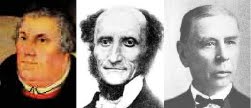
Back To Luther... and the old (German) Missouri Synod. Below are thoughts, confessions, quotations from a Missouri Synod Lutheran (born 1952) who came back to his old faith... and found more treasures than he knew existed in the training of his youth. The great Lutheran lineage above: Martin Luther, C.F.W. Walther, Franz Pieper.
Thursday, September 19, 2019
LCMS denies Universal Justification: Detlev Schulz
Some readers may question my assertion that the LC-MS teachers are increasingly confused on the fundamental article of Christianity, the Doctrine of Justification. But to continue from the previous post on Dr. Robert Kolb, I will add this quote from a well-known theologian, Dr. Klaus Detlev Schulz, from Concordia Theological Seminary-Fort Wayne, and compare it with two other quotes on the matter of Universal Justification:
I wish Dr. Schulz had not been so explicit in his denial of the chief Doctrine of Christianity (Ap IV, §2), especially in his high position as teacher for Missions, or "Missiology". There is no "Missiology" without the proper teaching of Grace and Justification.
I wish Dr. Schulz had not been so explicit in his denial of the chief Doctrine of Christianity (Ap IV, §2), especially in his high position as teacher for Missions, or "Missiology". There is no "Missiology" without the proper teaching of Grace and Justification.

Tuesday, September 17, 2019
Fundament 3: The Papacy and the Lodge – one class

This continues from Part 2 (Table of Contents in Part 1), a translation of Franz Pieper's essay on the foundation of the Christian faith ("Das Fundament des christlichen Glaubens"). — Pieper now begins the transition from Unitarianism and Lodges to the Papacy and the Roman Church. A true Lutheran comparison of these bodies is quite different from the world's judgment.
As mentioned in the introduction, the Missouri Synod valued Pieper's extended serialized essay so much, they had it assembled and put into a small book – Concordia Publishing House, 1925. The cover is shown at right and the book is available for viewing on Archive.org here. This segment begins on page 4.
= = = = = = = = = = = = = = = = = = = = =
Text preparation and translation by BackToLuther using DeepL, Google Translate, Microsoft Translate, Yandex Translate. All bold text is Pieper's emphasis. All highlighting, red text, and most text in square brackets [ ] is mine.
The Foundation of the Christian Faith.
The Papacy and the Foundation of the Christian Faith.

Rome, unlike the Unitarian fellowships, confesses the Triune God. Rome teaches the eternal Godhead of the Son and the Holy Spirit. It teaches the incarnation of the Son of God and also speaks of the fact that this incarnation was necessary and for the good of mankind. But Rome denies in the most decisive way the fruit of the incarnation of the Son of God. It denies that by the grace of God alone, without works of our own, by relying on Christ's merit alone, we human beings attain forgiveness of sins and salvation. And Rome not only denies this, but also pronounces the curse on all those who do not also want to be justified and saved by the works of the law, but only by trusting in God's mercy in Christ. Thus, in the twelfth canon of the sixth session of the Council of Trent, it says: “If any one saith, that justifying faith is nothing else but trust in the divine mercy which remits sins for Christ's sake, or that this trust alone is that whereby we are justified, let him be anathema”. [On Justification, Canon XII] And in the twentieth [page 76] canon it is explicitly documented with an anathema that the Gospel is a mere and perfect promise of eternal life, without the condition of keeping the commandments of God and the commandments of the Church. As certain as the Gospel, that is, the message of the forgiveness of sins for the sake of Christ's satisfactio vicaria, without the works of law, is the object or foundation of the Christian faith, so certain it is that the Pope's Church denies the foundation of the Christian faith and not only denies it, but also expressly places it under the curse.

Rome's official religion is completely identical in essence with the religion of the Unitarians or Lodges. Rome and the Unitarians belong to one class, to the class of the religions of works. The difference is limited to the outer form of the works, which are prescribed on both sides as a means of attaining salvation. Rome urges the works prescribed by the Roman Church, that is, by the Pope. The Lodges urge the works in which, supposedly by virtue of the light of human reason, all men, the Christian, the Jew, the Mohammedan, the Buddhist, the Parse, the Confucian, etc., agree. The papacy and the lodges are known to fight each other. If the Knights of Columbus occasionally fraternized with the lodges in recent years, they were sharply rebuked by the superiors. But deceivingly. The Knights of Columbus felt an inner kinship. The battle between the Papacy and the Lodges is merely a game of the devil's jugglery. The activity in both camps is aimed at keeping mankind, which was lost but was redeemed by Christ, away from the foundation of the Christian faith, namely from Christ, the Saviour crucified for the sins of the world, and to lure those who already stand on this foundation away from it.

In the battle between Rome and the Lodges, the devil is always the winner. In every case — whichever side wins — he wins a comrade of eternal damnation. If the lodges win a soul from Rome for their religion, “in which all men agree”, then the soul remains lost. For of the universal religion of the lodges God says in his word: “Darkness shall cover the earth, and gross darkness the people”. (Isaiah 60:2) If Rome wins a soul from the lodges for the Roman doctrine of works, only an outer re-quartering occurs in the kingdom of spiritual darkness. The soul remains equally lost. For so God judges in His Word about the Roman doctrine of works: "You have lost Christ, whom you would do justly by the law, and have fallen from grace" (Gal. 5:4) and: "Those who deal with the works of the law are under the curse". (Gal. 3:10)

Nevertheless, we wish to draw a distinction between Rome and [page 77] the Lodges, so we must say that Rome's insolence and blasphemy, however, surpasses that of the lodges. The Lodges appear sufficiently brash and blasphemous against Christianity, so brash and blasphemous that we are rightly surprised when a Christian who is introduced to the facts does not very soon recognize the dramatic contrast between Christianity and the Lodge religion. Christ commands his Church to go with his (Christ's) Gospel among all nations, “to open their eyes, and to turn them from darkness to light, and from the power of Satan unto God, that they may receive forgiveness of sins, and inheritance among them which are sanctified by faith that is in me”, Christ. (Acts 26:18) According to the Lodge religion this is not necessary. According to them, Christian, Jew, Mohammedan, Brahmin, etc. “unite around one common altar,” as we've already heard. The blasphemy is also gross, which lies in the fact that the Lodges misuse the Bible and the ways of speaking of the Bible to conceal their hostility towards Christ. This is a Lodge prayer according to the Manual of the Lodge by A. G. Mackey, p.15:

“Most holy and glorious Lord God, the great Architect of the Universe, the Giver of all good gifts and graces! Thou hast promised that where two or three are gathered in Thy name, Thou wilt be in the midst of them and bless them. In Thy name we assemble, most humbly beseeching Thee to bless us in all our undertakings, that we may know and serve Thee aright, and that all our actions may tend to Thy glory and to our advancement in knowledge and virtue. And we beseech Thee, O Lord God, to bless our present assembling and to illuminate our minds that we may walk in the light of Thy countenance and, when the trials of our probationary state are over, be admitted into the temple not made with hands, eternal in the heavens. Amen.”
Those are almost all clear Bible words. But they are abused blasphemously. What is said about Christ's presence in those who are gathered in his name – in Christ's name – is applied to the lodge assemblies in which Christ's name and Christian religion are not merely excluded by statute, but forbidden. They defy Christ in His capacity as judge of the world. While Christ, referring to the Universal Judgment, says: “Whoever confesses me before men, I will confess him before my heavenly Father; but whoever denies me before men, I will also deny him before my heavenly Father,” (Matt.10:32-33) Freemasons have the impudence to prescribe to those of their members who want to be Christians: “They are not permitted to introduce them [namely their opinions of Christ] into the lodge or to connect their truth or falsehood with the truth of Masonry.” (Mackey, Lexicon of Freemasonry, p.404.) That's truly outrageous enough! But this [page 78] outrage is outdone by the Papacy.
= = = = = = = = = = continued in Part 4 = = = = = = = = = = Some British television programs have depicted the rituals of Freemasonry. Some of these have been surprisingly critical of this secret organization and the effects on its members. — The Wikipedia article on "Freemasonry" is an exhibit of what Pieper speaks about above – a supposed antagonism between the Roman Church and the Lodge. But Pieper's exposure of this secret organization is the most damning of all, clearly exposing the Lodge's blasphemous use of Scripture. You would think that this was the epitome of anti-Christian teaching, but… it isn't. In the next Part 4, we are brought to the abyss.
Sunday, September 15, 2019
“The Church and the Secular Press.” by Pieper: "seducing Christians", "Cosmopolitan Christianity"
The following short essay in 1899 Der Lutheraner magazine by Franz Pieper is striking for us today as the future of print newspapers dwindles because of the Internet media sources for news and information. Yet the story remains the same if we substitute for "newspapers" the term "media".
This essay follows Walther's writing from 18 years earlier on a similar subject in Der Lutheraner in 1881 – see my blog series "Godless newspapers". — I have discovered additional information about German language newspapers in America from the National Endowment for the Humanities (NEH) here (WayBack). Unfortunately, it takes no notice of religion among the native German people, and ignores any mention of church papers. Yet it is striking how prominent the German papers were in America up to World War I. There is a good overview of the history of the newspaper Germania here. (WayBack) — My paternal grandfather came from Germany in the late 1800s. Although I never knew him, I suspect he would have read the German papers in his day. — There is more than one striking feature in Pieper's remarkable article… "the power of Missouri"?
= = = = = = = = = = = = = = = = = =


 = = = = = = = = = = = End of essay = = = = = = = = = = =
 I have news for the National Endowment for the Humanities – there were German Lutherans in America, even if they won't report about it. And among those Lutherans of America, some even wondered at the "power of Missouri [Synod] in the German church movements of this country". Better historians than those of the NEH (or Time magazine) do not ignore true religion in the history of a land.
This essay follows Walther's writing from 18 years earlier on a similar subject in Der Lutheraner in 1881 – see my blog series "Godless newspapers". — I have discovered additional information about German language newspapers in America from the National Endowment for the Humanities (NEH) here (WayBack). Unfortunately, it takes no notice of religion among the native German people, and ignores any mention of church papers. Yet it is striking how prominent the German papers were in America up to World War I. There is a good overview of the history of the newspaper Germania here. (WayBack) — My paternal grandfather came from Germany in the late 1800s. Although I never knew him, I suspect he would have read the German papers in his day. — There is more than one striking feature in Pieper's remarkable article… "the power of Missouri"?
= = = = = = = = = = = = = = = = = =
Text extracted from Der Lutheraner, vol. 55 (October, 1899), p. 189; translation by BackToLuther; bold text is Pieper's emphasis, hyperlinks, highlighting, red text, text in square brackets [ ] are mine.
The Church and the Secular Press.
[by Franz Pieper]
 |
| Presidential election – 1900: William Jennings Bryan vs. McKinley |
The Lutheran of October 5 [1899] expresses in an extended editorial the assumption that the Missouri Synod is preparing to make politics, and possibly to speak the decisive word in the next presidential election.
How does this paper come out with these strange thoughts? It is reported from the New York Tribune that Dr. [Hermann] Dümling joined the editorial staff of Germania in order to keep “objectionable matter” out of this paper. But this purpose of Dr. Dümling's new position does not make sense to the Lutheran. Rather, the terrible thoughts just mentioned above come to him.
He thinks that if “one of the most capable pastors of the Missouri Synod” joins the editorial staff of Germania, it is probably for the purpose of possibly controlling the next presidential election through this “most widespread German newspaper”. The Lutheran says: “Many of us have come to know the power of Missouri in the German church movements of this country, and it is only natural that we do not like it at all when a Lutheran church body makes use of the secular press to make its influence felt in politics.”
We can calm the Lutheran down. First of all, the Missouri Synod as such has nothing to do with the fact that Dr. Dümling became editor of Germania. Then we also know and the Germania itself has announced that Dr. Dümling's appointment to the Germania has no “political” purpose at all, but merely to keep “objectionable matter” away from the Germania, not only from the “weekly” but also from the “daily” Germania. The policy of Germania is none of our business and has no interest in us. But because Germania is read in many thousands of our Christian homes, we have a great interest in keeping out of this newspaper all offensive reading material. And Dr. Dümling's entry into the editorial staff of Germania makes only this sense.
We can assure the Lutheran: No righteous Missourian pastor or professor, as long as he is able to work, gives up his ecclesiastical office to become politically active. If he makes the personal sacrifice of taking over the editorial work of a secular newspaper, this is done in the knowledge that in this way he is rendering a necessary service to his Church and to his Savior, namely for his part the service of keeping away the rubbish with which most secular newspapers pollute and poison Christian homes and hearts, year in, year out, and daily. There can be no doubt that the secularization and stagnation of modern Christianity is to a large extent attributable to the pernicious influence of the secular press, which so generally finds its way into the homes of Christians.
The worldly press, as it is ordinarily constituted, is in a constant struggle against the Christian church. The secular press wants to make the church secular and thus does not seek less after the life of the church than the press of the false churches which spread false doctrines. On Sundays the pastor preaches to his congregation: “Do not love the world, nor what is in the world.” But six or seven times a week a newspaper comes into the home and is read by young and old, in which the sinful nature of this world is partly hidden, partly openly glorified and praised. Now it is true: We cannot protect our Christians and also our youth from all temptations on the part of the world. They come into contact with the world and should learn to fight against the world. But the Lord Christ also taught us to pray: “Lead us not into temptation.” Christian parents do not do their duty unless they try to keep temptation away from their own family. It is also part of this that they strive to exclude soul-poisoning reading from their homes as far as possible.
The Last Day will one day reveal that, in the hearts of many people who, while they lived under the sound of the Word of God, were held back from their spiritual life, or again suffocated from it, through the influence of the worldly newspapers.
So it is truly worth the effort when Christians take it upon themselves to produce such secular newspapers which exclude all offensive reading material from their columns. If, for the purpose of this judgment, experienced people, be they pastors or professors, enter the editorial department of a secular newspaper, then one does not immediately sense politics behind it, as happened to the Lutheran, but one assumes—what is actually the case here—that it is a matter of the production of a secular newspaper that is not offensive to the Christian home.
The production of such newspapers was particularly important to the blessed Dr. Walther. We know that he traveled several times to persuade pastors to take over the editorial work of such secular newspapers. He repeatedly stated that he did not consider it a waste of energy to take the best pastors out of ministry in order to render this very important service to the Church. He said this to those who said that a pastor or a professor should not give himself up to be the editor of a secular newspaper.
Of course, one thing is necessary if the evil is not to become worse. The worldly newspapers, which are published by Christians, must now also really keep away all offensive things from their columns. If such newspapers are once again like the world, e.g. by displaying theaters, balls and other worldly entities, they are a double damage to the community. They seduce Christians into a cosmopolitan Christianity, into the deadly belief that Christ is in agreement with Belial. No Christian, let alone a Christian pastor or professor, can give himself up to this.
But such worldly newspapers, which really keep away everything offensive from their columns, are to be held up and valued as a precious gift of God. Such newspapers should not be obstructed, but encouraged and supported, even in cases where they hold political opinions which do not always coincide with ours. As far as politics are concerned, after all, every Christian has his own politics, that is, he does not let himself to be dictated by a party, by a newspaper, or by individual persons how he should vote, but he decides this himself before God to the best of his knowledge and conscience. F[ranz] P[ieper]
= = = = = = = = = = = End of essay = = = = = = = = = = =
In a more recent case of a related matter, we find that Concordia Seminary President Ludwig Fuerbringer's youngest son, Otto Fuerbringer, also joined a secular publication, Time magazine. Unfortunately, although once considered a "conservative", yet his magazine in 1966 would, on the question of “Is God Dead?”, state that believers “perhaps secretly fear that he is”. How different that is from the situation above and indicative that it was the "cosmopolitan" Lutheran Church—Missouri Synod, not the true Missourians, that practically led the world into a "cosmopolitan Christianity", even the "radicalism of the 1960s".
 I have news for the National Endowment for the Humanities – there were German Lutherans in America, even if they won't report about it. And among those Lutherans of America, some even wondered at the "power of Missouri [Synod] in the German church movements of this country". Better historians than those of the NEH (or Time magazine) do not ignore true religion in the history of a land.
Thursday, September 12, 2019
Fundament 2: Unitarians; American classic literature; Lodges
This continues from Part 1 (Table of Contents in Part 1), a translation of Franz Pieper's essay on the foundation of the Christian faith ("Das Fundament des christlichen Glaubens"). — Pieper begins with those who practically admit that they are not Christians – the Unitarians. And he reveals just how widespread this belief is among Americans, then and now. They are in our heads, in our reading…


There seems to be nothing written by later LC-MS authors on the matter of lodge members in their churches. I suspect that any semblance of spiritual discipline, as Pieper outlines for true "Missourians", is largely dispensed with today.
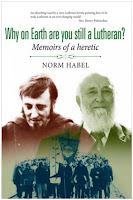
Habel's forthright narrative reveals that he had not been properly trained by his LC-MS teachers (or he had forgotten their teaching) on how to confront such a member as this, as Pieper taught above.
 Pieper includes a rather comprehensive list of American literary figures who wrote from a Unitarian viewpoint. I have wondered why he did not include Mark Twain since Twain became largely a scoffer of religion through his writings of humor and otherwise, even as he had been identified as "Presbyterian". He was a member of the Masonic Lodge during his early life. Pieper had plenty of American writers to identify with Unitarianism without the inclusion of Twain, but I remember reading Twain's fictional books as required reading in the education of my youth and can say that he impacted my Christian faith in a negative way, just as Pieper lamented how this was happening in his day. — In the next Part 3…
= = = = = = = = = = = = = = = = = = = = =
Text preparation and translation by BackToLuther using DeepL, Google Translate, Microsoft Translate, Yandex Translate. All bold text is Pieper's emphasis. All highlighting, red text, and most text in square brackets [ ] is mine.
The Foundation of the Christian Faith.
The Unitarians and the Foundation of the Christian Faith.
The Unitarians deny the Holy Trinity. This includes the denial of the eternal essential (metaphysical) deity of Christ and, consequently, the denial of the vicarious satisfaction of Christ (satisfactio vicaria). As surely that the Christian faith is not faith in a mere man, but faith in the living Son of God, (Matt. 16:16) and not only faith in Christ as a model of life, but is faith in the only mediator between God and man, who has given himself a ransom (ἀντίλυτρον) [1 Tim 2:6] for all for that such would be preached in his time, (1 Tim. 2:5-6) so surely have all Unitarians, the Unitarians of former times and in our day, completely abandoned the foundation of the Christian faith. They stand outside the Christian Church, extra ecclesiam, as the first article of the Apology of the Augsburg Confession says. The Unitarian religion is, according to Scripture, blasphemy and idolatry.
Unitarianism has also become widespread in our country, in the United States. It has also generally penetrated the Reformed sects, formerly called “Orthodox” sects, in contrast to Unitarianism, and already holds the majority in some of these sects. At the Northern Baptists’ gathering last year in late May and early June [page 36] in Milwaukee, the “modernists”, that is, the Unitarians, won out across the board.

Unitarianism, as the Baptist fundamentalists in Milwaukee testified, had also invaded the Baptist mission to heathens, and Dr. Stratton of New York made the correct observation that the Christian Church certainly had no advantage from this Baptist missionary activity. The heathen were “converted” not to Christ, but away from Christ. —

Furthermore, we must also not forget that the Unitarian religion is a large part of our American classics literature. S.J. Barrows, the author of the article “Unitarianism” in Samuel Macauley Jackson's Concise Dictionary of Religious Knowledge, for example, uses Emerson, Irving, Hawthorne, George W. Curtis, Longfellow, Holmes, Bryant, and historians Prescott, Bancroft, Motley, and others. Therefore, our teachers at our colleges are staggered off their position when reading from these Unitarian writers. The same applies, of course, to reading German classics such as Lessing, Schiller and Goethe.
Furthermore, we must not overlook the fact that Unitarianism also approaches us in the form of the religion of the Lodge, and especially to our congregations. The official Lodge religion of the main lodges is decidedly Unitarian. It’s content is that every man can go to heaven on account of one's own virtue, with the explicit rejection of the Christian belief that only faith in the crucified Christ is the way to heaven. Thus in Webb’s Monitor of Freemasonry by Robt. Morris, p. 280 [1959 ed., p. 385] :
“So broad is the religion of Masonry, and so carefully are all sectarian tenets excluded from the system, that the Christian, the Jew, and the Mohammedan, in all their numberless sects and divisions, may and do harmoniously combine in its moral and intellectual work with the Buddhist, the Parsee, the Confucian, and the worshiper of Deity under every form.”
According to Mackey, Lexicon of Freemasonry (p.404) [1860 ed., p. 287], the lodge members are also committed to a religion. But it is a commitment to the lodge religion with the express exclusion of the Christian religion. “They [the lodge members, including those who still want to be Christians] are not permitted to introduce them [namely their “peculiar opinions”] into the lodge or to connect their truth or falsehood with the truth of Masonry.” This establishes the practice of our congregations against the lodges. The practice of our churches against the lodges is based on this. If lodge members notify us for church fellowship, e.g. at the Lord's Supper, we do not have the right to consider them Christians. Because they are members of a society that confesses the Unitarian religion in the most pronounced and abrupt form, they must first prove their Christianity. And this can only happen if their involvement with the Lodge’s religion and any participation in the [page 37] exercise of Lodge religion is renounced. That's not asking too much. Even the weakest Christian sees the justification of this demand. We must not underestimate the work that the Holy Spirit has in every one, even the weakest Christian. If a person has recognized himself as a damnable sinner before God and trusts in God's atoning blood of Christ—and only such a person can Pastor and congregation hold as a Christian and admit to Communion—he recognizes the lodge religion as a direct denial of Christianity and participation in the Lodge worship as idolatry, with which he wants to have nothing to do. Where in a congregation the Lodges have gained room, it is usually the case that at the first registration for the Lord's Supper, the report of the examination of Christian status is missing. There was no need to inquire whether the person in question recognizes himself as a poor sinner and that the foundation of his confidence before God is the blood of Jesus Christ, the Son of God, which makes us clean from all sin. It is obvious that this test concerning the Christian faith of those who seek communion with us belongs to the concern of the souls and conscientious administration of the sacrament. In this way of dealing with the so-called Lodge Question, hundreds, even thousands of pastors of the Synod have either managed to keep their congregations completely free of lodges or, if individuals have strayed into the camp, return them to the communion of the Christian Church. They acted in the knowledge that the Lodge religion is Unitarian which clearly and boldly pushes aside the foundation of the Christian faith, namely the forgiveness of sins alone for the sake of the blood of the Redeemer. Our pastors acted and will act so in the knowledge that not postponing serious pastoral care is proper here, because it is the life and death of the souls who were purchased by Christ's blood for their life. F.P.
= = = = = = = = = = continued in Part 3 = = = = = = = = = =
There seems to be nothing written by later LC-MS authors on the matter of lodge members in their churches. I suspect that any semblance of spiritual discipline, as Pieper outlines for true "Missourians", is largely dispensed with today.

A more recent account of a handling of a congregation member who was also a Freemason was given by LC-MS pastor Norman Habel in the early 1960s in Brooklyn, New York. Habel eventually became one of the professors of Concordia Seminary who removed themselves in the 1974 "Walkout". , He was rather forthright in his 2015 book Why on Earth are you still a Lutheran? Memoirs of a Heretic when he recorded the following conversation with a parishioner (p. 37):
‘Good evening! I am Hans Schmidt, the chairman of the congregation.’
‘See this badge on my lapel? It identifies me as a Freemason. Plan to do anything about it, Pastor?’ The Lutheran Church had publicly declared that Freemasons were heretics, or at least far from the faith, and good Lutherans dare not join them.
Rather taken aback, I invited Hans inside to discuss my understanding of my role: I was expected to preach the sermon, visit the sick and bury the dead... especially bury the dead.
‘My God, you’re young’, said Hans. ‘Hope you survive. Many haven’t. Anyway, welcome to Ft Hamilton Lutheran Church’
I was a gullible boy from the Australian bush thrown into an American jungle. I had been invited to ‘fill in’ for a couple of months at a parish in Brooklyn, New York.
Habel's forthright narrative reveals that he had not been properly trained by his LC-MS teachers (or he had forgotten their teaching) on how to confront such a member as this, as Pieper taught above.

Subscribe to:
Posts (Atom)