Search This Blog

Friday, November 8, 2019

Fundament 12: Means 3: Can the Reformed be saved?; no certainty in enthusiasm

      This continues from Part 11 (Table of Contents in Part 1), a translation of Franz Pieper's essay on the foundation of the Christian faith ("Das Fundament des christlichen Glaubens"). — Since the doctrine of the Means of Grace belongs to the "Fundament", the foundation of Christianity, how can the Reformed, who deny it, be saved at all?  Pieper, also Luther, answers this question…
= = = = = = = = = = = = = = = = = = = = =
Text preparation and translation by BackToLuther using DeepL, Google Translate, Microsoft Translate, Yandex Translate. All bold text is Pieper's emphasis. All highlightingred text, and most text in square brackets [ ] are mine.

The Foundation of the Christian Faith.
[by President Franz Pieper, Concordia Seminary; continued from Part 11 - page 133]
But then there could be no Christian faith among the Reformed enthusiasts and the like-minded followers of modern theology! However, no Christian faith can be found among them if they are consistent, that is, if they themselves practice what they speak with their mouths and claim in their writings to be the only correct claim. Sacred Scripture describes the faith, that obtains the forgiveness of sins and saves, as faith in the outer Word of the Gospel that Christ commanded his Church to teach. 
This external Word is the object and thus the foundation of the faith on which it is based. “Repent and believe in the gospel”, πιστεύετε ἐν τῷ εὐαγγελίῳ. (Mark. 1:15) This outer Word, as it is preached and heard, is also the means by which faith arises. “So then faith cometh by hearing, and hearing by the word of God.”, ἡ πίστις πίστις ἐξ ἀκοῆς. (Rom. 10:17) Indeed, Scripture expressly rejects faith that does not have Christ's Word as its object and has not arisen from this Word alone. It describes such wordless faith as a human imagination. “If any man teach otherwise, and consent not to wholesome words, even the words of our Lord Jesus Christ, … he is proud, knowing nothing.” (1 Tim. 6:3-4) That we have Christ's Word in the Word of his Apostles, Christ Himself tells us in high priestly prayer: “For I have given unto them the words which thou gavest me”. (John 17:8) At the same time Christ himself tells us, (Joh. 17:20) that all people until the Last Day who come to believe in Him will attain this faith through the Word of the apostles (διὰ τοῦ λόγου αὐτῶν) [John 17:20- ‘through the word of them’]. Hence the specific explanation regarding the foundation on which the whole Christian Church stands with its faith: “Built upon the foundation of the apostles and prophets”. (Eph. 2:20) Whoever thinks he has faith besides and in addition to the Word of the Apostles and Prophets deceives himself. His faith is not the Christian faith.
But even here a “happy inconsistency” is possible. Those who officially so decidedly not only deny the Scriptural Lutheran doctrine of the means of grace, but also fight it as rude against the great God and as a dead Christianity, become inconsistent in their own practice. If they remained consistent, they would have to remain completely silent about the Gospel in word and writings in order not to disturb the alleged immediate effectiveness of the Holy Spirit. But instead of remaining silent, they are very active in word and writing. And if they let the Gospel of Christ be heard, the Gospel of the Christ who by his vicarious satisfaction has reconciled men to God, they give the Holy Spirit the opportunity, through the Gospel they teach [page 134] to work and maintain faith in Christ. 
This inconsistency on the part of the Reformed enthusiasts in his time is also referred to by Luther in the Smalcald Articles with the words:
“Just as also our enthusiasts [at the present day] condemn the outward Word, and nevertheless they themselves are not silent, but they fill the world with their chatterings and writings, as though, indeed, the Spirit could not come through the writings and spoken word of the Apostles, but [first] through their writings and words he must come.” (M. 322, 6. [Trigl. 494-496, § 6; BoC here])
And if they receive so much from God's Word in their “chattering” and writings that the hearers or readers can recognize themselves as both damnable sinners, and sinners reconciled with God through Christ's blood, the Holy Spirit is so faithful that He accepts His own Word and through it works the knowledge of sin and grace in the hearts in spite of the disturbance that comes against Him in the mixed human word of the enthusiasts. Here we have the same situation as with the question of the possibility of Christian faith in the papist and synergistic camp. No Christian faith could be found there, if all really believed the officially accepted doctrine of works, because the Christian faith “builds on pure grace”. 78) But fear of conscience and death make them despondent in all their works and in all their good conduct, and flee to sola gratia. In the same circumstances, many in enthusiastic circles base their faith in the forgiveness of sins on the outer, objective, established Word of the Gospel as opposed to the error surrounding it, which warns them against trust in the outer Word of the Gospel and points them to an immediate [i.e. Enthusiastic] revelation and effect of grace.           F.P. 
------------------------- 
78) Apol. M. 97. [Trigl. 136-137, § 56, § 56; BoC here]
= = = = = = = = = =  continued in Part 13  = = = = = = = = = =

      This blog's mission in part is to show where the LCMS teachers are erring so that they may return to the old paths. (Jer. 6:16)  Pieper above teaches the true Lutheran doctrine:
"Whoever thinks he has faith besides and in addition to the Word of the Apostles and Prophets deceives himself. His faith is not the Christian faith."
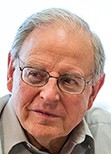
Dr. Samuel NafzgerDr. Samuel Nafzger wrote in his 2018 seminary textbook Confessing the Gospel, p. 686 :
“The gospel has a power … independent of the Scriptures”.  
This is essentially unvarnished enthusiasm.  Luther correctly translated the last phrase of John 1:1 – "and God was the Word".  So where does Nafzger think the "gospel power" is… if it is not in the external Word?  Nafzger's teaching is essentially what Pieper identifies as false teaching.  Separating Christ from the Scriptures goes against His Word, and Dr. Nafzger not only “deceives himself”, but would deceive his whole Synod.  Nafzger's textbook is the official textbook to replace Pieper's Christian Dogmatics.  Dear reader: may you or I never turn a "happy inconsistency" into an unhappy consequence! —  In the next Part 13

Wednesday, November 6, 2019

Pfotenhauer funeral sermon for Franz Pieper, part 1 of 2

At Home in the House of My Fathers, translated by Matthew Harrison, 2009 CPH book
      The following sermon was translated into English by Matthew C. Harrison in CHIQ vol. 66 (Spring 1993): 39-42 from a 1938 book of sermons by Friedrich Pfotenhauer, fifth President of the Old Missouri Synod.  Harrison then had it reprinted in his 2009 CPH book At Home in the House of My Fathers, p. 782-785. This sermon had originally been published in German in Der Lutheraner vol 87, (June 16, 1931) p. 194-195 magazine and so the German original is available for public viewing.
      Why would I re-translate this sermon into English now… since it has been published twice by Harrison?  It is because he, since his earlier works, now shows that he has largely left "the House of his Fathers".  What theologian did Harrison quote in his President's Report at the 2019 LCMS convention (p. 1)?  Hermann Sasse, not Pieper, not Walther.  I want this funeral sermon for the Twentieth Century Luther to be freely available to all Lutherans.

Translated by BackToLuther using DeepL, Google, Microsoft, Yandex. German text available here.
- - - - - - - - - - - - - - - - - - - - - - - - - 
Friedrich Pfotenhauer, fifth president Missouri Synod 1911-1935 (image from "Ebenezer" p 334)
Pres. Friedrich Pfotenhauer
Funeral Sermon on John 17:10,
held at the funeral of F. Pieper on June 6, 1931.
——————
In Christ Jesus, our faithful Saviour, heartily beloved mourning assembly!
The chosen text is taken from the high priestly prayers of our Saviour, which he spoke in the face of his impending suffering and death. In it He asks his Heavenly Father for the Church of the New Testament to preserve it and to lead it through the need of time to eternal glory. When the Saviour in our text says to His Father: “I am glorified in them”, he thanks his Father and praises that the faithful and especially the faithful teachers of the Church glorify Him and praise His name.
If we look back on the long life and work of Dr. Pieper, which has now reached its end through death, we realize that it is a fulfillment of the chosen words of our Saviour.
Well then, let us who are gathered here to lay to rest our father in Christ in the tomb, let us reflect a little on these words of prayer of our Saviour, so that we may not fall into too great a sadness for our loss, but rather, as Christians should, confidently praise our Father in heaven.
Allow me to show you under the counsel of God the Holy Spirit:
How is our Lord Jesus glorified in our teacher who has fallen asleep?
1. By recognizing our teacher Jesus as the only Savior in faith;
2. by spreading this knowledge through word and writing.
1.
Our chapter begins with the words: “These words spake Jesus, and lifted up his eyes to heaven, and said, Father, the hour is come; glorify thy Son, that thy Son also may glorify thee: As thou hast given him power over all flesh, that he should give eternal life to as many as thou hast given him. And this is life eternal, that they might know thee the only true God, and Jesus Christ, whom thou hast sent.”, v. 1-3. [John 17:1-3]
From these words we see that the Lord Jesus is glorified in a man when He is seen by him in his saving form, as the eternal Son of the Father, sent into the world to save and redeem men from all sins, from death and from the power of the devil and to give them eternal life. By nature no man has this knowledge of Christ. No man can give it to himself by his own reason and strength. We are so blind by nature that we cannot see the splendor of our Saviour, so mischievous it is that we transform His glory into an image like that of a moral teacher or hero of virtue. It is exclusively God’s work that a man's eyes are opened, so that he recognizes Jesus in His saving form and can no longer turn his eyes from Him, cannot see enough of Him, believes in Him and relies and trusts in Him alone. Therefore our Saviour asks His Father in His high priestly prayers: “Glorify thy Son!” v. 1, 5. [John 17:1, 5]
And O! blessed is the man to whom such glorification has been given! Although someone may be at home in all areas of human knowledge, may have acquired all earthly knowledge, such knowledge does not bring lasting, eternal profit. It is different with the knowledge of Jesus Christ. This is where salvation can be found. Our Saviour says: “And this is life eternal, that they might know thee the only true God, and Jesus Christ, whom thou hast sent”, v. 3. [John 17:3]
Now this is the comforting thing about the coffin of our dear father, that Christ was glorified in him, recognizing Jesus as his one and only Savior in faith and relying on Him with firm confidence in life and death. The one here departed had not a closed nature. He possessed to a great extent the gift of communication and entertainment. [!
And in the course of dealing with him it soon became apparent that his heart was surrounded by a bright glow and was enlightened by the knowledge of the clearness of God in the face of Jesus Christ. In his heart reigned the several articles of Jesus Christ, who was for all his spiritual and divine thoughts the beginning, middle and end. His mouth overflowed, and his face brightened when he spoke of the love of his Savior, <page 195> who had come to save him and to redeem him, with His holy blood of God, from death and damnation. In the sunshine Jesus bathed his soul. The friendly face of his Saviour made him certain that he was in favor with God. The warm love with which his Saviour surrounded him made him willing and ready to consume his strength in the service of his neighbor and to flourish and blossom in the cross and tribulation, which was not lacking. And when it came to death, his Saviour appeared to him as the overcomer of death, and fulfilled in him His Word: “Father, I will that they also, whom thou hast given me, be with me where I am; that they may behold my glory, which thou hast given me”, v. 24. [John 17:24]
So we praise today in the coffin of our father in Christ the great kindness of our God, which brought him to the knowledge of his Saviour and made him attain the end of faith, the soul's salvation, and comfort us that he now, far from all earthly wailing, sees his Saviour face to face in eternal joy and blessed light.
But our Saviour is glorified in the departed not only by the fact that he has recognized Him in faith as his personal Saviour, but also by the fact that the departed has spread this knowledge by word and in his writings.
= = = = = = = =  conclusion in Part 2  = = = = = = =

      President Pfotenhauer reveals the splendor of Pieper's teaching, because it gave all glory to God.  But now that Pieper was gone, what next for his Synod?  Pfotenhauer pronounces ominous words about this, words that even President Harrison highlighted in his own introductory remarks on this sermon.  This will be shown in the concluding Part 2.

Monday, November 4, 2019

Fundament 11: Means 2: Luther & enthusiasts; Nafzgers; Eric G. Phillips

      This continues from Part 10 (Table of Contents in Part 1), a translation of Franz Pieper's essay on the foundation of the Christian faith ("Das Fundament des christlichen Glaubens"). —  The term "enthusiasts" is a confusing English word because its meaning in the spiritual sense is different from general usage.  The word in German is Schwärmer or Enthusiasten., in Latin "enthūsĭastae" (see #3-5 here). I tend to like the more perjorative term "swarmers" as we find the world swarming with those who think they are inspired… instead of Holy Scripture. But Luther (and Pieper) set us straight on just what spiritual "enthusiasm" is and how to defend against it.
= = = = = = = = = = = = = = = = = = = = =
Text preparation and translation by BackToLuther using DeepL, Google Translate, Microsoft Translate, Yandex Translate. All bold text is Pieper's emphasis. All highlightingred text, and most text in square brackets [ ] is mine.

The Foundation of the Christian Faith.
[by President Franz Pieper, Concordia Seminary; continued from Part 10 - page 131]

Luther's struggle against the enthusiasts (Schwärmer) at the time of the Reformation was nothing less than a struggle for the foundation of the Christian faith. Under the illusion and pretence that they must warn Christianity against an externalization of the Christian faith and stand up for the glory of the great, majestic God threatened by Luther's clinging to the external means of grace, the enthusiasts most emphatically taught a separation of both the divine revelation of grace and the divine effect of grace from the means of grace
The Reformed
They all agree on that: Carlstadt, Zwingli and comrades. This subheading covers Zwingli's well-known assertion that the Holy Spirit does not need a vehicle (vehiculum) to come down to us men. 62)  Calvin teaches the same separation of the Holy Spirit from the means of grace when he says that the sacraments do not bring about (advehunt) the Holy Spirit to all without distinction, but only to “his” ones, and that the “inner grace” of the Spirit should be considered and thought of as segregated (seorsum), as distinct (distincta) from the external administration of the means of grace. 63) The same separation of the action of the Holy Spirit from the means of grace is taught almost more decisively by our American “Orthodox” Calvinist dogmatists. Charles Hodge: 64) 
“The influence of the Spirit acts immediately on the soul. — Efficacious grace acts immediately. — In the work of regeneration all second causes are excluded. — Nothing intervenes between the volition of the Spirit and the regeneration of the soul. — There is here no place for the use of means any more than in the act of creation or in working a miracle.” [page 132]
-------------- 
63) Inst. IV, 14, 17.

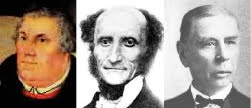
—The outer Word of the Gospel may be present or current, but rebirth or faith is not effected through the Word of the Gospel: “Truth [in the case of adults] attends the work of regeneration, but is not the means by which it is effected.” William Shedd: 65) “The influence of the Holy Spirit is directly upon the human spirit and is independent even of the Word.” Likewise modern theologians, because they deny the satisfactio vicaria and do not want to “identify” the Holy Scripture and God's Word—from Adolf Harnack to the positive circles [to today’s LC-MS]—have entered with full sails into the port of the Reformed enthusiasts.
Adolf Harnack criticizes Luther as follows: “The Christian, as Luther himself knew best (!), does not live by the means of grace; he lives through the personal union with God, which he experiences in Christ”. 66) Harnack means that if a person wants to experience the “personal union” with God in Christ, i.e. to become inwardly and truly pious, he must above all reject the means of grace in the sense that grace is given through them. Through his insistence on the means of grace, Luther had misdirected the Reformation and thus “retreated into the deserted narrow circles of the Middle Ages”. 
But also Ihmels has expressed himself to the effect that 67) the faith of the first disciples in Christ was not enlisted by the individual sayings of Christ about his person, and adds: “Rather it [faith] grew out of the impression of reality 68) under which the disciples stood daily. Also today is only the real faith in Christ, which is imposed on 68) man by his appearance himself 68). It cannot be said seriously enough that if Jesus really is what the Church confesses Him to be, He Himself must also be able, through His reality, 68) to convict of that reality.” A strange contrast between the impression of Christ's “reality” and Christ's Word! 
The true “reality of Christ”
Christ rejects this opposition when he says: “If ye continue in my word, (ἐν τῷ λόγῳ τῷ ἐμῷ), then are ye my disciples indeed and ye shall know the truth” (John 8:31-32) And again: “The words that I speak unto you, they are spirit, and they are life”. (John 6:63) With this assumption of a contrast between the “reality of Christ”, the “historical Christ”, etc., and the Word of Christ, modern theology joins the class of enthusiasts. All discourses of a “personal union with God”, an “experience of the personal Christ”, “the reality of Christ”, etc., apart from the Word of Christ, are based on self-deception and imply a falling away from the foundation of Christian faith
-------------- 
65) Dogmatic Theol., II, 501.         
67) Zentralfragen 2, p. 89.
68) Our [Pieper’s] emphasis.
= = = = = = = = = =  continued in Part 12  = = = = = = = = = =

      Both of the Nafzgers, Dr. Samuel and Prof. Peter, especially Peter, although ostensibly defending against the Reformed, e.g. Carl F. H. Henry, actually end up in their camp as “enthusiasts” by denying the reading of the written Word as a means of grace. Samuel Nafzger is less crass in doing so, yet Samuel recommends his son Peter’s book "These Are Written": Toward a Cruciform Theology of Scripture, thereby partaking in his error.
Dr. Eric G. Phillips,
Reformed scholar turns
Lutheran, by the Word.
      But just when I wonder that all true teaching seems dead in the LCMS, then I find an essay by a new contributor to Concordia Theological Quarterly, Dr. Eric G. Phillips.  In a masterful, scholarly essay, he unmasks the misunderstanding and misuse by erring Lutheran theologians of the phrases "theology of glory" and "theology of the cross" from Luther's Heidelberg Disputation of 1518.  But to my great joy, I read the following report about Pastor Phillips (Concordia Luth. Church, Nashville, TN, 🔗): 
“He is a convert to Lutheranism (it started with 1 Peter 3:21: 'Baptism now saves you')”
Phillips is like Wallace McLaughlin who came out of the Reformed.  And McLaughlin, in his journey to orthodoxy, used Pieper's Das Fundament to counsel his congregation! — In the next Part 12