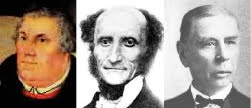
This concludes from Part 2 in a 3-part series (Table of Contents in Part 1) presenting certain highlights from the 1980 book by ALC theologian Edward C. Fendt regarding the controversies between the LC–MS and the ALC. —
- - - - - - - - - - - - - -

317: Prayer Fellowship in post-Walkout times: “Even though the LC-MS has been led to declare that for it the A.L.C./ LC-MS fellowship is a "fellowship in protest" I know that a fellowship of prayer between the members of the A.L.C./LC-MS commission still exists”” [1978 – prayer fellowship under J.A.O. Preus??]
318: “... that A.L.C. support of the "dissidents" only and not of the LC-MS in this struggle was a serious matter for the LC-MS. … This could cause some problems in the future.” [This seems to expressly declare that the ALC officially supported the “dissidents”, or so-called “moderates” or “progressives”. Many of today's LC–MS leaders and teachers would sympathize with them.]
- - - - - - - - - - - - -
But the most stunning account that Fendt related was the "breakthrough" of the prominent LC–MS theologian Prof. Theodore Graebner. Although I reported on this in 2011 (here and here), I want to repeat it here again, from p. 26-27:
- - - - - - - - - - - - - - - - - - -
But the real “breakthrough” in Dr. [Theodore] Graebner’s change in attitude toward other Lutherans was observed at the Philadelphia meeting of this conference (joint faculty meetings which started at Valparaiso) several years later. In a session when Dr. Elmer Flack of Hamma presided, Dr. Graebner asked for the floor to make a statement. I wish somebody had taken down the statement, but all of us were intent to listen carefully; the statement in essence was:
“All of you know how active I have been in keeping my church suspicious and hostile with respect to developments in other Lutheran churches. I want you to know that I regret many things I have written and said. I have learned to respect and trust many Lutheran brethren in other synods. From now on I shall devote the rest of my life, the few years that may remain to me, to rectify matters and plead with my brethren in the Missouri Synod to follow my example.”
.jpg)
At times his voice halted and tears came into his eyes while making this statement. All of us in the meeting were stunned, not exactly surprised, but lacking words to express our appreciation. I remember seeing Elmer Flack’s tears roll down on his face and temporarily he was immobilized. But after a bit he arose and without saying a word he stepped over to shake Dr. Graebner’s hand and embrace him. Then I remembered Dr. Greever’s prediction (watch Graebner for changes) and thanked God with the others at the meeting for Dr. Graebner’s statement.
- - - - - - - - - - - - - - - - - - -
There is much material in Fendt's book that that does not deal directly with the LC–MS. Yet it will give the reader much of the background information to more fully understand the opposition. — The sad thing for me is that, since the LC–MS tolerated "moderates" after the Walkout if they did not leave, they now find themselves in just the same dangerous position as in the times leading up to the Walkout of 1974. May God have mercy on that church body!
- - - - - - - - - - -
Postscript: For those who have purchased the 2024 CHI book Rediscovering the Issues, they may want to compare Pres. Matthew Harrison's brief "Historical Introduction" with Fendt's earlier history. Although Harrison's writing is not without benefit, yet it and the rest of the book, mostly dwells on the latter events that had their roots during Fendt's history, and so, after reading Fendt, one is left with far fewer questions than by just reading the 2024 CHI book.

No comments:
Post a Comment
Comments only accepted when directly related to the post.