Search This Blog

Showing posts with label Matthew Harrison. Show all posts

Sunday, June 22, 2025

Pff2: Evangelical doctrine, “defend to the death”; Harrison a “deceitful peacemaker”?

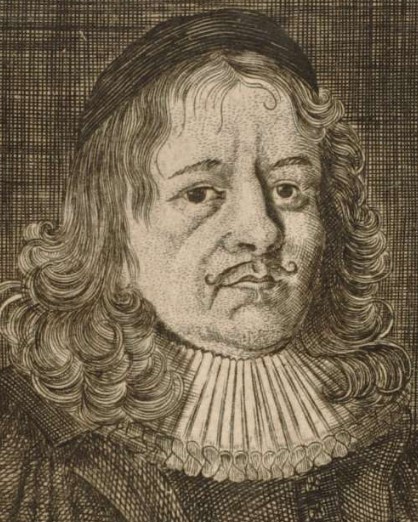
      This continues from the previous Part Pff1 (from April) (Table of Contents in Part Pff1) in a 3-part presentation of the old Missouri Synod's reprint of August Pfeiffer's influential book Lutheranism Before Luther. — If there is one quote that stood out to me above all others, it was this one in Pfeiffer's Preface, page 3:
 “As long as the Pope remains Pope and we Evangelicals remain Evangelicals, a reasonable person can easily see that no religious settlement can be hoped for between us, that deceitful peacemakers are not to be trusted, and that it is best to defend the truth to the death, as God wills.”
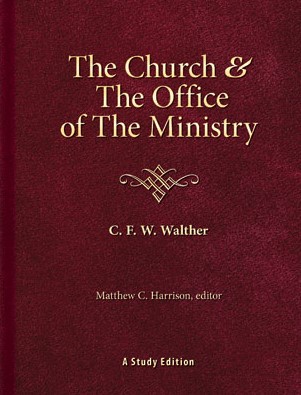
Compare this with LCMS President Matthew Harrison's comment in his Preface to his translation of Walther's Church & Office:
“As I perused the Catechism of the Catholic Church for contemporary documentation of positions of the Roman Catholic Church which Walther addresses and which are the object of Lutheran polemic, I noted numerous points of remarkable convergence of Lutheran and Roman Catholic doctrine on the Office of the Ministry. While we must reject what is false, we can also joyously note what is rightno matter who says it.”
Would it not be fair to say that Pfeiffer would call Pres. Harrison a "deceitful peacemaker"? — Let us hear more from our dear Pfeiffer:
Notable Quotes:
5: "Where one Pope decrees contrary to the other, one of the two must necessarily err in his decree"
6: "popes have often in their decrees…run directly counter to the revealed Word of God"
17: "they invoke the authority of the Church" over Christ and the Apostles.
24: "so the wine that is not partaken of sacramentally, but is poured out carelessly, is not Christ's blood, but only mere wine"
30: "the one against whom the following writing is directed, namely a Jesuit, Fr. Arnold Engel…has copied his entire work from others, has not yet read our writings properly, has not examined the passages from Luther and others himself" [A common practice of papists in their polemics.]
33: The papists' "great following does not harm the lies and our small following does not harm the truth".
36: Jesuit Jacob Reihing "turned from a zealous champion of the Roman Church into a staunch confessor of the evangelical doctrine"
37: Papacy "like a rotten fish".
44: "since they [papists] have no intention to proceed in the main controversy, to make a diversion…and to lead us away from the Scriptures". 
44-45: "this Antichrist is none other than the Roman Pope [regarded not as a single person, but as an ever-living enemy in many successive persons]" [See this blog post.]
50: "so it is enough that I know and prove that the Pope, as he now is, is the Antichrist, … even if I cannot specify, know or point out the year and day when he first became so."
55: "is it not enough that we show the papists their gross errors from God's infallible Word…?"
59: "the pope's growth …is seen for the first time in Victor as a child or child in the womb, in Boniface III as an adolescent or boy, in Leo III as a youth…, in Gregory VII as a man, and in Leo X as an old man"
67: Fr. Engel "claims that if the papacy were…not from God, it would not have stood for so long"
70: "One must therefore distinguish the papacy, i.e. the falsifications of doctrine…from that which has remained good under the papacy."
77: "…but therefore the Papists are as little catholic as a quack is a doctor".
77-78: "Father Engel…wants to insist on the everlasting succession,…from one bishop to another… It is enough that the faith remains in the divine Scriptures and in some people's hearts at all times."
81: "This question: whether before Luther there were Lutherans or Christians of the same mind or faith as Luther? …has already led many a man to fall away and fall into hell".
84: "if we now speak of doctrine,… all orthodox believers before Luther were certainly in agreement with Luther in the fundamentals of Christian doctrine".
89: "it of no help to the papists that they object that all other heretics also appeal to Scripture" [See how Prof. Joel Biermann uses the same tactic as the papists.]
90: Papists "do not desire to learn the truth from the divine Word".
95: "it may well happen, and has happened very often, that the visible church…which publicly professes the true Christian faith…is covered with the clouds of affliction, stirred up…by false teachers" [Cp. to this blog post on old Missouri's teaching.
103: "But with such “new” [Lutheran] doctrine we already want to go to heaven, which is new in the eyes of the Pope, but old in the eyes of Christ."
105: "we have a legitimate calling.…rather congratulate ourselves that we do not have the papal mark on us."
119: "so they are even greater fools who therefore fall away to the papacy and rely on the fact that in the end they can depart on Christ's merit". [e.g. Father Richard John Neuhaus]
125-6: "the term “Roman Church” has two meanings…Either by the Roman Church is meant the multitude of those who cling to the Roman Popeor the remnant of the ancient Roman Church, or the pious Christian hearts among the outward group of the Roman Church"
129: "I hope that Fr. Engel's little nut will have been bitten open in this way and, praise God, it has left me without any toothache." [:-) – Pfeiffer's lighthearted joke!]
131: "he knows well that according to the papal doctrine no man can be assured of God's grace"
134: Luther "is as little to be called a weather vane as Augustine".
138: "For their 'unity'…is only enforced and does not consist in the unity of the Spirit".
145: "Not Luther, but the Pope has hatched completely new and unheard-of doctrines"
163: "that I therefore not only maintain the unconquerable and alone saving evangelical doctrine before and after, but also defend it against you and your kind to the death".

There it is again, that phrase "defend to the death", both in the Preface and here in his hot battle against the Jesuit Father Engel. Pfeiffer signals the absolute importance of the "evangelical doctrine", i.e. the Gospel – it is a matter of life and death. — In the concluding Part Pff3, we explain some details pertinent to our translation, and then present our full translation.

Wednesday, April 16, 2025

EC3: Confessional Subscription (of Pres. Harrison?) (Western 1858, again)

[2025-06-29: added appendix at bottom where Confessional subscription came into play in discussion on Election or Predestination; 2025-05-24: updated and expanded download links below;]
      This continues from Part EC2 (Table of Contents in Part EC1), a series restoring availability of English translations of several of Walther's convention essays that have seemingly been abandoned by Concordia Publishing House. — Although the following essay (Western District, 1858) has previously been translated three times, in CTM XVIII p. 241-253,  by Theo. Tappert and by Matthew Harrison (At Home in the House of my Fathers. p. 120-137), yet its importance cries out to be revisited again to see where these translators may be suspect in their own "Confessional Subscription". This becomes abundantly clear on page 12 of the original report where Walther makes the following statement against Pastor Wilhelm Loehe (underlining is Walther's own emphasis):
     In a similar spirit [as the Reformed and Calvin!], a few years ago an entire conference of Lutheran preachers gathered in Fuerth in Bavaria, headed by Pastor Loehe in Neuendettelsau in Bavaria, encouraged our Synod to understand and interpret the Symbols according to Scripture in order to come to an agreement on the controversial doctrines of Church and Ministry. …these additions [of Loehe] rather indicate that one cannot accept them as they read, and that one therefore requires to be able to connect with the words of the symbol a meaning which does not lie in them, but which one considers to be the right Biblical one. [Compare Harrison's translation here, p. 124-125.]
Rev. Matthew Harrison
As I was polishing my translation at this point, I kept comparing it with Rev. Matthew Harrison's translation. I wanted to see what comments he would have concerning this major fault of his favorite theologian, Wilhelm Loehe. Would he be critical of Loehe at this point? Harrison himself was critical of the 1947 CTM translation which 
"was an abridgement, which unfortunately left out most of the critical references to other American Lutherans (an indication perhaps of where the Synod was headed already in 1947)."
On this point Harrison was critical of his own LC–MS of 1947 and their unionistic spirit. But he was totally silent when Walther brought up the false confessionalism of Loehe, even while Harrison praised the idea of "Confessional Subscription" in his introduction to Walther's essay. — More evidence brought forward by Walther, p. 13:
"A fourth way of subscribing the symbols only conditionally is to declare that one can only profess what is confessional in them. Pastor Loehe, for example, only subscribes the symbols with this condition. He writes: 'I distinguish in the Book of Concord what is confessionally said and what is not confessionally said, — and I distinguish even more. It does not occur to me to stick to the letter and be guilty of symbololatry. I accept what is confessedly (confessionally) said in the confessional writings.' It goes without saying that this excludes a significant part of the doctrinal content of the symbols from what can be professed as one's faith; just as Pastor Loehe, in the same writing where he states the above, openly declares several parts of doctrine found in the symbols to be not pure and therefore capable of purification." [Compare Harrison's translation here, p. 125.]
Again, no comment by Rev. Harrison. To praise confessionalism while not defending it vigorously is empty praise.
      While Harrison's translation is now freely available to the public on the Internet Archive, and is perhaps better in some respects, yet my translation includes (1) Walther's own emphasis of wording that is sometimes missing in Harrison's translation, (2) links to some of Walther's sources and (3) links to each original German page. I have added highlighting and some comments along the way.  It is presented below in an embedded window:
Web version >> here <<;  be download >> here <<; German original  >> here <<.

      In the next Part EC3a we publish a short blurb from this same 1858 Western District report against Pastor Loehe on another doctrine, the Last Unction, or Extreme Unction.
- - - - - - - - - - 
[2025-06-29: Appendix] 
      It has been discovered in another place where confessional subscription came into play, in 1880 at a large Pastoral Conference dealing with the controversy on the Doctrine of Election. This was documented on page 54 of the 2018 CPH book Walther's Works: Predestination. There the translation of the proceedings record the following, probably from Walther: 
"The Book of Concord must be interpreted by means of itself, even as Scripture must be interpreted through Scripture. Everyone is his own best interpreter. If someone wants to say we must interpret the Book of Concord according to Scripture, then he is saying that one cannot trust the Formula of Concord, that one must first correct it according to Scripture."

Unfortunately, Dr. Martin Franzmann did exactly that, according to Dr. Fendt, as we will see in Part EC3b.

Monday, December 9, 2024

John Gerhard, Prof. Mayes defend "grace alone" (vs Harrison)

Gerhard's "On Good Works" — Prof. Benjamin Mayes
        While researching some writings of John Gerhard, I had occasion to glance through the 2020 CPH book On Good Works - Theological Commonplaces. What impressed me was how thoroughly Gerhard defended against the Roman Catholic theologian Robert Bellarmine, who doggedly defended his Church's doctrine of "grace and works" for salvation.
      The editor of this volume is Prof. Benjamin T. G. Mayes, a theologian who has been shown to hold questionable theology in other blog posts here and here. So it came as a surprise to me that he spoke well about Gerhard's strong defense against the Roman mixing of grace and works. What was perhaps most helpful was his quote from Catholic sources of their "Response" to the 1997 Joint Declaration of the Doctrine of Justification. On page xii, Prof. Mayes quotes this Roman "Response":
“We can therefore say that eternal life is, at one and the same time, grace and the reward given by God for good works and merits” — (Pontifical Council for Promoting Christian Unity) (see archived copy here.)
That is an official statement of the Roman Catholic Church in 1998 under Pope John Paul II. Prof. Mayes' republishing of this statement was most helpful for Lutherans today in order to see that there remains a major difference between Lutherans and Catholics. The Roman Catholic Church is the same church today as it was in the days of the Council of Trent. Now Prof. Mayes goes on to make the following statement of "Applications to Modern Theology": 
“Gerhard’s response [to Catholic theology] will thus be applicable to modern ecumenical discussions…”
That is a very appropriate statement! But our professor does not go into detail of what these "modern ecumenical discussions" might or should be. Perhaps that was not the place to do it. But he should have "discussions" within his own church body, particularly with President Matthew Harrison, who in his presentation of Walther's Church and Office said this (p. xiv, emphasis mine):
Pres. Matthew Harrison
“As I perused the Catechism of the Catholic Church for contemporary documentation of positions of the Roman Catholic Church which Walther addresses and which are the object of Lutheran polemic, I noted numerous points of remarkable convergence of Lutheran and Roman Catholic doctrine on the Office of the Ministry. While we must reject what is false, we can also joyously note what is right—no matter who says it.”
Now if Prof. Mayes actually believes what John Gerhard defended, then he would recognize the fallacy in Harrison's statement. Because when the Roman Catholic Church condemns "grace alone" and "faith alone", it has struck at the heart of the Christian faith. And so there can be no "convergence of Lutheran and Roman Catholic doctrine", no matter what doctrine the papists teach.

==>> Prof. Mayes: Do you really believe what John Gerhard defended? It seems that your spiritual leader causes one to question "grace alone".

Saturday, June 1, 2024

CM5: Pres. Harrison "At Home" with Rev. Harrison?

[2024-09-08: added links to Harrison's book on the Internet Archive - quotes readable directly now.]
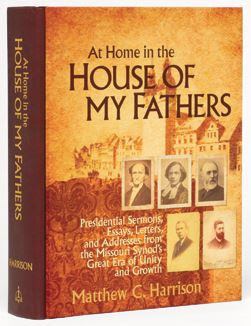
      This continues from Part CM4b (Table of Contents in Part CM1) in a series defending Walther against a false portrayal by LC-MS President Matthew Harrison on the doctrines of Church and Ministry. — After researching Pres. Harrison's writings, especially his Romanizing tendencies in his editorial comments in his 2012 Church & Office  book, I was struck by his earlier comments in his At Home in the House of My Fathers (or At Home) book (text © 2009). This was authored before he was elected as President in 2010. What was the difference? In the "Preface" of his 2012 Church and Office book is the following, p. xiv
"As I perused the Catechism of the Catholic Church … I noted numerous points of remarkable convergence of Lutheran and Roman Catholic doctrine on the Office of the Ministry." [One only finds the opposite conclusions in all of Walther's writings.]
At Home in the House of My Fathers (CPH)
But then I read in his 2009 comments in his At Home book on Walther's 1848 Address to the Synod, "The Synod Has No Power But the Word of God", p. 1:
Do we believe in sola scriptura, or rather sola structura? After so many years of strife, political activity, and division, our only hope for unity is to regain Walther’s vision of a synod that knows no unity by compulsion, by human regulations and laws. The Synod has only the power of the Word of God. Where the Word is silent on a matter, there is freedom ruled by love. God grant us repentance so that the endless wrangling over bylaws gives way to a never-ending love for God’s inerrant Word. We shall find unity again as we humbly and avidly join together in deep repentance and reverent consideration of the Word of God. “To be sure, there are matters which the Word of God does not regulate [adiaphora], but which must be arranged in the Church. But all such matters are not to be arranged by any power above the congregation, but the congregation, that is, pastors and hearers, arranges them, free of every compulsion, as it is necessary and appears salutary.” As Walther says, “We have only the power of the Word.” Anything else ends in coercion, and the result is division.
And in the same book, Harrison's prefacing comments to Walther's 1879 Iowa District essay on the "Duties of an Evangelical Lutheran Synod" (At Home, p. 261-262):
…it is vital for all of us to give careful attention to this essay… we would do well to understand the beliefs, motives, and intention behind the formation of the Synod… The genius of Missouri was doctrinal unity and concern, combined with congregational freedom in matters not governed by the Word of God. And every congregation, no matter how small, had an equal voice in synodical life. This has worked for great consistency and stability.
In his earlier writings, Harrison gives no hint of his later assertions for "transcongregational", "supracongregational", and "synod as 'church'" expressions. Was he hiding this in 2009 or did he change his opinions? Only he knows. — In the next Part CM6a, we quote an important passage from Walther's 1879 Iowa District essay to get a footing on the doctrines of Church and Ministry. This essay will be used for the next 3 blog posts. 

Tuesday, May 7, 2024

CM1: Harrison's false claims of Walther on Church & Ministry: Harless's Kirche und Amt (Part 1 of 10)

LC–MS Pres. Matthew Harrison & his re-translated book
[2025-02-22: Added note in red below.]
     The doctrines of Church and Ministry are a major focus for the leaders and teachers of the LC-MS today.  Towards this, President Matthew Harrison put a massive effort into his 2012 re-translation of Walther's Kirche und Amt book, Church and Officepromoting the notion that his theology is the same as C. F. W. Walther's. (I have blogged before on this 4 years ago.) Harrison brought in his "sainted teacher, the Rev. Dr. Kurt Marquart" to support his own assertions. The scholarship that went into this book is striking, citing many sources and resources, giving much additional material from the 19th century. It may be noted that he cites numerous recent German theologians, especially in support of his assertions. 
      Others have written much to defend against President Harrison (and Prof. Marquart) on theological, scriptural grounds.  But is it true, that Walther not only did not defend against, but taught that the Synod was also the Church in the same sense as the congregation? This is the striking feature of both protagonists. Marquart states (The Church and Her Fellowship, Ministry and Governance, xi)
"…some popular impressions of, say, Walther's actual position, are one-sided and even inaccu­rate."
Harrison goes into more detail regarding his assertion on page xi:
"…in the American context with its self-governing and largely autonomous congregations, the understanding of what it means to be church is pulled strongly toward the local congregation and away from being a broader fellowship, such as a synod or even the universal Church. We see this disconnect most clearly when we consider Walther's rendering and application of texts compared with Mueller's choice to translate Kirche as "congregation."
[2025-05-08: Compare this to Walther's statement at the 1866 synod convention here.] Harrison is here building his case for his assertion that culminates on page 65, where he states that 
a synod is in fact "church" because it is a transcongregational expression of ecclesiastical unity.
Harrison is backed up by the 1981 CTCR report "The Ministry" which states "It is God’s call mediated through the church (as a single congregation or a group of congregations)" (p. 29) That corresponds to Harrison's term for a "synod" as "a transcongregational expression". — But did Walther really teach that "a synod is in fact 'church'" in the same sense as the congregation is "church"? Did Walther really teach against the later "popular impressions" and "[J. T.] Mueller's choice" of terms? Is Harrison's assertion against "Mueller's choice" of terms really true for Walther? To address this conundrum, we will respond in several ways. 
———————————————————
Gottlieb Christoph Adolf Harless (Wikipedia)
     The first response concerns the 19th century German theologian Gottlieb Christoph Adolf Harless. Harless held a high position in the German Church. Pres. Harrison states the following against him on the above doctrines (p. xv):
[Hoefling] "'denies the positive divine institution of the office [Amtes]. For him only the general office of the priesthood is divinely instituted, namely, the functions of Word and Sacrament.' Gottlieb Christoph Adolf von Harless… held similar views."
By this reference, Harrison condemns Dr. Harless on the "Ministry", charging him with a low view of the office of the Ministry (Marquart does not.). (2025-02-22: But compare with Harrison's earlier praise of Harless in his At Home book, p. 110.) Harrison sides with those such as Loehe and Kliefoth, and a more recent German theologian Hellmut Lieberg
      But what was Walther's opinion of Harless? Did he condemn Harless as Harrison does? — 
      Just as Walther had done in 1852, Harless authored a book in 1853 on "Church and Ministry". After he read this, Walther jumped at the opportunity to give his comments on Harless's theology of Church and Ministry. While processing the volumes of Der Lutheraner for OCR text, I ran across Walther's 1854 review of Harless's Kirche und Amt. All of these writings are within a 2 year period, so Walther knew that his readers were familiar with his famous book from 1852. The following is from Der Lutheraner, vol. 10 (1854), pp. 170-172. Footnotes were re-positioned to be closer to their text. [Ggl Bks; DE docx; EN]:
- - - - - - - - - - - - - - - - - - - -

Church and Ministry

according to Lutheran doctrine.

Compiled in fundamental propositions with Luther's testimonies by

Dr. G. Chr. Adolph Harless

Senior Consistorial President in Munich.

(Stuttgart by Liesching.)


[Review by C. F. W. Walther, Part 1]

 
C. F. W. Walther

At the end of last year [1853], the excellent and distinguished theologian Dr. Harless published a paper under this title, in which he gives his voice in the dispute over the doctrine of Church and Ministry just as briefly as it did clearly and decisively. In the foreword, he himself speaks as follows about the occasion that prompted the esteemed author to publish this pamphlet: 

"A special occasion gave rise to the pages published here. It was the request to give a kind of arbitral judgment in a dispute that had arisen in the German-Lutheran Church in North America. *) However, since it does not only seem to be a matter of principles, but also of the manner of their assertion in individual cases, I saw myself unable to render a judgment in arbitral form without hearing the disputing parties and without inspecting the files of both sides.  **) But the invitation was important enough for me to ask myself whether this was not a clear signal to break a long silence. For what is moving the minds there is ultimately nothing other than the dispute about Church and Ministry, which has arisen within the Lutheran Church in Germany for some time and has led to many a feud. So far, I have not been able to maintain a complete and undivided position with either the one [anti-hierarchial, Hoefling] or the other ["high church", Kliefoth-Loehe] of the disputing parties. It was partly due to the matter, partly to the way in which the arguments and evidence were presented."

----------------------

*) It is not said by whom this request was made. The Editor. [Walther]

**) Dr. Harleß is therefore not in agreement with the principles according to which the Leipzig Conference acted.  The Editor.

- - - - - - - - - - - - - -  Continued in the next Part CM1a  - - - - - - - - - - - - - - 
      Walther gleaned from Harless that he was not in agreement with a major German church conference. I suspect that the Leipzig Conference was leaning in favor of the Kliefoth-Loehe-Dieckhoff "high church" camp (instead of towards Hoefling) of giving more right to the public ministry by taking it away from the local congregation. In fact, we get a strong clue from Walther himself, in the next Part CM1b, which concludes Walther's review. Then Part CM1c will publish all 18 theses from Harless's pamphlet.
- - - - - - - - - - - -  Table of Contents  - - - - - - - - - - - -
CM1: Pres. Harrison's assertion: Walther supports me, Harless in error; beginning of Walther's review 
CM1b: Walther reviews Harless II (Romanism); Harrison's & Lieberg's unbalanced, Romanizing teaching
CM1c: Harless's propositions (III) (w/ notes)
CM2: Pieper quotes Walther on "Church" (against Harrison)
CM3: Walther's "Antitheses" to his Church and Ministry (against Loehe & Harrison)
CM4a: Pieper follows Walther on Church & Ministry (I); Pieper, "our greatest theologian"?
CM4b: Preger: Loehe & Kliefoth deny Justification (Pieper recommends)
CM4c: Pieper's essay "Church & Church Government", in English (1896 Missouri convention)
CM5Pres. Harrison "At Home" with Rev. Harrison?
CM6a: Walther's 1879 Iowa: “Congregation is supreme court in its sphere”
CM6b: Harrison omits Walther's emphasis of congregation, his whole point (1879 Iowa)
CM6c: Harrison's “challenging tension” vs Walther's "evangelical, gentle, loving bond" (Iowa 1879)
CM7: Walther's 1848 Synod: no machine, but a living organism; missing section restored 
CM8: Kliefoth- if only he learned from Walther (Free Church obituary)
CM9a: Lochner & Craemer on Loehe's Romanizing: a co-founder vs. a "co-founder"
CM9b: Lochner & Craemer: "Missourians until death" (not Loehe's men)
CM10: Dr. Schurb vs Pres. Harrison (on Lieberg vs. Walther)

Tuesday, July 21, 2020

LCMS-Harrison vs. Walther on "Church and Ministry" (Excursus)

      This post is an excursus to the previous post "Hist11: Chapter 7" of Hochstetter's History.  The depth that the LCMS has fallen to Romanizing becomes even more apparent from this History and has caused me to produce a separate blog post instead of an add-on to the previous post. This matter is not a minor doctrinal issue for Lutherans, but about "far-reaching doctrinal differences".
Reversing Walther's teaching
by Matthew Harrison
LC-MS Pres. Harrison with Vice Presidents (2019)      Hochstetter's chapter 7 hits home against President Matthew Harrison and his LC-MS today. While Harrison praises Walther in his editorial comments in his re-translation (and mis-translation) of Walther's Kirche und Amt, (Church & Office, CPH 2012), he reinterprets the Lutheran Confessions and misunderstands Christ's words in Matthew 18:17-20.

Synecdoche: figure of speech
      Harrison makes maximum use of the term "Church" as a synecdoche, a figure of speech, in order to confuse the term's various meanings, thereby making even Holy Scripture uncertain.  It is a clever way of achieving his aims, making it seem like he is following rather than overturning Walther's teaching. This is indeed poor praise of Walther, for Walther clearly teaches what Harrison says he did not.  And Hochstetter is another witness against Harrison, along with J.T. Mueller whose better translation, Church and Ministry, in most cases is the correct meaning.  I may quibble with some of Mueller's paraphrasing, but not his general understanding of Walther. Unfortunately for Harrison, Hochstetter confirms Walther's true teaching, and Hochstetter's work was personally approved by Walther, and so Harrison cannot easily separate Walther from his later true followers, those who properly understood the rights of congregations or the local church.  Too bad for Harrison, we meet a true "Missourian" in Hochstetter, a label that Harrison explicitly derides in his later books, his books that came after his At Home in the House of my Fathers.
Confessing the Gospel (CPH 2018)
      The latest textbook of doctrine to come out of the LCMS, Samuel Nafzger's Confessing the Gospel (CPH 2018) which was personally approved by Harrison, even states (p. 1013): 
Walther’s understanding of the doctrine of the office of the public ministry may be summarized in the following points: … (7) God brings men into the pastoral office through the call of the congregation, to which the power of the keys is given.”
But Harrison attempts, with his editorializing, to claim that Walther taught that the term "church", the entity empowered to call a pastor, does not mean just the local congregation.  He says (p. 212):
I do not believe the Missouri Synod's decision to 'call' clergy to its district or national work–a practice that was ratified by convention in the early 1960s–is fundamentally at odds with Walther's views.”
How ironic it is that a textbook of doctrine with Harrison's support, which can lay little claim to orthodoxy, would affirm Walther's teaching on this very point that Harrison explicitly denies.  President Harrison essentially openly identifies with those who staged the 1974 Walkout from Concordia Seminary! And doubly ironic is the fact that Nafzger's textbook quotes J.T. Mueller's translation, not Harrison's translation, in the subsections dealing with "The Church" and "The Ministry"!  How embarrassing for Harrison that his great work is not even mentioned anywhere in Nafzger's textbooks. No, not once.

Luther's Works, volume 40, p. 371 (Gemeine translated as congregation)Gemeine and Gemeinde
      Harrison also plays fast and loose with the German terms Gemeine and Gemeinde and tries to use the change in spelling from the archaic Gemeine to the more recent spelling Gemeinde, claiming it can also be used as "Church" in the wider sense.  But not only does J.T. Mueller translate it properly to "congregation", not "church", but even the opponents of the Missouri Synod who translated Luther's writing on "The Keys" in the American Edition of Luther's Works, volume 40, p. 371) translated Luther's "Gemeine" as "congregation", not "church" (ref. WA 30II, 502, StL 19, 950, 94-95).  Imagine that!  Even Missouri's opponents, non-"Missourians", from the Romanizing old Augustana Synod (#18) knew better than the current President of the LC-MS, Matthew Harrison.
- - - - - - - - - - - - - - - 
      But enough!  Just read the Brief Statement of 1932 (English, German) and get a clear, concise declaration of the Lutheran Doctrine of the Church and the Ministry, and avoid reading Harrison's translation until one is firmly grounded in the truth of God's Word.
      I had not fully realized the depth to which Harrison has yielded to the Romanizing tendency, but now I see clearly how Harrison is not just against J.T. Mueller, but also against Franz Pieper, Christian Hochstetter, C.F.W. Walther, the Lutheran Confessions, Martin Luther, and… most importantly, against Holy Scripture – Matt. 18:17-20.  Harrison improperly uses J. T. Mueller as his scapegoat, while wanting to appear in support of Walther.  But the worst part is his attempt to use the Lutheran Confessions against themselves.  Hochstetter gives us the true picture of Walther's teaching – Walther said so.  
      Harrison's mis-translation of Walther reveals another reason why Dr. Fred Kramer's translation of Hochstetter has not been published by CPH. It is because Kramer's translation fully agrees with Walther's (and J.T. Mueller's, Pieper's, the Brief Statement's) meaning on the doctrines of Church and Ministry.  Harrison is now putting the last nail in the coffin of the Old German Missouri Synod within his LC-MS.
      No, no, President Harrison, as Walther says, your "zeal leads (you) beyond Lutheranism,", here and now.  It remains to be seen whether there are true Lutherans left in the congregations of the LC-MS, whether they can see through the subterfuge, and recognize the wolf when they see it.  Currently there is one book review on Amazon that is aware of  this ('Meh', by Micah D. Schmidt).
      Any of the laity not well versed in the doctrines of the Church and the Office of Ministry, as I have been in the past, would do well to get J.T. Mueller's translation first, Print-on-Demand or used [2024-02-26: but now available to borrow on Internet Archive], to get Walther's true meaning, the true Lutheran meaning.  Only after one is well grounded and ready to have their faith surreptitiously attacked should one study Harrison's subterfuge of a translation.  Then one can understand just how far today's LC-MS has gone backward, to being like the Walkout crowd of 1974.
Prof. Otto F. Stahlke, Concordia Theological Seminary
===>> To President Harrison: did Prof. Otto F. Stahlke (1906-1992), whom you seemed to praise in your At Home book (p. 782: "he would read the Lutheran dogmaticians with me in Latin"), take your position on "Church and Ministry" or did he still confess with Walther (and Pieper) on these, i.e. for the God-given rights of the congregation, and against a call of pastors/church workers by a larger group than a congregation as divine right?  Would he have also negated Dr. Fred Kramer's translation on this? [Hint: read Stahlke's 1962 Springfielder essay on "Apostolic Succession".]  If not, then don't your criticisms of Mueller also apply to your mentor Prof. Otto Stahlke?
===>> To Concordia Publishing House: Why have you quit selling the hardback edition of J.T. Mueller's Church and Ministry book?  I see by the Wayback Machine you were selling it in 2016… could it be that you are rather promoting Harrison's translation instead?  Perhaps you could also explain why Mueller's translation had to wait 25 years to be published, in 1987, after it was completed in 1962?  … Really? a delay of 25 years? Who pushed for its publication… CHI Director August Suelflow? — In the next blog post, Part 12, Chapter 8, of Hochstetter's History.

Saturday, March 28, 2020

Gospel vs. Bible? MacKenzie says no; "fundamentalist" straw man; ironies (Part 3 of 3)

Dr. Cameron MacKenzie, Concordia Theological Seminary - Ft Wayne
[2020-03-30: added pictures, and note on Prof. Lane]
     This concludes from Part 2 (and Part 1), a short series unraveling the confusing teaching emanating from LC-MS teachers since the Walkout of 1974. — In this segment we get some welcome relief from a current professor at CTS-FW, Dr. Cameron MacKenzie ().  This blog has harshly criticized Dr. MacKenzie for his 2011 CTQ essay supposedly in honor of C.F.W. Walther.  
Defending Luther's Reformation: Its Ongoing Significance in the Face of Contemporary Challenges (CPH, 2017)And so it was quite surprising to read MacKenzie's essay "The Source of Biblical Authority: Gospel or God?" in the 2017 CPH book Defending Luther's Reformation: Its Ongoing Significance in the Face of Contemporary Challenges.  I made note of several passages from this essay (all emphases are mine, red text is my comments).
1) Page 104 :
"The Bible is powerful to save because of the Gospel. However, in Luther’s thinking the authority of the Scriptures does not come from the Gospel but instead that authority guarantees the Gospel. We know what the Gospel is because the Scriptures tell us."
2) p. 105 – the source, the foundation, of the Gospel:
"Although the writing of the New Testament followed the first preaching of the Gospel, the apostles and evangelists intended their written works as norms for subsequent preaching. In short, we know today what the Gospel is because we find it in the written Scriptures."
3) p. 106 – MacKenzie brings out the true Luther on the source of Scripture's authority:
"…Luther relied on the Scriptures to define the Gospel and did so by means of particular passages or proof-texts, we might say. Clearly, the implication of this procedure was that a person should know that this is the Gospel because the Scriptures teach it concretely in specific places and with particular words."
4) p. 107 – on a layman armed with Scripture:
“… Luther wrote against Eck and defended the proposition: 'A simple layman armed with Scripture is to be believed above a pope or a council without it.'”
5) p. 113 – Luther on a so-called "divine-human" authorship of Holy Scripture:
"Luther did not ignore the human authors. In fact, he referred to them often, but he regarded them as instruments of the Holy Spirit who was speaking through their words. 'The Scriptures, although they too are written by men, are neither of men nor from men but [are] from God.'" [Did MacKenzie get this Luther quote from Walther?]
Timothy Wengert, professor emeritus of Reformation history, Lutheran Theological Seminary, Philadelphia6) p. 118-119 – on "biblical fundamentalism" and "Fundamentalists":
"It is… quite another to launch an attack on those who hold to the infallibility and inerrancy of the Scriptures.… it raises questions about what he [Timothy Wengert, co-author with Robert Kolb] thinks of Luther's belief in the infallibility of the Bible. Was Luther also guilty of importing a definition of truth into Scripture when he said things such as “The saints could err in their writings ... but the Scriptures cannot err”… Do statements like these display a “fundamentalist” attitude? Furthermore, because of its divine origin, Luther also contended that Scripture could not contradict itself: “It is certain that the Scriptures cannot be at variance with themselves.”… As do many modern fundamentalists, Luther affirmed a six-day creation".  [I wonder that Profs. David P. Scaer and John T. Pless call MacKenzie a "fundamentalist" behind his back!]
IRONIES
There are so many ironies in this wonderful essay that I can only begin to cover them on this blog. I would ask Prof. MacKenzie the following pointed questions:

1) Should you not be contending against professors at your own Concordia Theological Seminary-Ft. Wayne instead of an ELCA professor? Profs. David P. Scaer (doctor evangelicus) and John T. Pless ("a Lutheran approach to the Scriptures in distinction from Fundamentalism") are quite out-spoken in their anti-Fundamentalist position on "biblical fundamentalism".
- - - - - - -   read the balance of ironies and conclusion in the "Read more »" section below   - - - - - - -
2) Although you rightly used Luther to support your position, and you call on several theologians for the same, yet why did you not also reference Walther and/or Pieper as they taught this just like Luther? Are they unmentionable in today's LCMS? Since Walther was so strong on Holy Scripture, why then did you state in "honor" of him in 2011 that "Anyone who has read just a little bit of Walther knows that his theological method routinely involved citations from Luther on doctrinal issues". Why do you honor Walther this way? Was Walther not true to Luther when he cited him? Shouldn't you now be questioned in the same way that you questioned Walther?
Prof. Jason D. Lane, Concordia-Wisconsin3) Did you know that in the same book as your essay there was another essay, one by Prof. Jason D. Lane, Concordia-Wisconsin who stated (p. 155): "For a corrective to some of Pieper’s arguments and critique of his tendency toward Fundamentalism, see Hermann Sasse" (Lane references a retracted writing of Sasse, "Letter 14"). Should you not be also "corrected" by Hermann Sasse?

4) Shouldn't you be contending against your Pres. Matthew Harrison? In his "Prelude" to his book of Sasse's Letters to Lutheran Pastors vol. 1, p. lxxxvi-lxxxv, he encouraged his readers to "find themselves growing in… the certainty of the Gospel', while admitting that 'Sasse never was comfortable with the Missouri Synod's doctrine' on Scripture". Isn't that practically impossible?  How do you reconcile this with your essay that asserts that Scripture's "authority guarantees the Gospel"?
5) Did you know that a co-essayist with one of your references, Armin Buchholz, said this about Luther in East Asia, that his "law and gospel dialectic [can be a corrective] to the fundamentalist view of Scripture in general"? Isn't this "law and gospel dialectic", à la Werner Elert, the teaching of your LC-MS against the "fundamentalist view of Scripture", just like Wengert?

      Why go on?  No, Prof. MacKenzie, your theology in this essay is not the teaching of the LC-MS, as much as you attempt to show otherwise in your 2017 essay to be "defending Luther's Reformation".  It is not the teaching of today's LC-MS as I have clearly demonstrated in Parts 1 and 2, and elsewhere.  And I must tell you that when you are no longer a professor at your seminary, you will be relegated to the same "dust bin" as your former colleague Prof. Eugene Klug. You will be called a "fundamentalist". You will be forgotten… but not by Christians desperate for the truth of the Gospel "in accordance with the Scriptures" (1 Cor 15:3-4).